Step by step
What not to do
- Don't quiz or correct them about your identity, introduce yourself calmly and redirect to something neutral instead.
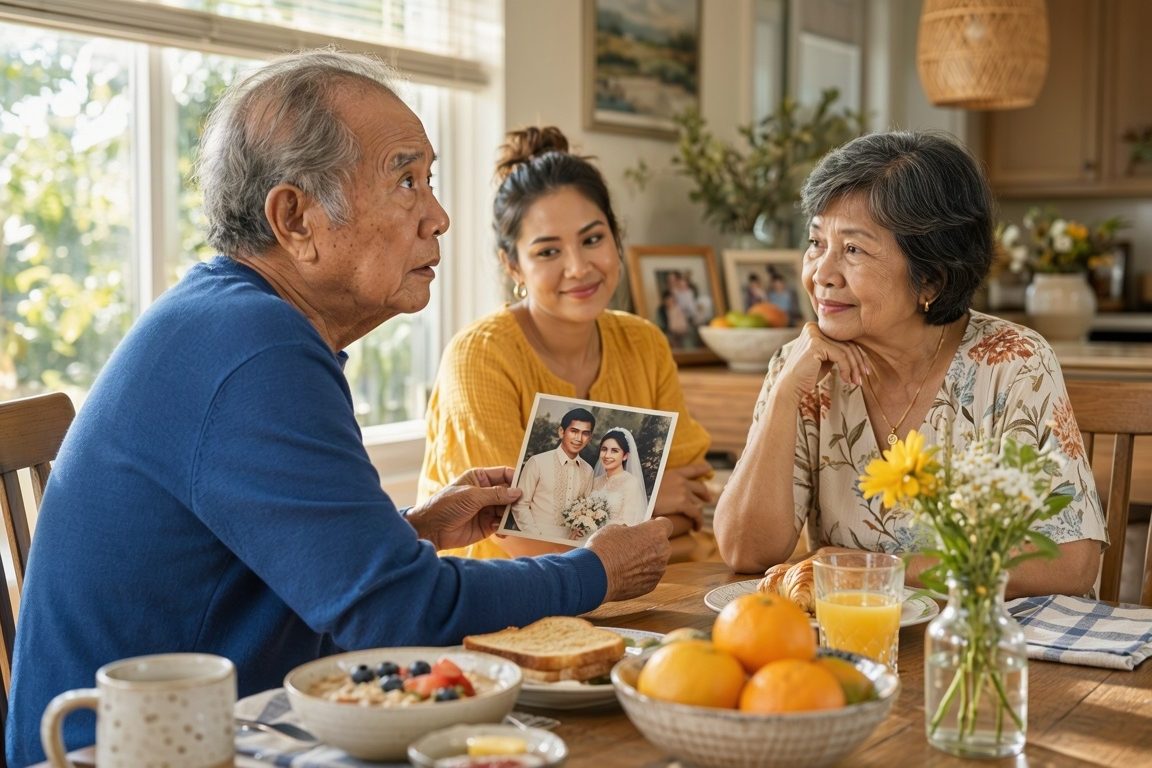
- Don't show recent photos or mention recent events; their brain cannot reach those memories, causing frustration.
- Don't take their lack of recognition as a verdict on your relationship, it is the disease damaging face and memory processing, not withdrawal of love.
- Don't stay when you are overwhelmed or they are spiraling; step away for a few minutes, breathe, and return with a fresh approach.
- Don't carry this grief alone, join a caregiver support group, see a therapist, or find one trusted friend to listen without trying to fix it.
Key points
- Your spouse's lack of recognition is a symptom of brain damage, not a rejection of you.
- Use their voice before they see your face to help bridge the recognition gap.
- Old photos from decades ago can trigger recognition more effectively than recent ones.
- Do not argue or correct them; this only increases confusion and distress.
- Take care of your own emotional health, seek support, take breaks, and allow yourself to grieve.
- Focus on sensory and emotional connections that don't rely on face recognition.
Videos
 How to cope when someone with dementia forgets who you areThis video offers practical strategies for handling the moment when a loved one doesn't recognize you, including the voice-first approach and using old photos.
 The 5 Most Misunderstood Dementia Behaviors (Explained)This video explains the brain-based reasons behind behaviors like not recognizing a spouse, helping you understand that it's not personal.
 What is the Impact of Dementia on a Spouse?This video addresses the emotional toll on the caregiving spouse, including feelings of loss and how to cope.
 Surprising Symptoms of Dementia! Part 3This video covers lesser-known symptoms like facial recognition problems and sensory changes that affect how your spouse perceives you.
2 more videos
 Time with Teepa - I'm Married, but I Sure Do Not Feel That WayTeepa Snow discusses the shift in relationship dynamics when a spouse no longer recognizes you and offers compassionate advice.
 When Marriage Meets Dementia: The Emotional Reality of Spousal CaregivingThis video explores the redefinition of marriage in dementia care and provides emotional support for spousal caregivers.
Background
What Is Happening in Their Brain
In late-stage Alzheimer's, the brain's ability to process faces and memories is severely impaired. Your spouse's brain has essentially 'gone back in time' 20, 30, or even 40 years. They may remember you as you were then, if you were even alive at that point, and the physical changes you've undergone since make you unrecognizable to them. This is not a rejection of you; it is a perceptual and memory failure caused by the disease. Their brain is misinterpreting your face as a stranger's, even though their heart may still hold a deep, wordless connection to you.
Why It Hurts So Much for You
As a spouse, you have built your life around partnership, shared memories, and mutual recognition. When your partner no longer knows who you are, it can trigger feelings of grief, loneliness, and even resentment. You may feel invisible or replaced by a stranger. This is a normal response to an abnormal situation. The loss of recognition is not a reflection of your worth or the love you've shared, it is a symptom of a brain that can no longer hold the present. Acknowledging your own pain is the first step toward coping.
The Role of Perception and Senses
Dementia affects all the senses, not just memory. Your spouse may see your face differently due to changes in visual processing, or they may hear your voice as unfamiliar. The brain can misperceive gentle touches as startling or threatening. This means that even if they don't recognize your face, they might still respond to your voice, your scent, or the rhythm of your presence. Understanding that their brain is playing tricks on them can help you approach them with more patience and creativity.
Practical tools
5
Voice-First Greeting Script
Before entering, say warmly: 'Hi [name], it's [your name]. I'm just outside. I'm coming in to sit with you: I brought your favorite blanket.' This lets their brain process your voice before your face appears.
Decade-Old Photo Album
Assemble 10–15 photos from your early years together (e.g., wedding, first home, vacations from 30+ years ago). Sit beside them, point to one, offer a single sentence ('Look at us at the lake, you loved that hat'), and let them lead.
Sensory Comfort Kit
Gather
Use during visits to create warmth without requiring face recognition.
Exit-and-Return Phrase
When upset, say calmly: 'I'm sorry to have bothered you. I'll come back later.' Leave for 5–10 minutes. Upon return, don't reference the earlier interaction, offer a snack, start a song, or sit quietly. The reset is the tool.
Visit Journal
Keep a small notebook by the door. After each visit, note the time, greeting used, activity tried, their response (what lit them up or triggered distress). Within weeks, patterns emerge to tailor future visits.
Different situations
Late-stage Alzheimer's / spouse caregiver / at home
When your spouse is at home, you have more control over the environment. Use the phone call trick from another room. Keep a consistent daily routine. If they don't recognize you, try again later in the day. Consider using a baby monitor or intercom to call out before entering.
Late-stage Alzheimer's / spouse caregiver / in a facility
In a facility, you may have less control over the environment. Arrive at the same time each visit. Use the voice-first approach before entering their room. Bring the photo album and sensory items. If staff are present, ask them to step away briefly so you can try the phone call trick. Be prepared for variability, some days they may recognize you, others not.
Lewy body dementia / spouse caregiver
In Lewy body dementia, visual hallucinations and fluctuating cognition are common. Your spouse may see you as a different person entirely. Do not argue. Use the exit-and-return strategy. Focus on sensory connections like music or touch. Discuss any hallucinations with their clinician before trying to redirect.
Frontotemporal dementia (FTD) / spouse caregiver
In FTD, personality changes and loss of empathy are early symptoms. Your spouse may not recognize you emotionally even if they know your name. Do not take this personally. Use very simple, direct language. Avoid emotional appeals. Focus on practical tasks like offering a snack or a walk.
Spouse caregiver / you feel resentful or burned out
It is normal to feel resentful when your spouse no longer recognizes you. This does not make you a bad person. Seek respite care so you can take breaks. Join a support group for spousal caregivers. Consider seeing a therapist who specializes in dementia care. Your well-being matters.
Common questions
2
How do I relate to my loved one when they no longer recognize me?
Approach them from the front and say their name in a calm, familiar tone before they see your face, the sound of your voice can bridge the gap their brain is struggling with.
How can I cope with losing my role as a spouse and the routines that defined our marriage?
Instead of correcting them when they don't remember you, focus on the shared moment, offer a warm drink or a gentle touch on the arm, and let the love you feel guide your actions, not the need to be recognized.
For the doctor
5
- Ask your spouse's doctor if there are medications that might help with agitation or anxiety related to recognition loss.
- Discuss with a neurologist whether your spouse's lack of recognition is typical for their stage of Alzheimer's or if it might indicate another condition, such as a stroke or infection.
- If your spouse becomes aggressive when they don't recognize you, ask their clinician about non-pharmacological strategies and when medication might be considered.
- Ask about a referral to a geriatric psychiatrist or a dementia care specialist for additional support with behavioral symptoms.
- Discuss with a social worker or elder law attorney about legal and financial planning, including power of attorney and advance directives, to ensure your spouse's wishes are honored.