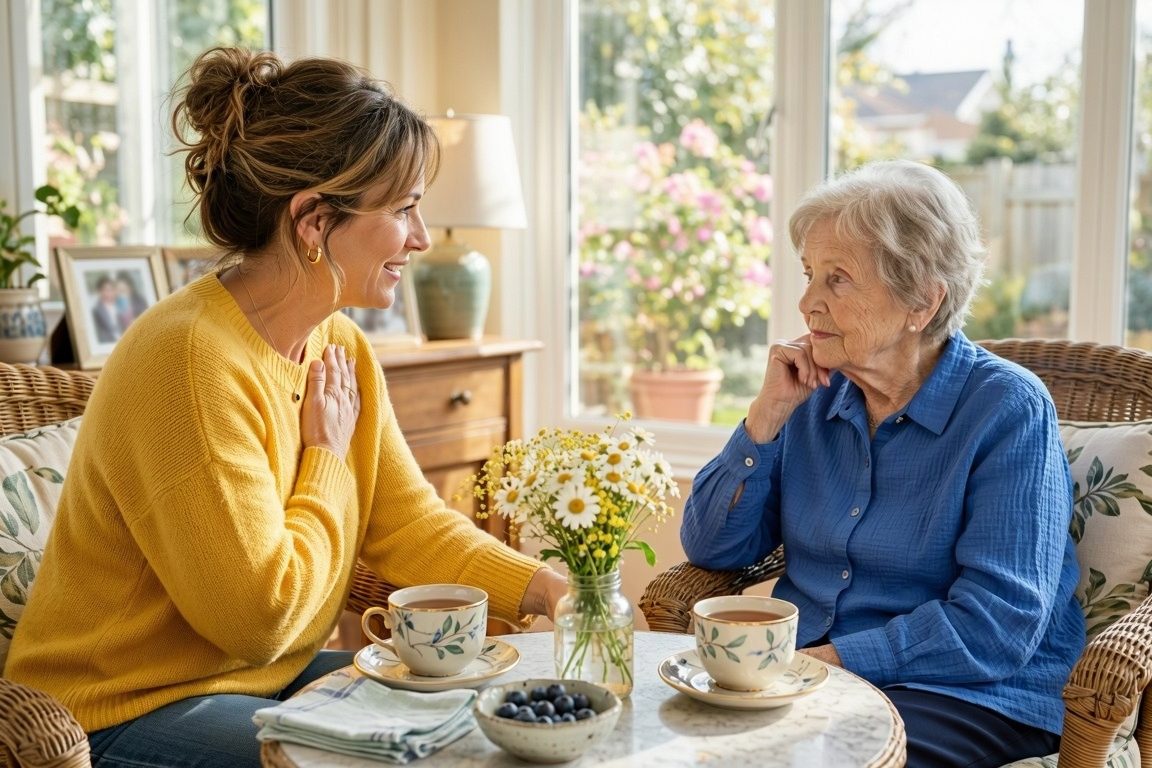
Step by step
What not to do
- Don't correct, argue, or insist they remember, their reality reduces distress for both.
- Don't take the lack of recognition personally; it is a symptom, not a reflection of your love.
- Don't use a condescending or childish tone; preserve their dignity as an adult.
- Don't suppress your grief or withdraw from support; the pain deserves witness.
- Don't sacrifice basic self-care (sleep, meals, breaks); your well-being shapes the care you give.
Key points
- Recognition loss is a neurological change, not a personal rejection. Their brain has traveled back in time.
- Do not correct or argue. Instead, introduce yourself warmly and meet them where they are.
- Use old photos, sensory activities, and gentle prompts to create connection without pressure.
- Acknowledge your own grief. Ambiguous loss is real and deserves compassion.
- Seek support from others who understand. You are not alone in this journey.
- Focus on what your loved one can still do and enjoy, not on what has been lost.
Videos
 How to cope when someone with dementia forgets who you areThis video directly addresses the emotional impact of recognition loss and offers practical strategies for connecting in new ways.
 When Marriage Meets Dementia: The Emotional Reality of Spousal CaregivingFocuses on the unique challenges spousal caregivers face when their partner no longer recognizes them, including grief and identity shifts.
 Alzheimer's LA Caregiver Tips - EP. 18 ‘Grief’Explores the grief of losing a loved one's identity and offers validation and coping strategies for caregivers.
 Dementia and Ambiguous Loss with Dr. Natalee Oliver, DSW April 20 23Provides a professional perspective on ambiguous loss and how to navigate the emotional complexity of a loved one who is still here but changed.
2 more videos
 THIS is important in dementia careHighlights the importance of focusing on the present moment and finding joy in small interactions, even when recognition is lost.
 Avoid Loneliness in Old Age to Reduce Health RisksAddresses the risk of isolation for both caregivers and care recipients, offering ideas for maintaining social connections.
Background
What Is Happening: The Brain Has Time-Traveled
When a person with dementia no longer recognizes you, it is not a rejection or a sign that your love has been erased. Instead, their brain has essentially gone back in time, 10, 20, 30, or even 40 years. They may remember you from that earlier period, but the face they see now is decades older than the one stored in their memory. If you suddenly lost 20-30 years of memory and all the physical changes that come with aging, you would also struggle to recognize people you once loved. This is a neurological change, not a personal one. Understanding this can help you shift from feeling hurt to feeling compassionate.
Ambiguous Loss: Grieving Someone Who Is Still Here
This experience is a form of ambiguous loss, the person is physically present but psychologically changed. You are grieving the loss of the relationship as it was, even as you continue to care for them. This grief is real and valid. It can feel confusing because you are mourning someone who is still alive. Many caregivers describe feeling like they are losing their spouse, parent, or friend slowly, day by day. It is normal to feel sadness, anger, guilt, and loneliness. Acknowledging this grief is the first step toward finding new ways to connect.
Your Role Has Shifted: And That Is Okay
Your identity has changed from spouse, child, or friend to caregiver. This shift can feel disorienting. You may no longer find comfort or security in the person you once relied on. The intimacy of the relationship has changed, and both of you may feel more isolated. But this new role does not erase the love you share. It simply needs new ways to express itself. By reframing your relationship around what your loved one can still do, rather than what has been lost, you can find moments of connection that are meaningful for both of you.
Practical tools
5
Gentle Introduction Script
A repeatable phrase for each arrival: 'Hi, I'm [your name]. I'm here to keep you company today. Would you like to look at some photos?' On video calls, hold up a paper with your name or use a platform that displays it on screen.
Decades-Old Photo Album
15–20 photos from 20–40 years ago of family, pets, familiar places. Sit beside them and let them turn pages. Ask 'Do you remember this house?' and follow their lead without correcting names or details.
Sensory Connection Kit
Small bag with a soft blanket, lavender scent, playlist from their youth, textured cloth, smooth stone. Use 1–2 items per visit while holding their hand, brushing hair, or sitting quietly.
'Tell Me a Story' Prompt
Open-ended invitations: 'Tell me about your favorite holiday' or 'What was your first job like?' Listen, nod, reply 'That sounds special.' Connection over accuracy.
Letter of Release
Private letter to the past relationship: write what you miss, what you're grateful for, what you're letting go of. Burn it, keep it, or tuck it away to process grief and make space for the present relationship.
Different situations
Late-stage dementia (any type)
In late stages, verbal recognition may be rare or absent. Focus entirely on sensory and emotional connection. Use gentle touch, soft music, and familiar scents. Do not expect them to remember your name. Your presence and calm energy are what matter most. Speak in a soothing tone, even if they do not respond.
Spousal caregiver
The loss of a spouse's recognition can feel like a profound betrayal of the marriage bond. You may grieve the loss of partnership, intimacy, and shared history. It is especially important to seek support from other spousal caregivers. Consider writing a letter of release to the marriage as it was. Find new rituals, like holding hands during a favorite song or dancing slowly together, to create moments of connection.
Adult child caregiver
When a parent no longer recognizes you, it can trigger feelings of abandonment or childhood pain. You may need to grieve the parent you once had. Focus on being a comforting presence rather than trying to be 'the child.' Use the photo album tool with pictures from your own childhood. Remind yourself that their lack of recognition is not a reflection of your worth.
Long-distance caregiver
Distance adds an extra layer of difficulty. Use video calls with the person's name displayed. Ask the in-person caregiver to set up a photo album or sensory kit before your call. Send a voice recording of yourself reading a favorite story or singing a lullaby. Coordinate visits around times when your loved one is most alert. Accept that you may not be recognized, but your voice and face can still bring comfort.
Lewy body dementia
Recognition loss may fluctuate more dramatically in Lewy body dementia. One day they may know you, the next they may not. Do not take the variability personally. Visual hallucinations are common, so avoid arguing about what they see. Use calm redirection and focus on sensory grounding. Be especially patient during periods of confusion.
For the doctor
4
- If your loved one becomes severely agitated or aggressive when they do not recognize you, discuss behavioral strategies or medication adjustments with their doctor.
- If you are experiencing symptoms of depression, anxiety, or burnout, talk to your own healthcare provider about counseling or support options.
- If your loved one is asking for a deceased person repeatedly and it causes them distress, ask a dementia specialist about the best approach for your specific situation.
- If you are unsure about the stage of dementia or how to adjust your care approach, request a referral to a neurologist or geriatric care manager.