Step by step
What not to do
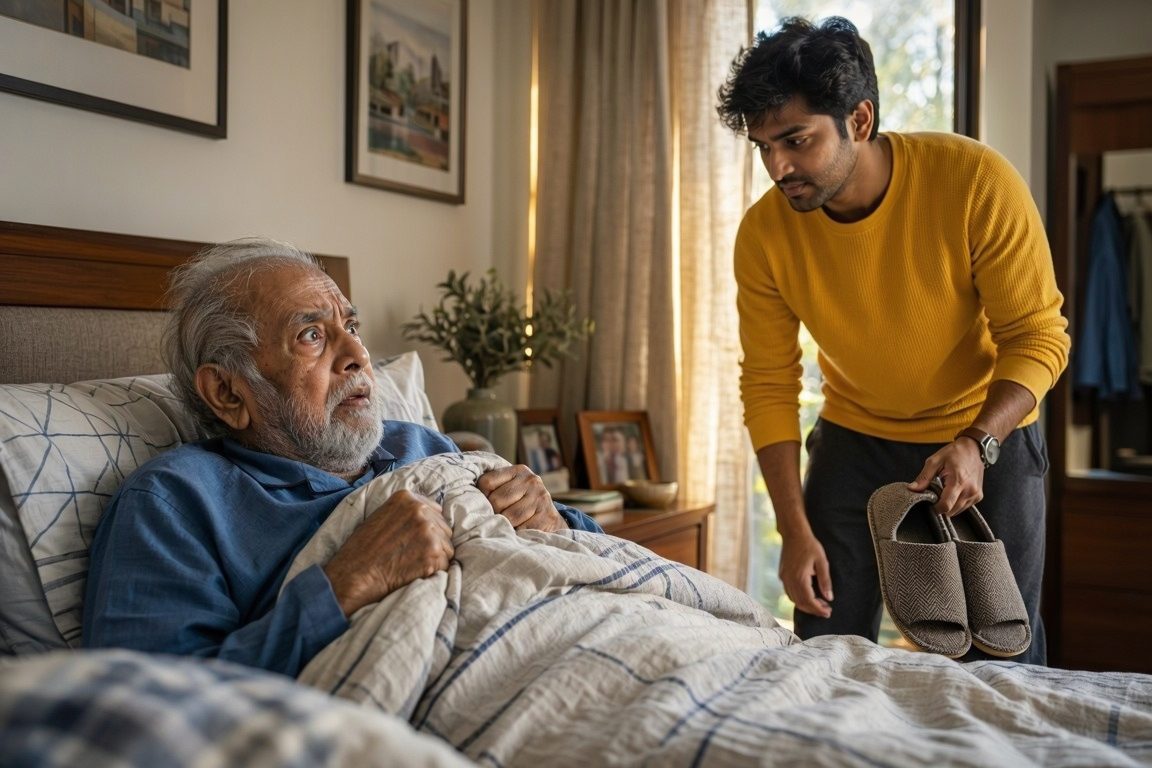
- Do not wake them by calling their name loudly from across the room or by turning on bright lights suddenly. This startles the brain and triggers a defensive response.Instead, approach quietly, use a soft voice, and increase light gradually.
- Do not touch them without warning, especially on the face or head. A hand suddenly on the shoulder or arm can feel like an attack. Always announce your intention first: 'I'm going to put my hand on your arm now.' Then wait for a sign they are ready.
- Do not argue or reason with them if they resist. Saying 'You have to get up now, the doctor said so' will only increase their sense of being controlled.Instead, acknowledge their feeling: 'I know you're comfortable. Let's just sit up for a minute and see how it feels.'
- Do not rush the process. Trying to move someone quickly because you are in a hurry will almost always backfire. The person will sense your urgency and become more anxious and resistant. Build in extra time for every transition.
- Do not use physical force or restraint to move them. Pulling, pushing, or holding them down will escalate aggression and can lead to injury for both of you. If they absolutely cannot be moved, stop and call for help or wait until they are calmer.
- Do not take their resistance personally. They are not doing this to upset you. Their brain is in survival mode. If you feel yourself getting frustrated, step away for a moment, take a breath, and remind yourself that this is the disease, not a choice.
Key points
- Aggression during waking or moving is a survival reflex, not intentional behavior. The person's brain perceives a threat and reacts before they can think.
- Always approach from the front, use a soft voice, and give a one-step instruction with a 10-second pause before you act.
- Never touch from behind, grab suddenly, or use force. This will escalate the aggression and put both of you at risk.
- Use the 'hand-under-hand' technique for guiding, and redirect their attention to something interesting if they resist moving.
- Plan transitions for calmer times of day, especially in the morning, and avoid waking or moving them during sundowning hours if possible.
- Your safety comes first. If the person becomes physically aggressive, step back, leave the room, and wait for them to calm down before trying again.
Videos
 Aggressive Behavior in People with Dementia | Linda Ercoli, PhD | UCLAMDChatDr. Ercoli explains the brain changes behind aggression and why the person may not recognize you, which is key to understanding why waking and moving can trigger a defensive response.
 How to Deal with Aggressive Dementia Patients (4 Strategies)This video offers practical, level-based strategies for handling aggression, including how to de-escalate during a transition and when to step back for safety.
 How to Manage Anger and Aggression in Alzheimer's DiseaseCovers the importance of not confronting or arguing, and gives specific phrases to use when the person resists being moved or woken.
Background
Why Waking and Moving Trigger Aggression
When dementia damages the brain, the parts that help a person understand language, control impulses, and remember who you are become less reliable. At the same time, the ancient 'fight, flight, or freeze' response stays fully intact. So when you suddenly wake someone or move them without warning, their brain interprets it as a threat. They may not recognize you in that moment, and they may lash out defensively because they feel trapped or ambushed. This is not intentional meanness; it is a survival reflex they cannot override.
The Role of Sundowning and Fatigue
Aggression during waking and moving is often worse later in the day, a pattern called sundowning. As the person becomes more tired, confused, and anxious in the late afternoon and evening, their ability to cope with even gentle transitions plummets. They may pace, say they want to go home, or become restless. Waking them from a nap or moving them from a chair to the bathroom at this time can feel like one demand too many. Understanding this timing helps you plan the most important moves for calmer hours.
The Person's Inner Experience: Loss of Control and Fear
Imagine being deep in a dream and suddenly someone is pulling your arm, speaking in a loud voice, and you have no idea where you are or who that person is. That is what waking can feel like for someone with dementia. They have lost the ability to rationalize that you are helping them. Their aggression comes from feeling out of control, frustrated, and frightened. They cannot tell you 'I'm scared' or 'Please give me a minute', so their body does the talking. Your job is to slow down, signal safety, and give them time to reorient before you ask anything of them.
Practical tools
6
The 'Soft Start' Script
Before waking or moving, say these exact words in a calm, low voice: 'Hi [name], it's me, [your name]. I'm right here. I'm going to help you sit up now. Take your time.' Then wait. This script gives the person a moment to recognize you and understand what is about to happen. Practice it until it becomes automatic.
The 10-Second Pause
After you give a one-step instruction (like 'Let's sit up'), count to ten in your head before doing anything else. The person's brain needs this extra time to process the information and initiate movement. Rushing past this pause will often cause them to freeze or lash out.
The 'Hand-Under-Hand' Guide
When you need to guide them, slide your hand under theirs, palm to palm, and gently lead. This is less threatening than grabbing from above. It also gives them a sense of control because they can pull away if they need to. Use this for walking, sitting down, or standing up.
Morning Light and Music Routine
Set up a consistent morning routine that starts 15 minutes before you wake them. Turn on a dim lamp or open the curtains slightly. Play a familiar, calming song (like their favorite old tune or nature sounds). This gentle sensory cue helps their brain shift from sleep to wakefulness without a shock.
The 'Redirection' Distraction
If they resist moving, point to something interesting in the direction you want them to go. Say 'Look at that bird outside the window' or 'I think I see a flower in the garden.' Their attention will shift, and they may follow your gaze and start moving without realizing it. This works because their brain can only focus on one thing at a time.
The 'Safety First' Checklist
Before you approach, quickly scan the room:
If they become aggressive, you want to be able to step back safely. Keep a clear path to the door. Your safety is always the priority.
Different situations
Lewy body dementia
People with Lewy body dementia often have extreme sensitivity to touch and may have visual hallucinations. Approach even more slowly and from the front. Use very soft lighting because bright light can worsen hallucinations. Be prepared for sudden changes in alertness, they may be calm one minute and agitated the next. Never wake them abruptly from a nap, as they may have vivid dreams that carry over into confusion.
Late-stage dementia (bedridden or very limited mobility)
When the person is bedridden, waking and moving are often for care tasks like bathing or turning. Use the same soft voice and touch, but be aware that pain from pressure sores or stiff joints can cause aggression. Always check for signs of pain before moving them. Use a draw sheet or a turning pad to reduce friction. Speak to them as you move each body part: 'I'm going to lift your arm now.'
Spouse vs. adult child caregiver
A spouse may be more likely to be seen as a familiar face, but also may be the target of more intense aggression because the person feels safest expressing anger with them. An adult child may be mistaken for a stranger, especially in early morning. If you are an adult child, always identify yourself clearly: 'Dad, it's your daughter, Sarah.' Use your name, not just 'it's me.'
In a facility (nursing home or memory care)
In a facility, you may not be the one waking or moving them, but you can advocate. Ask the staff to use the same gentle approach every time. Request that the same caregiver be assigned to your loved one as much as possible for consistency. If your loved one is aggressive during transfers, ask for a physical therapy evaluation to see if a different technique or equipment (like a lift) could reduce the trigger.
Medicaid or limited resources
If you cannot afford special equipment, focus on the free tools: the soft-start script, the 10-second pause, and the hand-under-hand guide. You can also use a rolled-up towel under the knees to help them sit up more comfortably. Many community senior centers offer free caregiver training on gentle transfer techniques. Call your local Area Agency on Aging for resources.
For the doctor
4
- If aggression during waking or moving becomes frequent or severe, ask the doctor: 'Could there be an underlying pain, infection, or medication side effect causing this?'
- Ask about a medication review: 'Can you check if any of my loved one's current medications might be contributing to agitation or confusion?'
- If the person has Lewy body dementia, ask: 'Are there any medications that could worsen their sensitivity to touch or hallucinations?'
- If you are considering a different level of care because of aggression, ask: 'What are the signs that it is time for a memory care facility, and how can we get a referral to a geriatric psychiatrist for a medication evaluation?'