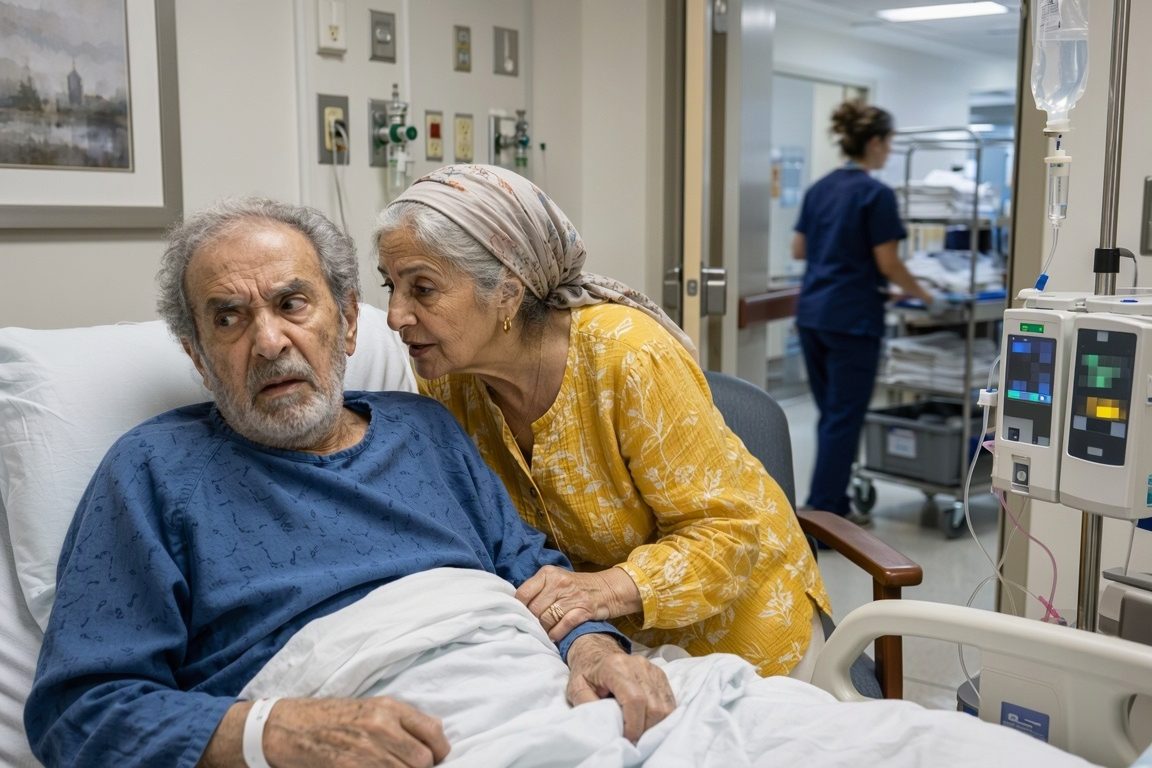
Step by step
What not to do
- Do NOT try to reason or argue with the person during an agitated episode. Their brain cannot process logic.Instead, validate the emotion: 'I see you're upset. Let's sit down and talk about it.'
- Do NOT physically restrain or corner the person. This will escalate the fight-or-flight response and may lead to injury for both of you.Instead, give them space and use a calm, open posture.
- Do NOT assume the behavior is 'just dementia' without first checking for pain, infection (especially UTI), constipation, or medication side effects. These are common medical triggers that can be treated.
- Do NOT leave the person alone in the room for long periods without explanation. If you must step out, tell them where you are going and when you'll be back, and ask a staff member to check in every 15 minutes.
- Do NOT ignore the person's sensory needs. If they are cold, ask for a warm blanket. If they are hungry, ask for a snack. If they need the bathroom, help them immediately. Unmet physical needs are a top trigger for agitation.
- Do NOT change the environment without warning. If you need to move furniture or adjust the room, explain what you are doing in simple terms: 'I'm moving this chair so you can see the window better.'
Key points
- The hospital environment itself, noise, unfamiliarity, bright lights, rotating staff , is a major trigger for challenging behaviors in dementia.
- Up to 45% of older adults with dementia exhibit responsive behaviors in acute care; these are not 'bad behavior' but communication of unmet needs or distress.
- Bring familiar items from home (blanket, photo, clock) to create a sense of safety and orientation.
- Reduce noise and visual clutter: turn off TV, dim lights, close curtains, and minimize overhead pages.
- Always check for pain, infection, constipation, or medication side effects before assuming the behavior is 'just dementia.'
- Your calm, consistent presence is the most powerful tool, use a slow, low voice and validate emotions, not logic.
Videos
 Wandering, Rummaging, & Hoarding, Oh My!This video explains how environmental changes (like moving to a hospital) can trigger wandering and rummaging behaviors, and offers practical strategies to redirect them.
 Aggressive Behavior in People with Dementia | Linda Ercoli, PhD | UCLAMDChatDr. Ercoli discusses how the hospital environment (unfamiliar people, noise, lack of routine) can trigger aggression, and provides a framework for identifying and modifying triggers.
 The Baffled Brain: Demystifying Dementia Episode 13This episode covers how the brain's vulnerability to environmental overload leads to challenging behaviors, and offers caregiver strategies for creating a calming environment.
 Is it Time? 8 Key Warning Signs It Might Be Time for a Different Level of Care.If hospital stays become frequent or behaviors are unmanageable, this video helps you evaluate whether a higher level of care (like a dementia-specialized unit) is needed.

Practical tools
6
The 'Hospital Comfort Kit'
A small bag you bring to the hospital containing:
Hand this kit to the nursing staff on arrival and explain each item's purpose.
The 'Whiteboard Reorientation' tool
Write on a whiteboard or large paper: 'Today is [day of week], [date]. You are in [hospital name]. Your family loves you. [Name of caregiver] will be here at [time].' Place it where the person can see it from the bed. Update it each shift. This reduces the 'where am I?' panic that triggers agitation.
The 'Calm Voice Script'
When the person becomes agitated, use this exact phrase: 'I'm here. You're safe. Let's take a breath together.' Repeat it slowly, like a mantra. Do not add new information. After 30 seconds of calm, redirect to a simple sensory comfort: 'Let's hold this cool cloth to your forehead' or 'Let's listen to this song.'
The 'Disguised Doorway' technique
If the person keeps trying to leave the room, place a 'Do Not Disturb' sign on the door, or hang a calming image (like a nature scene) on the door at eye level. This can reduce the urge to exit because the brain no longer sees a 'door', it sees a picture.
The 'Pain and Infection Checklist'
Before assuming a behavior is 'dementia,' run through this checklist with the nurse:
This helps identify treatable causes.
The 'Staff Communication Card'
Create a small card (laminated if possible) that says: 'My loved one has dementia. Please approach slowly, speak calmly, and use simple words. Do not startle them. If they become upset, please call me immediately at [phone number].' Give this to every new staff member who enters the room.
Different situations
Lewy body dementia (LBD)
People with LBD are extremely sensitive to antipsychotic medications and can have severe reactions. Discuss with the clinician: 'Can we avoid all antipsychotics unless absolutely necessary?' Also, LBD often involves visual hallucinations, the hospital's bright lights and patterned floors can worsen these. Request dimmer lighting and solid-colored bedding. Avoid mirrors, as they can cause confusion.
Late-stage dementia (severe cognitive impairment, limited mobility)
The person may not be able to walk or speak. Focus on non-verbal comfort: gentle touch, a familiar voice, and pain management. Use the 'Pain and Infection Checklist' religiously, as they cannot tell you what hurts. Ask the staff to do all care in one room to minimize transfers. A pressure-relieving mattress is essential to prevent discomfort.
Spouse vs. adult child caregiver
If you are the spouse, your presence may be the most calming factor. Stay as much as possible, but take breaks to avoid burnout. If you are an adult child, the person may not recognize you and may see you as a stranger. Approach slowly, identify yourself by name, and use a gentle tone. Ask the staff to use your name consistently so the person can learn it.
In a facility (nursing home or assisted living) that has a hospital unit
If the person is already in a facility and is transferred to an on-site hospital unit, the environment may be slightly more familiar, but the staff may be different. Request that a familiar aide from the home unit visit daily. Bring the person's own pillow and a familiar room scent (like lavender) to bridge the two environments.
Medicaid or limited resources
If a private room isn't covered, ask for a bed in a quieter corner of a semi-private room. Use a room divider curtain to create a visual boundary. Bring your own nightlight and earplugs. Many hospitals have a 'patient experience' fund that can provide comfort items, ask the social worker if any are available.
For the doctor
5
- Ask the doctor: 'Could any of my loved one's current medications be causing or worsening confusion or agitation? Can we review them for possible alternatives?'
- Ask the doctor: 'Is there a risk of delirium on top of dementia? What signs should I watch for, and how can we prevent it?'
- Ask the doctor: 'If my loved one becomes very agitated, what non-medication approaches does the hospital have? Are there geriatric psychiatry or behavioral health consultants available?'
- Ask the doctor: 'Are there any underlying medical issues (like a UTI, pneumonia, or constipation) that could be causing this behavior? Can we run basic tests?'
- Ask the doctor: 'If we need to use a medication for agitation, what is the safest option for my loved one's specific dementia type?'