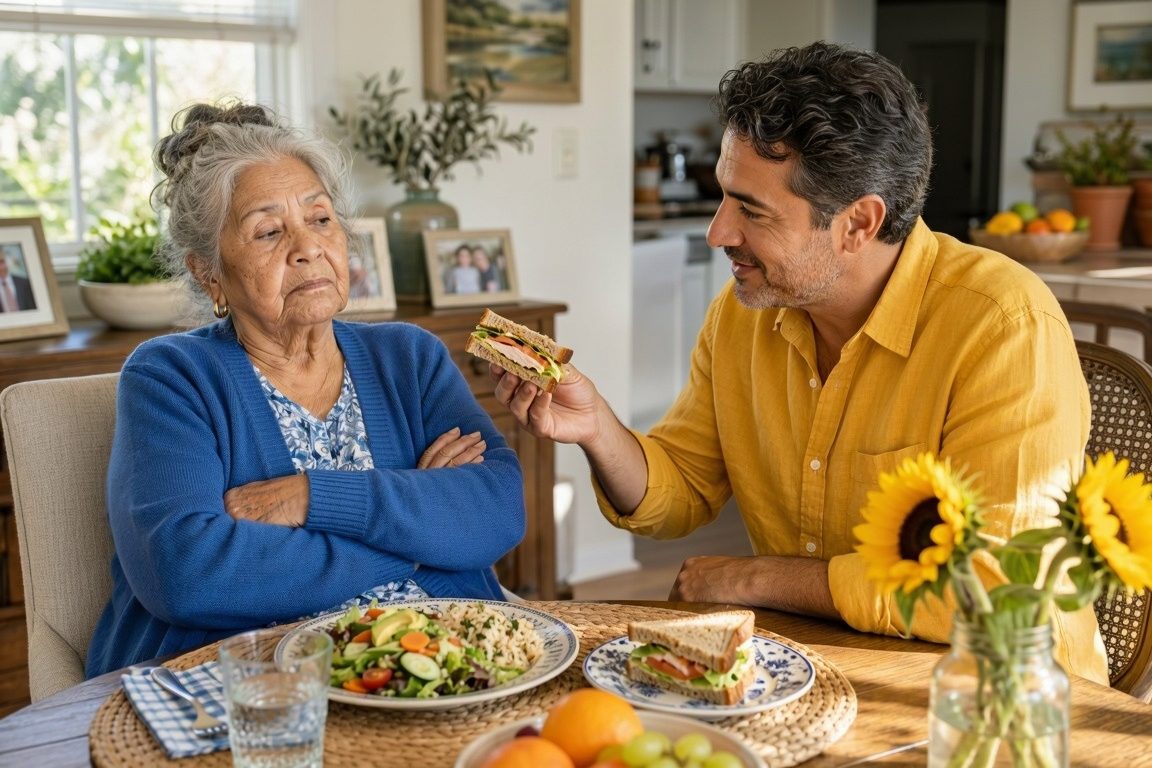
Step by step
What not to do
- Don't use a new name that sounds like a trick or a lie: If you call a doctor's appointment a 'fun outing' and the person feels deceived when they arrive, trust is broken.Instead, choose a name that is neutral or slightly positive but still honest, like 'health check' or 'meeting with our helper.' Honesty within the bounds of their understanding maintains trust.
- Don't switch names too often or use multiple names for the same thing: Consistency is key. If you call the toilet 'the bathroom' one day and 'the powder room' the next, the person may become confused or suspicious. Pick one name and stick with it. Write it down if you need to remind yourself.
- Don't use a name that clashes with the person's identity: For example, calling an adult day program a 'playgroup' might feel infantilizing.Instead, choose a name that respects their age and life stage. If they were a professional, call it a 'meeting' or 'club.' If they were a homemaker, call it 'coffee hour.' Always match the name to their self-image.
- Don't expect renaming to work instantly or every time: Renaming is a tool, not a magic fix. Some days it will work beautifully, other days it won't. That's normal. If it fails, don't take it personally. Simply try again later or use a different approach, like distraction or offering a choice. As one expert notes, what works today may not work tomorrow.
- Don't use renaming as a substitute for addressing pain or discomfort: If the person is resisting because they are in pain, too hot, too cold, or uncomfortable, no amount of renaming will help. Always check for physical causes first. Gently move their joints, ask if they hurt, or adjust the room temperature before trying a new name.
Key points
- Renaming works because the brain links words to past emotions; a new name can bypass negative triggers and create a fresh start.
- Choose names based on the person's history and preferences, not generic 'nice' words. A 'social club' works for a social person; a 'library' works for a reader.
- Use the new name consistently, with a warm tone, and pair it with a simplified task and a pleasant activity.
- Be flexible: if a name doesn't work, try another one later. What works today may not work tomorrow.
- Always check for physical causes of resistance (pain, discomfort) before relying solely on renaming.
- Coordinate with all caregivers (family and staff) to use the same renamed terms for consistency.
Videos
 How To Talk To Someone With DementiaThis video demonstrates the tone and phrasing that make renaming effective, warm, simple, and respectful. It shows how to avoid elderspeak and use positive language.
 What to do when a person with dementia refuses care: 6 simple strategiesThis video covers renaming as one of six strategies for reducing resistance. It provides real-life examples of how to rename activities like bathing and dressing.
 Zinnia Caregiver Support Session: Responding to Dementia-related Changes in the Person You SupportThis session discusses how to adapt communication as dementia progresses, including the use of renamed activities to maintain engagement and reduce frustration.
 Assisting with Activities of Daily Living in Dementia CareThis video shows step-by-step assistance with daily tasks, emphasizing the importance of simple language and positive framing, key to successful renaming.

Practical tools
5
The 'Positive Association' Phrase List
Create a small card or note with three to five renamed phrases for common triggers. For example: 'Shower' becomes 'Splash time' or 'Rinse off'; 'Medication' becomes 'Daily boost' or 'Morning helper'; 'Dressing' becomes 'Getting cozy' or 'Putting on your favorite shirt'; 'Doctor visit' becomes 'Health check' or 'Meeting with our friend'; 'Bathroom' becomes 'The little room' or 'Your private space.' Keep the card in your pocket or on the fridge for quick reference.
The 'History Hook' Worksheet
Take a few minutes to write down the person's past interests, jobs, and hobbies. For each trigger activity, brainstorm a name that connects to that history. For example: If they loved fishing, call a bath 'going for a swim.' If they were a teacher, call a puzzle 'class time.' If they enjoyed baking, call meal prep 'kitchen fun.' This personalized approach is far more effective than generic names.
The 'One-Step-at-a-Time' Script
When using a renamed activity, pair it with a simple, step-by-step verbal script. For example: 'Let's do splash time. First, I'll help you with your shirt. Then we'll step into the warm water. You're doing great.' Use the new name at the start and repeat it once or twice. Keep your sentences short and your tone warm. This reduces the cognitive load and makes the new name stick.
The 'Environment Setup' Checklist
Before you start a renamed activity, prepare the environment to support it. For 'splash time,' have the towel warm, the water temperature comfortable, and the room well-lit. For 'daily boost' (medication), have the pill and a glass of water ready, with no other distractions. A calm, prepared environment makes the new name feel more real and less stressful.
The 'Try Again Later' Reminder
Write a note to yourself: 'If it doesn't work, let it go. Try again later or tomorrow.' Place it where you'll see it during care tasks. This reminder helps you stay flexible and reduces your own frustration. As experts emphasize, forcing an activity when resistance is high only escalates the situation. Sometimes a 10-minute break is all that's needed.
Different situations
Early-stage dementia (still verbal and aware)
In early stages, the person may still understand that you are using a different name. Be transparent: 'I know this is your medication, but I'm going to call it your 'daily boost' to make it feel more pleasant.' This respects their awareness while still using the strategy. You can also ask them what they'd like to call it, they might have their own idea.
Late-stage dementia (limited verbal ability)
In late stages, words matter less than tone and routine. Use very simple, one- or two-word names repeated in the same tone each time. For example, 'Time for splash' said in a cheerful, sing-song voice. Pair the name with a gentle touch or a familiar object (like a favorite towel). The goal is to create a predictable, soothing ritual rather than a logical explanation.
Lewy body dementia (with visual hallucinations or fluctuating cognition)
In Lewy body dementia, the person may have visual hallucinations or sudden changes in alertness. Avoid names that could be misinterpreted (e.g., don't call a shadowy hallway 'the tunnel' if they already see things that aren't there). Stick to concrete, simple names like 'this room' or 'your chair.' Also, be ready to switch names if their cognition shifts suddenly, what worked in the morning may not work in the afternoon.
Spouse vs. adult child caregiver
A spouse may have decades of shared history to draw on for renaming. For example, 'Remember our special Sunday baths? Let's do that now.' An adult child may need to rely on stories or photos to find the right hook. Both can succeed, but the spouse's intimate knowledge is a powerful advantage. If you're an adult child, ask other family members for ideas about what the person loved.
In a facility (assisted living or nursing home)
In a facility, coordinate with staff so everyone uses the same renamed terms. Write the names on a care plan or a note by the bed. For example, if you call the shower 'splash time,' tell the morning aide to use that phrase too. Consistency across caregivers prevents confusion and builds trust. Also, consider the facility's routines, renaming a group activity 'club' may work better than renaming a personal care task.
For the doctor
3
- Ask your doctor or pharmacist: 'Are there any medications that should not be renamed or disguised in food or drink? Some medications lose effectiveness if taken with certain foods.'
- If the person has a feeding tube or swallowing difficulties, ask: 'How should I rename or present food and liquid to ensure safety while still using this approach?'
- For individuals with diabetes or other dietary restrictions, ask: 'Can I rename a snack or meal without changing its nutritional content? I want to use positive language but not accidentally encourage overeating of restricted items.'