Step by step
What not to do
- Do NOT argue or try to reason logically. Saying 'You can’t drive because you got lost last week' will only make them defensive. Their brain cannot process the cause-and-effect.Instead, use a temporary reason like 'the car is being serviced today.'
- Do NOT use a permanent, absolute statement like 'You will never drive again.' This feels like a death sentence to their independence and can trigger a catastrophic reaction. Always frame it as temporary: 'Just for now, until we get this sorted.'
- Do NOT interrupt them when they are speaking. If they are trying to explain why they need to drive, let them finish. Interrupting makes them feel unheard and more determined. Apologize if you cut them off, then listen.
- Do NOT use a condescending tone or 'elderspeak' (baby talk, overly simple words). This can feel disrespectful and increase resistance. Speak to them as an adult, with warmth and respect, even if you are using a white lie.
- Do NOT take away keys or hide them without a plan. If they discover the keys are missing, they may become suspicious or frantic.Instead, offer a substitute set of keys or involve them in a task that keeps them occupied while you discreetly secure the real keys.
- Do NOT use chemical restraints (medication) to manage their desire to drive without first discussing with a doctor. Sedating a person to prevent them from driving can reduce their overall function and quality of life. Always consult a clinician before using medication for behavioral management.
Key points
- Temporary language (e.g., 'just for today,' 'while the car is being fixed') reduces resistance by making restrictions feel less permanent and less threatening.
- Always validate the person’s feelings before redirecting. Say, 'I know you want to drive. This must be frustrating.' Then offer a temporary reason.
- Distraction with a positive activity (photo album, walk, snack) is your most powerful tool after you deliver the temporary message.
- Never argue, use permanent statements, or interrupt. These approaches escalate resistance and damage trust.
- Substitute keys and environmental barriers (like a locked gate or hidden battery disconnect) can prevent unsafe driving without confrontation.
- End every interaction on a warm, positive note to avoid lingering resentment and to preserve your relationship.
Videos
 How to Manage Repetitive Behaviors in Alzheimer's DiseaseThis video offers strategies for handling repetitive requests, like asking to drive, by using redirection and temporary answers.
 How Do You Get Someone With Dementia To Do Something?Learn how to approach your loved one with a calm, positive tone and use temporary language to gain cooperation without force.
 Ask Teepa Anything! Live on YouTubeTeepa Snow answers real caregiver questions about handling resistance, including driving restrictions, with practical, compassionate techniques.
 Refusals in Dementia Care: How to Start and Maintain a Positive Approach with Our Visual CuesThis video demonstrates how to use visual cues and a step-by-step approach to reduce refusals, which is directly applicable to driving conversations.
2 more videos
 Is It Good To Take People With Dementia Or Alzheimer's Out?Explores how to manage outings and transitions, including when to cut an outing short and how to use temporary language to ease the return home.
 Time with Teepa: How to Not Make a Person Living with Dementia Feel Stupid or IncompetentTeepa explains how to preserve dignity while setting limits, which is essential when using temporary language about driving.
Practical tools
6
Temporary Language Scripts
Keep a mental list of go-to phrases: 'The car is in the shop for a couple of days.' 'The doctor wants us to wait until next week for a check-up.' 'The roads are too slick today, let’s try tomorrow.' 'Your house is being painted, so you’re staying with me temporarily.' Practice saying them calmly, as if it’s no big deal.
Substitute Keys
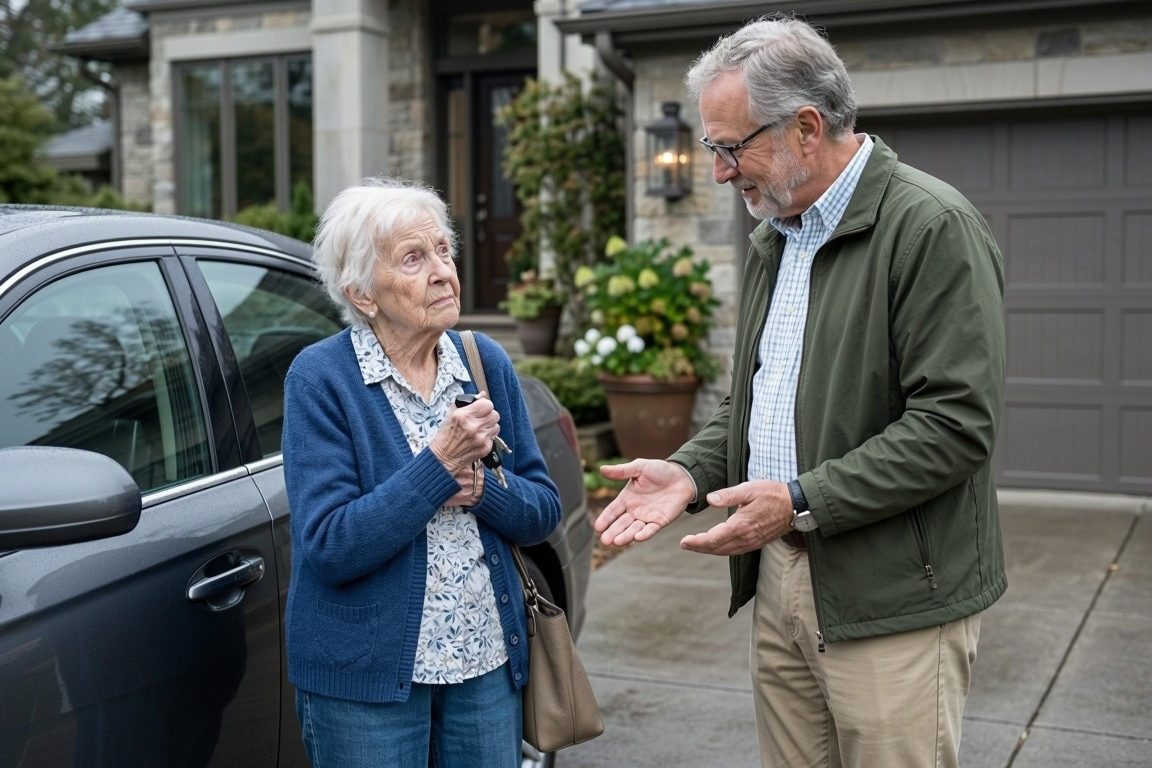
Get a set of old, non-functional keys (e.g., from a junk drawer or a hardware store). Keep them in your pocket or a drawer. When your loved one asks for the car keys, hand them the substitute set and say, 'Here, you can hold these while I grab my jacket.' This can satisfy the need to have keys without the risk of driving.
Activity Diversion Kit
Prepare a small bag or box with items that engage their hands and mind:
When the driving urge arises, pull out the kit and say, 'Oh, I just found this, can you help me with it?' The goal is to redirect their attention quickly and positively.
Positive End-of-Interaction Checklist
After any conversation about driving, use this checklist:
This helps prevent lingering resentment.
The 'Walk and Talk' Strategy
When they insist on driving, suggest a short walk instead. Say, 'Let’s go for a walk first: I want to show you the garden.' Walking together can reduce agitation and meet their need for movement. It also gives you a chance to calmly redirect the conversation away from driving.
Doctor’s Note Prop
If your loved one respects authority figures, you can create a simple note that says 'No driving until next check-up' and pretend it’s from their doctor. Show it to them and say, 'The doctor left this note. Let’s follow it for now.' This external authority can sometimes be more acceptable than a family member’s rule.
Different situations
Early-stage dementia (still aware of diagnosis)
You can have a more direct conversation, but still use temporary language. Say, 'I know this is hard. Let’s agree to take a break from driving for two weeks and see how you feel. We can revisit it then.' Involve them in the decision by saying, 'What do you think would help you feel safe?' This respects their insight while setting a boundary.
Middle-stage dementia (limited insight)
Temporary language is essential. They may not remember the restriction from one hour to the next, so you will need to repeat the same story (e.g., 'the car is being fixed') each time. Use substitute keys and distraction heavily. Avoid any mention of their diagnosis or memory loss, focus on external reasons.
Late-stage dementia (minimal verbal communication)
Driving is usually no longer a verbal issue, but they may still try to get into a car. Use environmental barriers (e.g., a locked gate, a car with a hidden battery disconnect). If they become agitated, use gentle redirection with touch and a calm voice. Temporary language may not be understood, but a soothing tone and a walk can help.
Lewy body dementia (fluctuating cognition, visual hallucinations)
Driving restrictions are especially critical due to visual-spatial issues and sudden confusion. Use temporary language that accounts for their fluctuating state: 'Let’s wait until you’re feeling clearer. The light is tricky today.' Be prepared for sudden changes in mood and have a distraction ready. Consult a driving rehabilitation specialist early.
Spouse vs. adult child caregiver
A spouse may have more emotional authority but also more conflict. Use 'we' language: 'We need to take a break from driving for a while.' An adult child may need to frame it as concern: 'Dad, I’m worried about the roads. Let’s use my car for now.' Both should avoid a power struggle and focus on partnership.
For the doctor
4
- Ask your doctor about a formal driving assessment or referral to a driving rehabilitation specialist. This can provide an objective evaluation and recommendations.
- Discuss whether any medications your loved one takes could affect their driving ability (e.g., sedatives, anti-anxiety meds). Do not stop or change medications without medical guidance.
- If your loved one becomes aggressive when you restrict driving, ask your clinician about non-pharmacological strategies and when medication might be needed as a last resort.
- Ask about state-specific reporting requirements for dementia and driving. Some states require physicians to report unsafe drivers to the DMV.