Step by step
What not to do
- Do not leave a person with dementia alone in the bathroom without grab bars or non-slip mats
- Do not assume familiar rooms are still safe without ongoing reassessment
- Do not keep items that could be mistaken for food or drink (e.g., dish soap in a juice bottle)
- Do not use dim lighting or patterned flooring that can cause confusion or falls
Key points
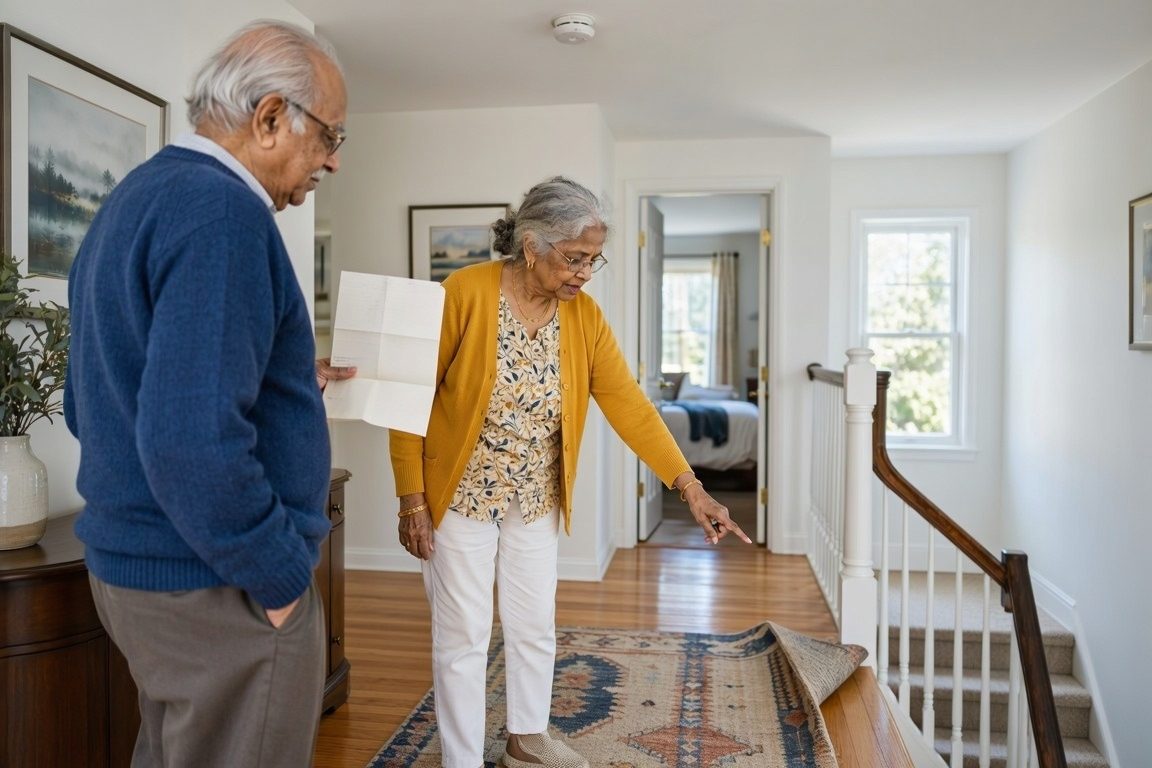
- Falls are the most common safety risk, remove rugs, improve lighting, and install grab bars.
- Wandering can happen suddenly; install locks and alarms before it becomes a problem.
- Kitchen and bathroom hazards are preventable with simple modifications like stove knob covers and non-slip mats.
- Driving safety must be addressed early and compassionately, involve the doctor if needed.
- Create a calm, predictable environment to reduce agitation and confusion.
- Reassess safety regularly as dementia progresses, what worked last month may not work today.
Videos
 What Are Common Safety Risks For Dementia Patients? - Dementia Help HubThis video gives a clear overview of the most common risks, falls, wandering, fire, and sensory changes, and offers practical prevention tips. Great for a first-time caregiver.
 Home Safety and Dementia: Module 1Dr. Beth Goaty and Dr. Martha Leatherman explain the core principles of home safety for dementia. This is the first of a three-part series, so start here for a solid foundation.
 How Do You Promote Safety In Patients With Dementia?This video covers how to promote safety through environmental modifications and supervision. It’s practical and easy to follow.
 095. How to create a safe home for Dementia family membersA step-by-step guide to creating a safe home, including specific product recommendations and room-by-room tips.
2 more videos
 123. Replay: How to create a safe home for Dementia family membersA replay of the previous video, with additional Q&A from viewers. Good for getting answers to common follow-up questions.
 How Do You Ensure Home Safety For Dementia Patients? - Dementia Help HubThis video focuses on practical, low-cost safety measures you can implement today. It’s especially helpful if you’re on a tight budget.
Background
Why Dementia Changes Safety Needs
Dementia doesn’t just affect memory, it reshapes how a person experiences the world. Their sense of balance, depth perception, judgment, and problem-solving skills all decline over time. This means a familiar room can suddenly feel confusing or even threatening. For example, a black-and-white checkered floor may look like a hole or a moving surface to someone with dementia, making them hesitate or fall. Shadows from poor lighting can be misinterpreted as people or obstacles, triggering fear or agitation.
As the disease progresses, the person may also lose the ability to recognize danger. They might not feel heat from a stove, forget they left a burner on, or fail to notice a wet floor. Their senses, vision, hearing, touch, and temperature perception, can change unpredictably. One day they may feel cold when the thermostat is at 80°F; another day they might dress for winter in July. These sensory shifts, combined with slower processing speed, mean that a simple trip over a rug crack can lead to a fall before they can react.
Behavioral symptoms like agitation, aggression, or anxiety can also create unsafe situations. A person who is frightened or confused may act impulsively, pushing, hitting, or trying to leave the house at 2 a.m. This isn't intentional; it's their brain's way of responding to a world that no longer makes sense. Understanding these changes is the first step to preventing accidents and keeping both of you safe.
The Most Common Safety Risks at a Glance
Falls are the number one safety risk. Dementia impairs balance, weakens muscles from reduced activity, and can cause a shuffling or unsteady gait. Medications used to treat dementia symptoms may also cause dizziness or affect balance. Even a small stumble over a threshold or a loose rug can result in a broken bone or head injury, which can lead to further health decline.
Wandering is another major concern. A person with dementia may get lost on familiar roads, leave the house without purpose, or try to “go home” even when they are already home. This is especially dangerous if you live near water, cliffs, high-traffic areas, or in extreme weather. Wandering can happen even after you’ve installed alarms or GPS devices, some individuals are so determined that they will find a way out.
Fire and kitchen hazards are also critical. Forgetting to turn off the stove, leaving flammable items near heat sources, or not recognizing that a pan is hot can lead to fires. Similarly, bathroom risks include scalding from water that’s too hot, slipping on a wet floor, or falling when getting on or off the toilet. Finally, driving becomes unsafe as judgment, reaction time, and spatial awareness decline, yet many people with dementia resist giving up the keys.
Practical tools
3
Non-slip bath mats and decals
Apply in tub or shower floor to reduce fall risk in wet conditions.
Door and window alarms
Simple battery-powered alarms that alert you when a door or window is opened.
Corner guards and edge cushions
Soft padding for sharp furniture corners to prevent injury during stumbles.
Different situations
Lewy body dementia
People with Lewy body dementia often have visual hallucinations and extreme sensitivity to medications. Avoid using mirrors or patterned flooring that could be misinterpreted. Work closely with a doctor to review all medications, as some can worsen symptoms or cause severe side effects. Falls are even more common due to Parkinson-like stiffness and tremors.
Late-stage dementia
In late stages, the person may be bedbound or need full assistance. Focus on bed safety: use bed rails (with padding to prevent injury), keep the bed low to the floor, and use a hospital bed if needed. Supervision must be constant. Consider a professional caregiver or a memory care facility if you cannot provide 24/7 care.
Spouse vs. adult child caregiver
A spouse may be more reluctant to impose safety changes, fearing loss of independence or intimacy. Adult children may need to take a firmer role, especially if the spouse is also elderly or in denial. In either case, involve a neutral third party, like a doctor or social worker, to help the family agree on safety measures.
Living in a facility (assisted living or memory care)
Even in a facility, you must advocate for safety. Ask about their fall prevention protocols, how they handle wandering, and whether they use locked doors. Visit often and at different times of day to observe. Report any safety concerns to the facility director immediately.
Medicaid or limited budget
Many safety modifications are low-cost or free. Use double-sided tape for rugs, move furniture to clear pathways, and use nightlights. Contact your local Area Agency on Aging for free or low-cost home safety assessments. Some states offer grants for grab bars and ramps. You don’t need expensive equipment to be safe.
For the doctor
7
- Ask your doctor: 'Could my loved one’s medications be causing dizziness or increasing fall risk? Can we review the list and adjust doses?'
- Ask your doctor: 'What are the signs that my loved one is no longer safe to drive? Can you perform a driving assessment or refer me to one?'
- Ask your doctor: 'My loved one is having trouble swallowing or coughing during meals. Could this be a sign of aspiration? What steps should I take?'
- Ask your doctor: 'Are there any non-medication approaches to manage agitation or aggression that we should try before considering medication?'
- Ask your doctor: 'Should we consider a referral to a neurologist or a geriatric specialist for a more comprehensive safety and care plan?'
- Ask your doctor: 'What are the safest types of locks or alarms for doors and windows that can be quickly released in an emergency?'
- Ask your doctor: 'If I need to temporarily disable the car or hide the keys to prevent driving, what is the best way to do this safely and ethically, and how can we create a driving cessation plan?'