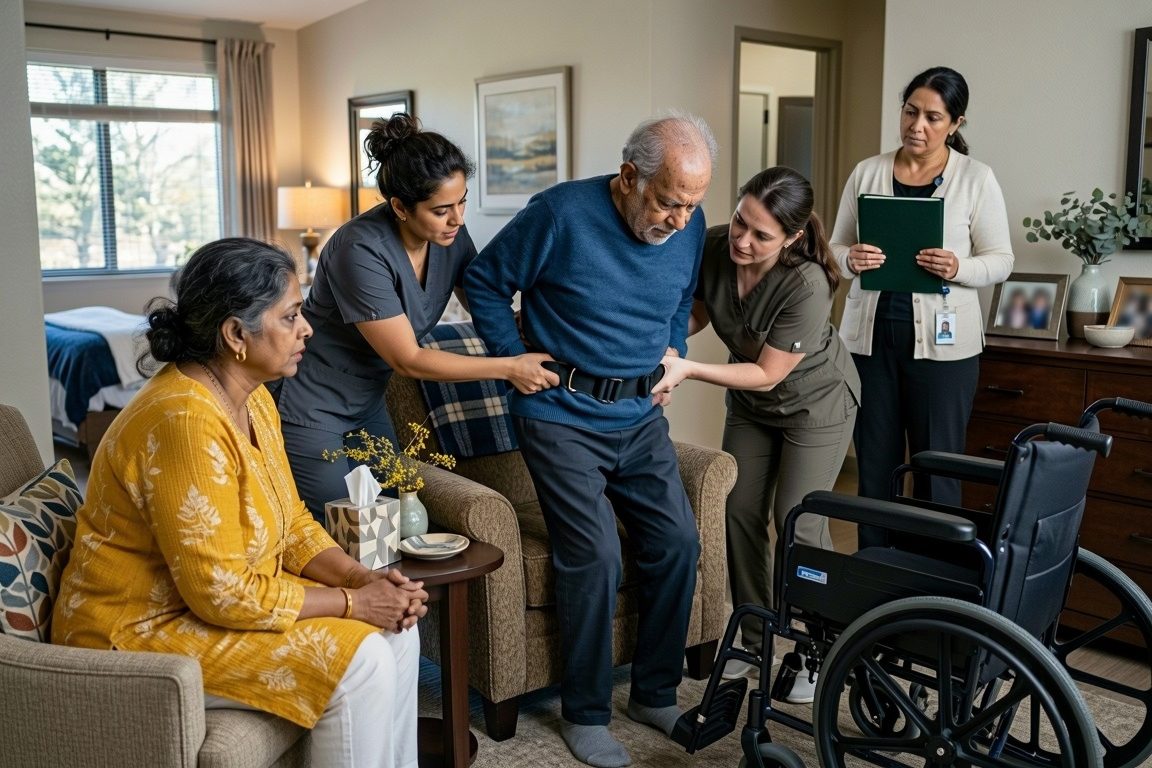
Step by step
What not to do
- Do not wait until a crisis forces the move. Many caregivers wait until a fall, a hospitalization, or a behavioral crisis, which makes the transition rushed and traumatic.Instead, start exploring options at least six months before you think you need them.
- Do not assume that a nursing home will accept your parent just because they have dementia. Some nursing homes are reluctant to take mobile residents with dementia because they fear elopement. Ask directly about their policy and whether they have a locked unit.
- Do not ignore the financial cliff. If your parent is in a private-pay memory care assisted living and their assets are running out, you may need to move them to a Medicaid-accepting nursing home before they become completely broke. Plan for this transition while they still have some resources to cover the move.
- Do not move your parent without visiting the new facility first. A facility that looks good on paper may have poor staffing, a depressing atmosphere, or a lack of dementia-specific programming. Tour in person, talk to other families if possible, and trust your gut.
- Do not try to hide the move or lie to your parent if they are still able to understand. This can cause confusion and distrust.Instead, use simple, positive language and focus on the benefits: ‘This new place has nurses who can help you with your leg so you can walk better.’
- Do not forget to take care of yourself during this transition. The guilt and stress of moving your parent again can be overwhelming. Talk to a counselor, join a caregiver support group, or lean on friends. You cannot be a good advocate if you are burned out.
Key points
- Start planning for a potential move to a nursing home at least 6–12 months before you think you need it.
- Memory care assisted living is private-pay; nursing homes can be paid by Medicaid, know the difference and plan financially.
- Not all nursing homes accept mobile dementia residents; ask about locked memory care units.
- A move is a major transition, prepare your parent with familiar items and a calm, reassuring approach.
- Monitor your parent closely after the move and request a care conference within the first month.
- Take care of your own emotional health; guilt and stress are normal, but you do not have to face this alone.
Videos
 MEMORY CARE ASSISTED LIVING FACILITY VS MEMORY CARE NURSING HOMEThis video directly compares the two settings, explaining payment differences, level of care, and when to consider a nursing home.
 Is It Time For Memory Care? 9 Signs That It Is Time To Consider ItHelps you identify the signs that your parent’s needs are exceeding what assisted living can provide, which is key to timing the move.
 Is It Time to Move Mom/Dad to Assisted Living? 4 Questions Families Can Answer TodayProvides a framework for decision-making that can be adapted for the move to a nursing home as well.
 Caregiver Guilt - Memory & Alzheimer's DiseaseAddresses the emotional burden of making a move, which is especially relevant when transitioning to a higher level of care.
2 more videos
 How Do I Know if a Parent Needs Memory Care or Assisted LivingExplains the difference between levels of care, helping you understand when a nursing home becomes necessary.
 What Level Of Care Does A Dementia Patient Need?Offers a broader perspective on assessing care needs, which is useful for planning the next step.
Background
Why This Transition Happens
Memory care assisted living is designed for people who need a safe, structured environment with help for dementia-related behaviors, but who are still relatively mobile and able to participate in daily activities. As dementia advances, your parent may develop new medical needs, like difficulty swallowing, frequent infections, or the need for skilled nursing care, that assisted living staff are not equipped to handle. Nursing homes (also called skilled nursing facilities) provide 24/7 medical supervision, on-site doctors, and therapies like physical, speech, and occupational therapy. The move is not a failure; it is a natural step in a progressive disease.
The Key Differences Between Memory Care in Assisted Living vs. Nursing Home
Memory care units in assisted living are typically private-pay (out-of-pocket) and do not accept Medicare or Medicaid for the daily care costs. In contrast, nursing homes can be paid for by Medicaid once your parent qualifies, which may be a deciding factor if your parent’s assets are limited. Nursing homes also have a higher staff-to-patient ratio and can manage complex medical conditions like bedsores, feeding tubes, or post-surgery recovery. However, nursing homes may be less willing to accept people with dementia who are still mobile and might wander, because they often lack locked units. Memory care units in nursing homes do exist, but they are not universal, you must ask specifically.
The Emotional and Practical Weight of the Decision
Moving your parent from one facility to another is a major transition that can be very difficult for them, especially if their dementia is advanced and they cannot understand the change. It can also be emotionally draining for you, the caregiver, as you may feel guilt or worry about uprooting them again. Yet staying in a place that cannot meet their needs is not kind either. Planning ahead, even a year or more before you think you need it, can help you avoid a crisis move and give you time to find a facility that is a good fit.
Practical tools
5
The ‘Needs vs. Wants’ Checklist
Create a simple two-column list. In the first column, write down your parent’s current needs (e.g., help with bathing, medication management, wandering prevention). In the second column, write what you want in a facility (e.g., a garden, a religious service, a certain location). Use this to compare facilities. For example: if your parent needs 24/7 nursing care, a nursing home is a must; if they just need memory care, assisted living may still work.
The ‘Three-Question’ Script for Facility Tours
When you call or visit a nursing home, ask these three questions:
Write down the answers. If they hesitate or give vague answers, that is a red flag.
The ‘Transition Kit’
Pack a bag with items that will comfort your parent and help them recognize their new room:
Also include a list of their medications, allergies, and emergency contacts to give to the nursing home staff on arrival.
The ‘Care Conference’ Template
Before the move, ask the current facility’s social worker for a discharge summary that includes your parent’s cognitive stage, behavioral triggers, and successful calming strategies. Give a copy to the new nursing home. After the move, request a care conference within two weeks. Use this template: ‘I want to review how Mom is eating, sleeping, and participating in activities. What concerns do you have? What can we do together to help her feel more at home?’
The ‘Financial Roadmap’ Worksheet
Create a simple timeline:
This helps you avoid a last-minute scramble.
Different situations
Lewy body dementia or Parkinson’s dementia
These types often involve more physical symptoms like stiffness, falls, and hallucinations. A nursing home with skilled nursing and physical therapy may be needed sooner. Also, some medications used for these conditions require close medical monitoring. Ask the nursing home if they have experience with Lewy body dementia.
Late-stage dementia (bedbound, non-verbal, needing feeding tube or hospice)
At this stage, the focus is on comfort and medical care. A nursing home with a palliative or hospice program is ideal. The move may be less disruptive if your parent is already in a facility that offers a continuum of care. Discuss with the current facility whether they can provide hospice in place or if a move is necessary.
Spouse vs. adult child caregiver
If you are the spouse, you may feel a stronger emotional bond and more guilt about moving your partner. It can help to involve a neutral third party, like a social worker or geriatric care manager, to help you see the situation objectively. If you are an adult child, you may need to coordinate with siblings, hold a family meeting to agree on the plan and divide tasks.
Parent is already in a facility (not at home)
If your parent is already in memory care assisted living, the transition to a nursing home is a transfer between facilities, not from home. This can be less disruptive because they are already used to a structured environment. However, you still need to prepare them emotionally and ensure the new facility has all their records. Ask the current facility to help with the transfer.
Medicaid planning
If your parent is already on Medicaid or will soon qualify, prioritize nursing homes that have a memory care unit and accept Medicaid. Some facilities have a limited number of Medicaid beds, so get on a waiting list early. Work with an elder law attorney to protect assets if needed, but be aware that transferring assets to qualify for Medicaid may have a penalty period.
For the doctor
4
- Ask your parent’s doctor: ‘Given my parent’s current health and dementia stage, what medical needs do you foresee in the next 6–12 months that might require a nursing home level of care?’
- Ask: ‘Are there any medications or treatments that would be better managed in a nursing home setting?’
- Ask: ‘If my parent has a fall or infection, will the current memory care facility be able to handle it, or would a nursing home be safer?’
- Ask: ‘Is my parent’s dementia advanced enough that a move would be more confusing than staying put? What is your opinion on the timing?’