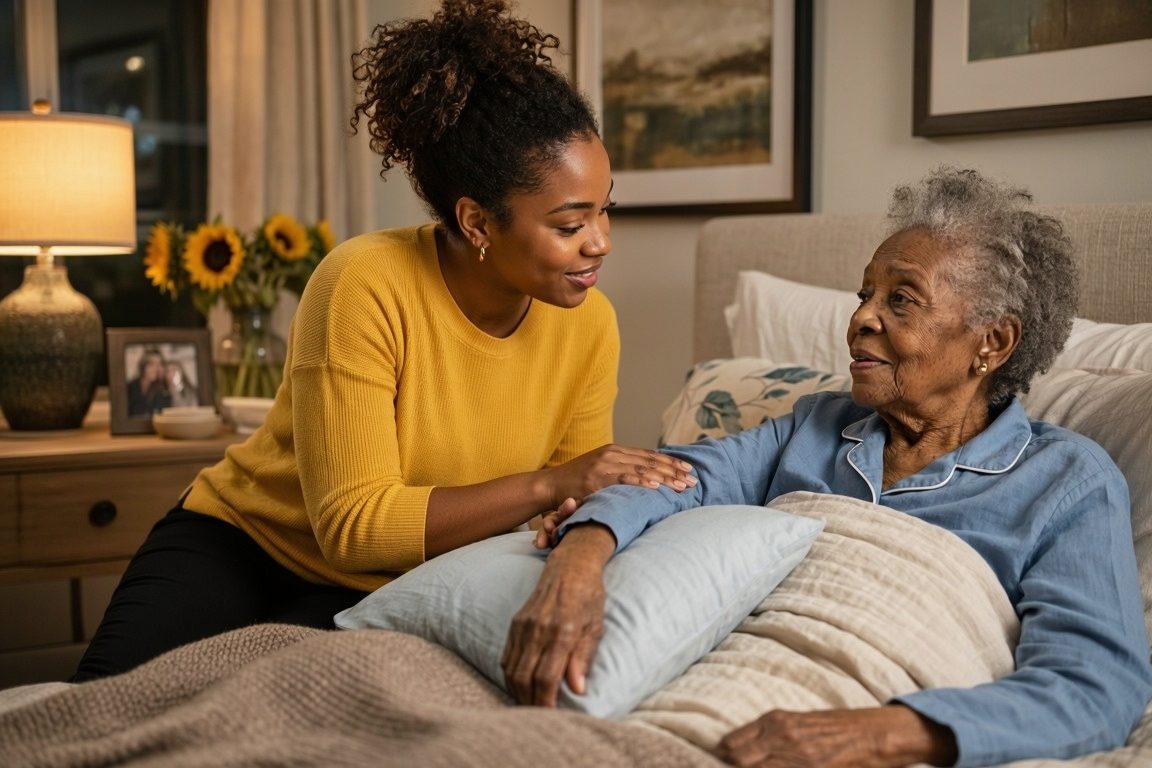
Step by step
What not to do
- Do not approach from behind or the side without warning. This can startle the person and trigger a fight-or-flight response.Instead, always approach from the front, slowly, and let them see you coming.
- Do not use a loud or demanding voice. Even if you are frustrated, a harsh tone can cause irritation or shutdown.Instead, speak softly, slowly, and with warmth.
- Do not grab or pull on the person’s arm or hand. This feels intrusive and can cause pain or resistance.Instead, use the hand-under-hand technique and let them feel your touch before you move.
- Do not rush through care tasks. Speed creates anxiety and confusion.Instead, plan extra time and move at the person’s pace, even if that means taking several minutes for a simple action.
- Do not ignore signs of distress like stiffening, turning away, or moaning. These are communications.Instead, pause, back off slightly, and try a different approach or a calmer tone.
- Do not assume the person understands your words. Even if they seem to listen, their brain may not process language well.Instead, pair your words with gentle, predictable touch and visual cues (like showing a washcloth before using it).
Key points
- Approach slowly from the front, at eye level, and wait before touching.
- Use a soft, low voice and simple phrases. Give the person time to process.
- Always use hand-under-hand touch, never grab or pull.
- Stop if the person shows distress. Pause, breathe, and try again gently.
- Pair words with visual cues and warm, predictable touch.
- Build a routine of comfort, not just tasks. A slow hand massage after care can build trust.
Videos
 Time with Teepa - Caregiving to Care Partnering, 22 Years Makes a Difference.Teepa Snow demonstrates the Positive Physical Approach and hand-under-hand technique, which are essential for Pearl state care.
 Join Us for Problem Solving with PACThis video offers practical problem-solving for challenging moments, including how to adjust your approach when the person is in a low-awareness state.
 An Interview with Dementia Expert and Educator Teepa SnowTeepa explains the GEMS states, including Pearl, and how to adapt your care to the person’s brain state.
 The Baffled Brain: Demystifying Dementia Episode 18 March 27, 2021This episode covers the science behind brain changes and why slow, gentle approaches work for people in late-stage dementia.
2 more videos
 Conscious Caregiving with L & L 'Dementia & Denial'Discusses the emotional side of caregiving and how your own calmness directly affects the person you care for.
 Aggressive Behavior in People with Dementia | Linda Ercoli, PhD | UCLAMDChatExplains why aggression often happens during personal care and how to prevent it with a slower, more respectful approach.
Background
What the Pearl State Feels Like for the Person
In the Pearl state, a person’s brain has lost much of its ability to guide and direct the body. They are largely unaware of what is happening around them, like being in a deep, dreamy fog. They can still notice voices, contacts, and gentle touches, but loud or sudden things can startle or irritate them intensely. Think of it as being in a very light sleep where you can sense someone near you, but you cannot fully wake up or respond. The person may not understand why you are there or what you want, so every physical interaction must be slow, predictable, and reassuring.
Why Your Approach Matters So Much
Because the Pearl brain is fragile, a quick or intrusive touch can cause a strong reaction, even aggression or withdrawal. But a quiet, calm approach with a stable touch can help the person feel safe and allow you to provide care without a fight. The goal is to bring the person out of themselves gently, not to force them into your world. This is not about rushing through a task; it is about partnering with the person in a way that respects their current reality. Your voice, your pace, and your touch are the tools that build trust.
Practical tools
6
Hand-Under-Hand Technique
Place your hand, palm up, under the person’s hand. Let them feel your warmth and weight before you move. This gives them a sense of control and reduces the feeling of being grabbed. Use this for guiding, washing, or just connecting.
Slow Approach Script
Say these exact words in a soft, low voice: 'Hello [name]. It is me, [your name]. I am here to help you. Take your time.' Pause for at least 10 seconds before doing anything else. Repeat if needed.
The 'Wait and Breathe' Pause
After you approach and before you touch, take three slow, audible breaths. This signals safety to the person and gives you both a moment to settle. It is a simple but powerful reset.
Visual Cue Card
Hold up a picture of a washcloth or a cup before you use it. For a person in Pearl state, visual cues can be easier to process than words. Point to the item and say, 'This is for your hands.' Then proceed slowly.
Warm Towel or Cloth
A warm, damp towel placed gently on the person’s hands or face can be calming and signal care. The warmth mimics a soothing touch and can help them relax into the task.
Environment Setup Checklist
Before approaching,
A calm environment supports a calm person.
Different situations
Late-stage Alzheimer’s (Pearl state)
The person may be completely nonverbal and unable to follow any verbal cues. Rely almost entirely on touch and your own calm presence. Use the hand-under-hand technique for everything. Expect very slow responses, sometimes minutes of stillness before a blink or a slight movement. Do not interpret lack of response as refusal; it may be the brain processing slowly.
Lewy body dementia with visual hallucinations
The person may be seeing things that are not there, which can make them more easily startled. Approach even more slowly and from the front. Speak in a low, rhythmic voice. If they seem to be looking at something you cannot see, do not argue. Instead, say, 'I see you are looking at something. I am here with you.' Then gently guide their attention back to you with a light touch on the arm.
Spouse caregiver vs. adult child caregiver
A spouse may have decades of shared history and the person may still recognize their voice and touch, even in Pearl state. Use that familiarity, speak in the same tone you always have. An adult child may need to be more patient, as the person may not recognize them. Do not take it personally. Use the same slow approach but add your name each time: 'It is your daughter, Sarah.'
In a facility or with a professional caregiver
If you are a professional caregiver, you may have less time, but the principles still apply. Build a routine: always use the same slow approach, the same soft voice, and the same hand-under-hand technique. Consistency creates safety. If the person is in a facility, coordinate with family to use the same phrases and touch style so the person experiences continuity.
Medicaid or limited resources
You do not need expensive tools. A warm washcloth, a soft blanket, and your calm presence are free. Focus on the approach and the touch. If you cannot get a therapy consult, watch free videos (like those listed below) and practice with a friend or family member. The key is your own practice, not products.
For the doctor
4
- If the person has a history of falls or fragile bones, ask the doctor or physical therapist about safe transfer techniques before attempting to move them.
- If the person shows signs of pain during touch (wincing, pulling away), discuss pain management options with their clinician. Do not assume it is just dementia-related behavior.
- If the person becomes aggressive or extremely agitated during care, ask the clinician about possible underlying causes like infection, medication side effects, or unmet needs (hunger, thirst, bathroom).
- If you are unsure about safe bathing or toileting techniques, request an occupational therapy evaluation through their doctor or hospice team. Medicare may cover this even for people on hospice.