Step by step
What not to do
- Do not raise your voice or argue. This adds more sensory stress and can escalate the agitation.Instead, use a soft, even tone and validate their feelings without correcting them.
- Do not use sudden movements or corner them. Approaching from behind or making fast gestures can startle them and trigger a fight-or-flight response. Move slowly, stay in their line of sight, and give them personal space.
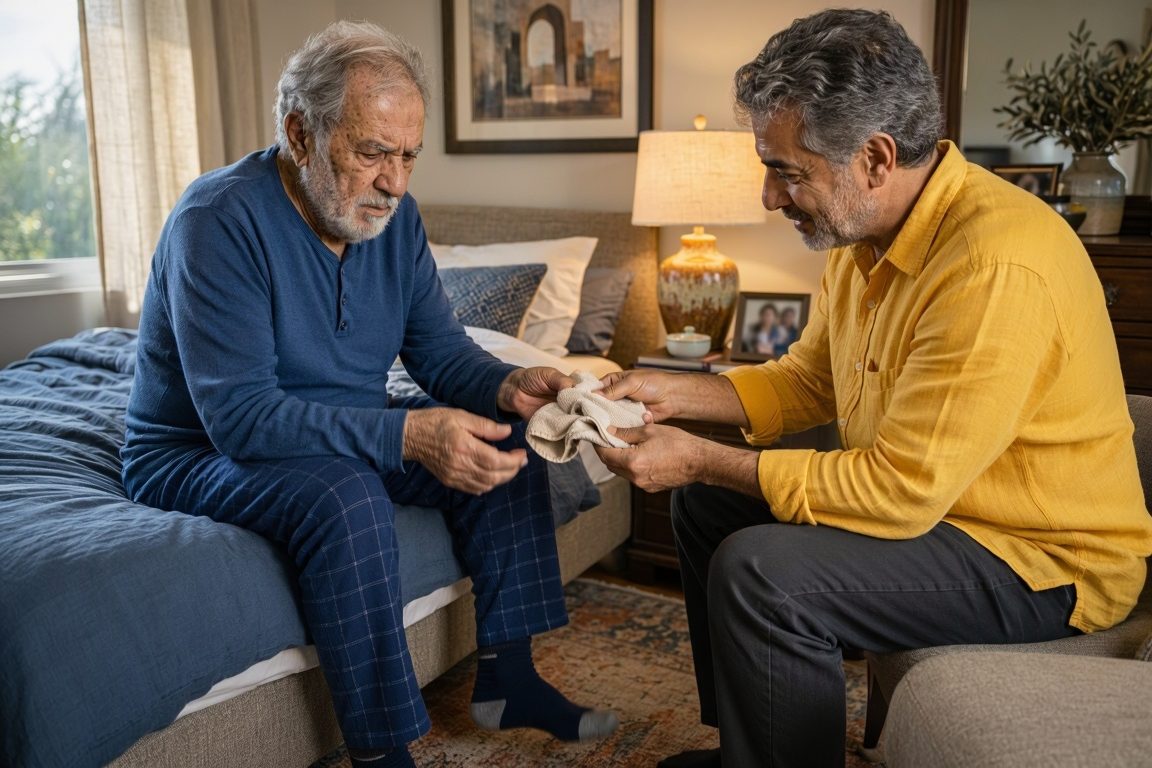
- Do not force touch or massage. If they pull away or seem tense, stop immediately. Forced touch can feel like an invasion and worsen agitation.Instead, offer a neutral object like a soft cloth or a stuffed animal for them to hold.
- Do not overwhelm with multiple sensory inputs at once. Playing music, diffusing oil, and handing them a toy all at the same time can overload their brain. Introduce one calming element at a time and see how they respond.
- Do not assume a scent or activity that worked once will always work. Preferences and tolerances can change day to day. Stay flexible and observe their cues. If something seems to agitate them, stop and try a different approach.
- Do not take their agitation personally. Their behavior is a symptom of brain changes, not a reflection of their feelings for you. Stay compassionate and remind yourself that they are struggling, not trying to be difficult.
Key points
- Your calm is the most powerful sensory tool. Breathe, soften, and lower your voice before you act.
- Always check for unmet needs (pain, thirst, hunger, bathroom) before trying other sensory techniques.
- Reduce sensory overload first: turn off the TV, dim lights, move to a quieter space.
- Gentle touch, like hand massage with lotion, can trigger a relaxation response and reduce agitation.
- Repetitive activities (folding towels, squeezing Play-Doh) soothe the brain by giving it a simple focus.
- Introduce one calming sensory input at a time, music, scent, or touch, and watch their reaction closely.
Videos
 Sensory Activities for Dementia: Simple Activities with Big BenefitsThis video shows practical, hands-on sensory activities like using lotion and Play-Doh, with explanations from an occupational therapist.
 The 4 R's of Responding to Dementia DistressOffers a clear framework (Recognize, Reassure, Redirect, Relax) that complements sensory techniques with a structured response.
 What is Sundowning Syndrome in Dementia and How Can You Manage It?Explains sundowning and gives sensory-friendly strategies like calming routines and environmental adjustments.
 Caregiver Strategies How to Deal with Dementia Care Challenges Sundowning, Anxiety, and RestlessnessCovers practical tips for using activities and touch to manage restlessness, especially in the late afternoon.
2 more videos
 What Stage Of Dementia Is Sundowning?Helps you understand when sundowning typically occurs and how sensory techniques can be adapted for different stages.
 How To Manage Sundowning: Unconventional Caregiver Tips For DementiaOffers creative, sensory-based tips like using weighted blankets and calming scents to ease evening agitation.
Background
What is happening in the brain during agitation?
Agitation in dementia often stems from a lowered threshold for expressing behavior. The brain's normal 'gating' or inhibitory mechanisms are damaged, so small triggers, like a loud noise, hunger, or confusion, can lead to a big reaction like pacing, yelling, or resisting care. This is not intentional; it is the brain's way of signaling distress when it cannot cope internally. Sensory overload from too much noise, bright lights, or clutter can push the person past their limit, while unmet physical needs like pain, thirst, or needing the bathroom can also spark agitation.
How do sensory techniques help?
Sensory techniques work by providing calming, predictable input that the brain can process without effort. Gentle touch, such as a hand massage or applying lotion, can trigger a relaxation response. Research shows that hand, head, and foot massage can effectively reduce agitation in the short term. Similarly, repetitive motions like kneading dough or folding towels soothe the dementia-affected brain by giving it a simple, rhythmic focus. Calming scents like lavender, used in a well-ventilated space, may also help, though individual responses vary. The key is to offer sensory input that feels safe and familiar, not overwhelming.
Why your own calm matters first
Before you try any technique, check yourself. People with dementia are highly attuned to your emotions, if you are frustrated, angry, or rushed, they will pick up on it and their agitation may worsen. Take a deep breath, lower your voice, and soften your body language. Your calm presence is the first sensory tool. Speak in a gentle, even tone, and avoid sudden movements. Remember, they are doing the best they can with a brain that is changing. Your steadiness can help them feel safe enough to settle.
Practical tools
6
The 'Calm First' Checklist
Before any sensory technique, run through this mental checklist:
Keep this list on your phone or a sticky note as a quick reminder.
Hand Massage with Lotion
Use a small amount of unscented or lightly lavender-scented lotion. Warm it in your hands first. With slow, firm strokes, rub the back of their hand, then each finger, then the palm. Use circular motions on the palm. The combination of cool lotion and deep pressure can trigger a relaxation response. Do this for 2-3 minutes, or as long as they seem comfortable.
Repetitive Activity Kit
Keep a small basket with items for repetitive, soothing tasks:
Introduce one item at a time and let them take the lead. The repetitive motion gives the brain a break from overwhelming thoughts.
Calming Scent Diffuser Setup
Use a cool-mist diffuser with 2-3 drops of lavender or chamomile essential oil in a well-ventilated room. Place it on a table nearby, not right next to them. Start with a short session (15-20 minutes) and watch for any signs of irritation. If they seem more agitated, turn it off and open a window. Always test a new scent when they are calm first.
Weighted Lap Blanket or Soft Object
A weighted lap blanket (about 5-10 pounds) can provide deep pressure that feels grounding. Alternatively, a soft stuffed animal or a small fleece blanket to hold can be comforting. Introduce it gently: 'Here, this might feel nice on your lap.' Let them touch it and decide. Do not force it on them.
Soothing Music Playlist
Create a playlist of familiar, gentle music from their younger years, soft jazz, classical, folk, or hymns. Keep the volume low so it is background, not a new stimulus. Use a simple speaker or tablet. Play it during calm times as well, so it becomes a cue for relaxation, not just a response to agitation.
Different situations
Lewy body dementia
People with Lewy body dementia are often very sensitive to touch and may find massage or lotion overwhelming. Use lighter, briefer touch, and always ask first. They may also have visual hallucinations, so avoid patterns or clutter that could be misinterpreted. Calming scents can be helpful, but test with extreme caution as they may be more sensitive to smells. Keep the environment simple and predictable.
Late-stage dementia
In late stages, the person may be less able to participate in active activities like folding towels. Focus on passive sensory input: gentle hand massage, soft music, a weighted blanket, or simply holding their hand. Speak in a very soft, slow voice. Watch for subtle signs of comfort like relaxed breathing or a softened face. Avoid any activity that requires their active cooperation.
Spouse vs. adult child caregiver
A spouse may have a deeper emotional bond and can use familiar touch and phrases from their shared history. An adult child may need to be more careful not to sound patronizing. Use phrases like 'Let's sit together for a bit' rather than 'Let me help you calm down.' Both should prioritize their own calm first, as the person will pick up on their stress.
In a facility or with paid caregivers
In a facility, the environment may be noisier and less controllable. Work with staff to create a calm corner with dim lighting, a comfortable chair, and a basket of soothing items. Share the person's favorite music, scents, and activities with the care team. Consistency across shifts is key, write down what worked and what did not. If the person is in a shared room, a personal music player with headphones may help.
Sundowning (late afternoon/evening agitation)
Sundowning often responds well to sensory routines. In the late afternoon, reduce stimulation: close curtains to soften changing light, turn off the TV, and offer a repetitive activity like folding towels. Use calming scents and soft music. Ensure they have had enough natural light during the day to help regulate their internal clock. A short, gentle walk earlier in the day can also help. Avoid caffeine and large meals late in the day.
For the doctor
5
- If agitation is severe, frequent, or includes aggression, ask the doctor about possible underlying causes like infection, pain, or medication side effects.
- Before using any essential oils, especially if the person has respiratory issues or allergies, check with their healthcare provider.
- If weighted blankets or other sensory tools seem to increase distress, stop use and consult an occupational therapist for guidance.
- If agitation is accompanied by sudden confusion, fever, or a change in alertness, seek medical attention immediately.
- Ask the doctor about non-pharmacological options first, but if medications are considered, discuss risks and benefits, especially for older adults.