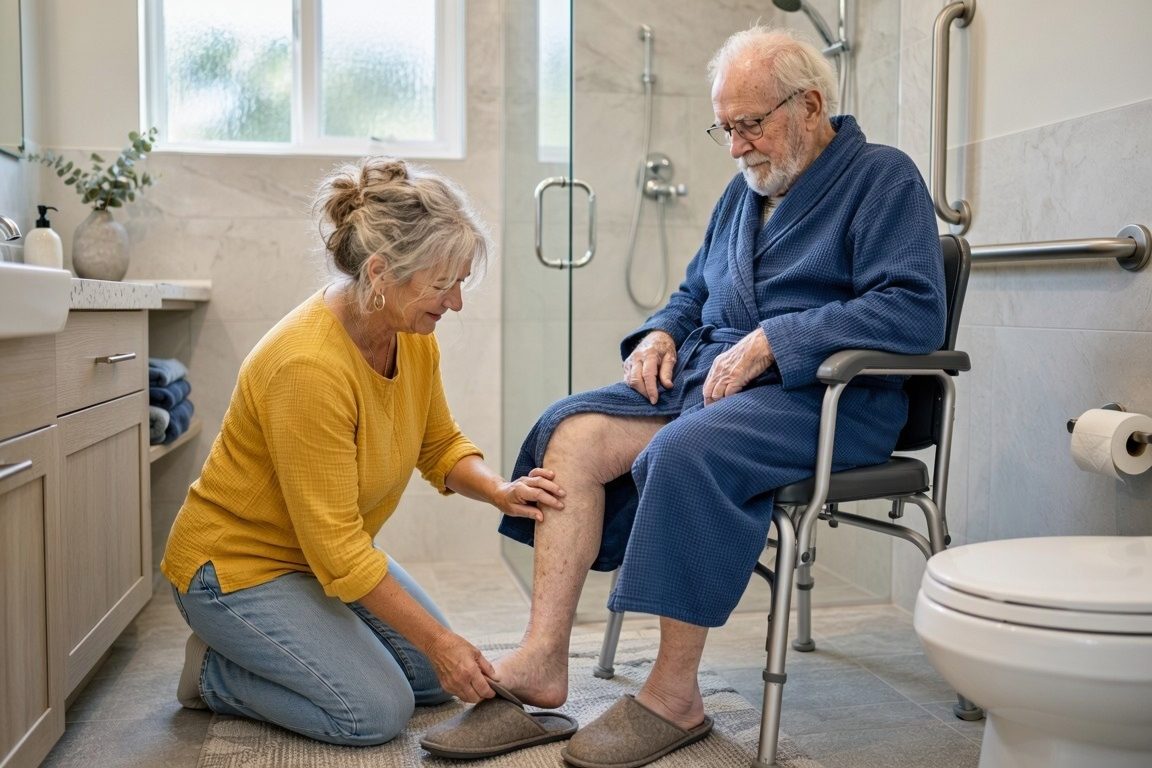
Step by step
What not to do
- Do not approach from behind or the side without warning. This can startle them into a fight-or-flight reaction, making them tense or aggressive.Instead, always approach from the front at eye level.
- Do not use a loud or demanding voice. This can irritate or overwhelm them, causing them to shut down further or react negatively. Use a soft, low, calm tone instead.
- Do not grab or pull their body quickly. Quick, intrusive touch can feel like an attack to a Pearl-state brain. Use slow, stable, hand-under-hand touch that lets them feel your support without force.
- Do not rush through tasks or expect quick responses. Rushing increases their confusion and resistance. Build in extra time for each step and wait patiently for them to process.
- Do not ignore signs of distress like pulling away, tensing up, or turning their head away. These are signals that they need more time or a different approach. Stop and adjust rather than pushing through.
- Do not assume they understand your words. Even if they seem to hear you, their brain may not process language. Use simple, one-step phrases and rely more on your touch and body language.
Key points
- Approach slowly from the front, at eye level, and wait for them to notice you before touching.
- Use a soft, low voice and simple phrases, avoid questions or demands.
- Use hand-under-hand touch to give them a sense of control and safety.
- Give extra time for processing, wait 10-15 seconds between each step.
- Stop if they show distress (pulling away, tensing up) and adjust your approach.
- Create a calm environment with dim lights and minimal noise to reduce overwhelm.
Videos
 Time with Teepa - Caregiving to Care Partnering, 22 Years Makes a Difference.Teepa Snow explains how the Positive Physical Approach has evolved over decades, including adaptations for different brain states like Pearl. This video gives context for why slow, calm touch works.
 Providing Support When Mobility Rules Are Not Regarded | Teepa's ClipsThis clip shows how to physically support someone who may not follow verbal instructions, common in Pearl state. It demonstrates hand-under-hand and gentle guidance techniques.
 An Interview with Dementia Expert and Educator Teepa SnowTeepa discusses the importance of adapting your approach based on the person's brain state, including how to read their cues and respond with patience.
 Conscious Caregiving with L & L 'Dementia & Denial'This video covers emotional aspects of caregiving that affect physical approach, like not taking resistance personally, which is crucial when caring for someone in Pearl state.

Background
What the Pearl State Feels Like
In the Pearl state, a person's brain is losing its ability to guide and direct their body. They may seem withdrawn, quiet, or unaware of what's happening around them. They can come in and out of this state, much like we drift in and out of sleep. Inside themselves, they are not ignoring you on purpose; their brain is simply not processing the world the way it used to. They can still notice voices, contacts, and gentle touches, but loud or demanding voices or quick, intrusive touches can startle, irritate, or even cause an intense reaction. Understanding this helps you see that their response is not personal, it's a brain state.
Why Physical Approach Must Change
For someone in a Pearl state, your physical approach is everything. Unlike earlier stages where you might use words or visual cues, here your body language, touch, and pacing do the real work. The person may not understand what you are saying, but they will feel your energy. If you approach quickly or with a loud voice, they may pull away or become agitated. If you approach quietly, calmly, and slowly with a stable touch, you can help them feel safe and more willing to accept help. This is not about being forceful; it is about being a calm, steady presence that guides rather than demands.
The Role of Patience and Processing Time
People in the Pearl state need extra time to process what is happening. They may not respond right away, or they may seem confused by your actions. Rushing them or repeating yourself loudly will only increase their distress. Instead, you must wait, sometimes several seconds or longer, for them to register your presence and your touch. This patience is not wasted time; it is the key to getting cooperation without resistance. Think of it as giving their brain the space to catch up to what their body is experiencing.
Practical tools
6
Hand-Under-Hand Technique
This is a core tool for Pearl state care. Instead of grabbing their hand or arm, slide your hand under theirs, palm-to-palm. This gives them a sense of control and reduces the feeling of being trapped. Use it for guiding, holding, or offering comfort.
Calm Voice Script
Prepare a few simple phrases to use repeatedly: 'I am here to help you.' 'Let's take our time.' 'I will wait for you.' 'You are safe.' Say these in a low, slow, rhythmic voice. Avoid questions that require a decision (like 'Do you want to get up?'), instead, state what you are going to do.
Stable Touch Checklist
Before any physical contact, check:
Use this mental checklist to keep your approach consistent and gentle.
Environmental Setup for Calm
A calm environment helps the person in Pearl state feel less overwhelmed and more receptive to your touch.
Patience Timer
Use a mental or physical timer (like a watch with a second hand) to remind yourself to wait at least 10-15 seconds after each step before moving on. This prevents you from rushing unconsciously.
Body Positioning Guide
Position yourself at their eye level, slightly to the side if needed, but always in their line of sight. Keep your body relaxed, shoulders down, and hands visible. Avoid looming over them, this can feel threatening.
Different situations
Late-stage dementia (Pearl state is common here)
In late stage, the person may be mostly non-responsive. Focus on slow, gentle touch and simple presence. Use hand-under-hand for comfort even if no task is needed. Avoid any sudden movements or loud noises. Tasks like bathing or dressing may need to be broken into very small steps with long pauses.
Middle-stage dementia (Pearl state can come and go)
The person may shift between Pearl and other states. Watch for signs they are 'coming out' of Pearl (e.g., making eye contact, moving slightly). When they are more alert, you can use a bit more verbal guidance. But always start with the Pearl approach and adjust as they respond.
Lewy body dementia
People with Lewy body dementia may have more fluctuations in alertness and can be very sensitive to touch. Use even lighter touch and longer waits. Avoid any pressure on their back or shoulders if they have rigidity or sensitivity. Watch for visual hallucinations, if they seem frightened, stop and wait until they settle.
Spouse vs. adult child caregiver
A spouse may be able to use more familiar touch (e.g., holding their hand) because of long-term intimacy. An adult child should be extra careful to approach with respect and not assume familiarity. In both cases, avoid any touch that feels controlling or parental.
In a facility or with professional caregivers
Professionals should use the same slow, calm approach but may need to coordinate with other staff to avoid multiple people approaching at once. Use a consistent routine so the person in Pearl state can learn to expect your gentle approach. Document what works (e.g., 'responds best to hand-under-hand and soft voice') for shift changes.
For the doctor
4
- If the person in Pearl state shows sudden changes in responsiveness or new resistance to touch, discuss with their clinician to rule out pain, infection, or medication side effects.
- If you are using any physical restraints or bed rails to prevent falls, ask the clinician about safer alternatives that do not increase agitation.
- If the person has a history of falls, ask the clinician about safe transfer techniques that minimize the risk of injury while using a gentle approach.
- If the person is on medications that affect alertness (e.g., antipsychotics or sedatives), discuss how these might impact their Pearl state and whether adjustments are needed.