Step by step
What not to do
- Do not argue or reason with them (e.g., 'You already took your pills' or 'We are at home'); instead validate and redirect.
- Do not use physical force or restraint; if they swing or hit, step back, give space, leave the room if needed, and try a different approach later.
- Do not assume behavior is intentional; remind yourself 'This is the disease, not the person' and look for the trigger.
- Do not make sudden environmental changes without warning; if a change is needed (e.g., removing a mirror), do it when they are not present and introduce slowly.
- Do not neglect your own well-being; accept help from friends and family, and consider respite care before burnout.
Key points
- Most difficult dementia behaviors are triggered by the environment, not by the person being 'difficult.' Changing the environment is the safest and most effective first step.
- Use the ABC model (Antecedent-Behavior-Consequence) to identify triggers. Keep a simple journal for a few days to spot patterns.
- Reduce visual confusion: cover mirrors, reduce clutter, use high-contrast colors, and disguise doors that lead to unsafe areas.
- Always check for unmet needs first: pain, infection, hunger, thirst, bathroom, or medication side effects. A new behavior often has a physical cause.
- Do not argue, confront, or use physical force. Validate the emotion, then redirect to a calming activity. Use distraction, not logic.
- Take care of yourself. Your stress affects your loved one. Use support groups, respite care, and self-care strategies to stay calm and effective.
Videos
 Simple Approach to Difficult Dementia BehaviorsThis video offers a straightforward, step-by-step method for assessing and responding to behaviors without medication. It reinforces the idea of looking for triggers and using environmental changes.
 Dementia Therapies and InterventionsProvides an overview of non-drug therapies, including environmental modification, and explains why they are preferred over medication. Helpful for understanding the 'why' behind the steps.
 How To Decrease Your Stress As A Dementia Caregiver Through Dementia CoachingFocuses on caregiver stress management, which is essential for implementing environmental changes calmly. A stressed caregiver cannot be an effective detective.
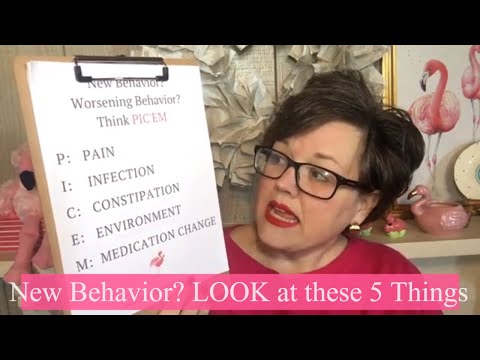 Dementia Behavior 5 Pro GAME CHANGING Assessment Tricks I Swear By & TeachTeaches practical assessment tricks for identifying hidden triggers like pain, infection, and environmental overload. Directly applicable to the ABC model discussed in this article.
2 more videos
 Management of Behavioral Disturbances in Dementia: Complexities in Antipsychotic UseExplains why antipsychotics are not a first-line treatment and why non-drug approaches (including environmental modification) should be tried first. Useful for understanding the risks of medication.
 3 Essential Dementia Care Shifts You Need to Make Today!Highlights the shift from focusing on 'behaviors' to focusing on 'situations,' which is the core philosophy of environmental modification. Encourages caregivers to change the environment, not the person.
Background
Why Environmental Changes Work When Words Fail
Think of it this way: if you were in a foreign country where you could not read the signs and everyone spoke a language you did not understand, you would feel anxious and frustrated too. Now imagine that someone kindly pointed to a picture of a restroom, handed you a glass of water, and led you to a quiet room. That is what environmental modification does. It removes the 'noise' and gives the person clear, simple cues. For example, if your loved one tries to leave the house repeatedly, it is not because they want to run away; it is because they see a door and their brain tells them 'that is the way out.' By disguising the door with a curtain, a mural, or even a simple sign that says 'closet,' you remove that trigger entirely. This is not trickery, it is compassionate care that meets the person where they are.
The ABC Model: A Simple Way to Understand Any Behavior
It is important to remember that the person with dementia is not trying to be difficult. They are trying to communicate a need, pain, hunger, fear, boredom, or overstimulation. Your job is to become a detective, not a disciplinarian. When you shift your focus from 'how do I stop this behavior' to 'what is this behavior telling me,' everything changes. You stop trying to change the person and start changing the situation. This is the single most powerful shift you can make as a caregiver. It reduces your stress, preserves your relationship, and often stops the behavior before it starts.
Practical tools
6
Behavior journal
Notebook or notes app to record time, trigger, behavior, and response for three days to spot patterns.
High-contrast items
Bright red toilet seat lid, dark plate on light placemat, or solid light-colored rugs to improve visibility and reduce confusion.
Door disguises
Full-length curtain, 'stop' sign, or paint matching the wall to camouflage unsafe doors; childproof doorknob covers or out-of-sight locks.
Adaptive eating tools
Plastic cup with tight lid, sippy cup or travel mug with straw; plates with raised edges or divided sections to prevent spills.
Locked automatic pill dispenser
Device that releases the correct dose at set times to prevent double-dosing and keeps medications out of sight.
Picture schedule
Images of a bed, toothbrush, plate, etc. posted on the wall to show the daily routine in a simple, visual way.
Different situations
Lewy Body Dementia (LBD)
People with LBD are extremely sensitive to medications and may have visual hallucinations. Environmental modifications are especially important here. Avoid using mirrors or reflective surfaces, as they can trigger hallucinations. Use soft, warm lighting (avoid fluorescent lights, which can worsen symptoms). Keep the room temperature comfortable, as temperature sensitivity is common. If hallucinations are present, do not argue; instead, say 'I do not see that, but I believe you do. Let us move to another room.' Always discuss any medication changes with your clinician, as LBD patients can have severe reactions to antipsychotics.
Late-stage dementia (bedridden, minimal communication)
Focus on comfort and sensory calming. Use a pressure-relieving mattress, keep the room at a consistent temperature, and use soft music or nature sounds. Speak in a calm, low voice even if they do not respond. Touch can be calming, hold their hand or gently stroke their arm. Reduce all visual clutter in the room. Use a nightlight to prevent disorientation at night. Check for pain regularly (facial grimacing, moaning) and discuss pain management with your clinician. Environmental changes here are about creating a cocoon of safety and comfort.
Spouse caregiver vs. adult child caregiver
As a spouse, you may feel a deep sense of loss and grief, and you may be more likely to take behaviors personally. Remind yourself that this is the disease, not your partner. Use the behavior journal to separate your emotions from the facts. As an adult child, you may feel torn between caregiving and your own family. Set clear boundaries: schedule specific times for caregiving and protect your own time. Use environmental modifications to make caregiving easier, for example, set up a medication dispenser that you can check remotely. Both roles benefit from joining a support group.
In a facility (memory care or nursing home)
You can still advocate for environmental modifications. Ask the staff to place familiar items from home in your loved one's room (photos, a favorite blanket). Request that the room be kept clutter-free and that the door be decorated to help them find it (a favorite color, a sign with their name). Ask about the facility's approach to non-drug behavior management. If your loved one is agitated, ask staff to try distraction, a walk, or a snack before considering medication. You can also bring in a small, safe fidget toy or a music player with headphones.
Medicaid or limited budget
You do not need expensive products. Use household items: a towel to cover a mirror, a cardboard box to block a door, a cup with a lid from a fast-food restaurant. Use free apps for calming music or nature sounds. Check with your local Area Agency on Aging for free or low-cost resources, such as respite care or home modification grants. Many Alzheimer's Association chapters offer free consultations. Focus on the simplest, cheapest changes first, like reducing clutter and using a nightlight.
For the doctor
5
- If your loved one has a sudden, severe change in behavior (e.g., new aggression, hallucinations, or confusion), rule out a urinary tract infection (UTI) or other infection. Ask your clinician for a urine test and a physical exam.
- If you suspect a medication is causing or worsening behaviors (e.g., a new drug, a dose change, or a drug interaction), do not stop or change the medication yourself. Discuss it with your clinician. Bring your behavior journal to the appointment.
- If non-drug approaches have been tried consistently for several weeks and the behavior is still dangerous (e.g., hitting, throwing things, or attempting to leave the house unsafely), ask your clinician about the risks and benefits of low-dose medications. Ask specifically about SSRIs like citalopram, which have some evidence for reducing agitation with fewer side effects than antipsychotics.
- If your loved one has Lewy body dementia, discuss the extreme sensitivity to antipsychotics. Ask your clinician for a medication review and a plan that prioritizes non-drug approaches.
- If your loved one has pain (e.g., from arthritis, a recent fall, or constipation), ask your clinician about a safe pain management plan. Pain is a common hidden trigger for behaviors.