Step by step
What not to do
- Do not force the PAC approach on staff without training and buy-in. If you just hand out a gem states chart and say 'use this,' staff will feel confused and resentful.Instead, invest in proper training and model the approach yourself. Start with a small pilot group and let their success inspire others.
- Do not use the gem states to label or limit participants. The goal is not to say 'She's an Amber, so she can't do that.' The goal is to say 'She's in an Amber state today, so I need to offer more support.' Avoid using the gem states as a fixed diagnosis; people can shift states based on mood, health, or environment.
- Do not ignore volunteers' own needs. Volunteers who are stressed or unsupported cannot give positive care. Make sure they have clear roles, regular breaks, and a chance to debrief. If a volunteer feels overwhelmed, pair them with a co-volunteer or give them a simpler task like greeting families instead of leading an activity.
- Do not expect perfection. PAC is a journey, not a destination. Staff and volunteers will make mistakes, they might argue with a participant or forget to use hand-under-hand. That's okay. In your PAC Circle, treat mistakes as learning opportunities. Say, 'What could we try differently next time?' This builds a culture of growth, not blame.
- Do not forget families. Families are part of the community too. Invite them to PAC workshops and share the gem states with them. When a family member says, 'Why can't she remember my name?', you can explain that she's in an Emerald state and needs more cues. This reduces family distress and builds trust.
- Do not try to change everything at once. Pick one or two practices to start, like using the gem states in daily handoffs or adding a PAC corner. Once those feel natural, add another. Rushing leads to burnout and resistance. As one PAC leader says, 'We're working hard to make a positive difference', one step at a time.
Key points
- Start small: train a core team, then expand. Use free videos and resources from Positive Approach to Care to build momentum.
- The gem states are a shared language that helps everyone, staff, volunteers, families, understand and adapt to each participant's changing abilities.
- Volunteers are engagement partners, not task-doers. Train them to 'Learn, Connect, Adapt' in every interaction.
- Use the '15-minute activity plan' to create flexible, low-prep activities that match different gem states.
- Create a PAC corner with visual reminders and a success story board to keep the philosophy alive daily.
- Hold monthly PAC Circles to share successes, discuss challenges, and build a learning community.
Videos
 PAC Community RelationshipsHear directly from Teepa Snow and her team about how PAC communities are built, including the types of settings (like adult day programs) and the reasons for change. Essential for understanding the 'why' behind the approach.
 An Interview with Dementia Expert and Educator Teepa SnowTeepa explains the core philosophy of PAC, including the gem states and the importance of creating safe, supportive spaces. Great for staff training and inspiration.
 Ep. 169: Until There's a Cure, There's Care™This episode reinforces the PAC message that care is the cure until a medical one is found. It emphasizes the role of community and positive engagement, perfect for volunteer orientation.
 Ep. 325: When Someone Living With Dementia Goes Missing, and What to Do Before It HappensPractical safety tips that align with PAC principles. Use this to train staff and volunteers on preventing elopement through proactive, positive strategies rather than restraint.
2 more videos
 Discussing Aging and Amazing with Founder Malika MooreHear from a community leader who has successfully built a positive care culture. Offers real-world examples of how to engage volunteers and create meaningful activities.
 Discover PHOTAVIA & MoreWhile not directly about PAC, this video shows how sensory and visual tools can be used in dementia care. Use it as inspiration for creating PAC-friendly activities that engage the senses.
Background
What Is a PAC Community and Why It Matters
A PAC-designated community is a group of people, staff, volunteers, families, and participants, who commit to using Teepa Snow's Positive Approach to Care in every interaction. This isn't just a training program; it's a culture shift. The goal is to move from a task-focused model (getting things done) to a relationship-focused model (understanding and supporting each person's unique abilities and needs). In an adult day program, this means every activity, meal, and conversation is designed to meet people where they are, using the 'gem states' framework to recognize the changing abilities of someone living with dementia.
Why does this work? Because when you stop trying to keep someone inside who loves the outdoors, and instead create a safe outdoor space, you reduce distress and increase joy. As one PAC leader explains, 'If you've always been someone who loved to be outside, then you going to the door and testing the door, rather than me saying come away from the door: I've got to create a safe space for you to go outside.' This shift from control to connection transforms the experience for everyone.
The Gem States: A Shared Language for Care
The gem states are a core tool in PAC. They describe the different stages of dementia using gemstones: Sapphire (early, clear thinking), Diamond (still sharp but needing more time), Emerald (losing some words but still engaged), Amber (needing more physical help and structure), Ruby (very late stage, needing full support), and Pearl (end of life). In an adult day program, staff and volunteers learn to identify which gem state a participant is in at any moment and adjust their approach accordingly. For example, someone in the Emerald state might need simple, one-step instructions and a calm tone, while someone in the Amber state might need hand-over-hand guidance during an activity.
This shared language helps everyone, from the program director to the volunteer, be on the same page. It reduces frustration because staff stop expecting a participant to 'remember' or 'behave' in ways that are no longer possible. Instead, they learn to 'figure things out to change how things are done so that it can be a better experience for everybody.' The gem states also help families understand their loved one's changing needs, reducing guilt and confusion.
How PAC Changes the Role of Volunteers and Staff
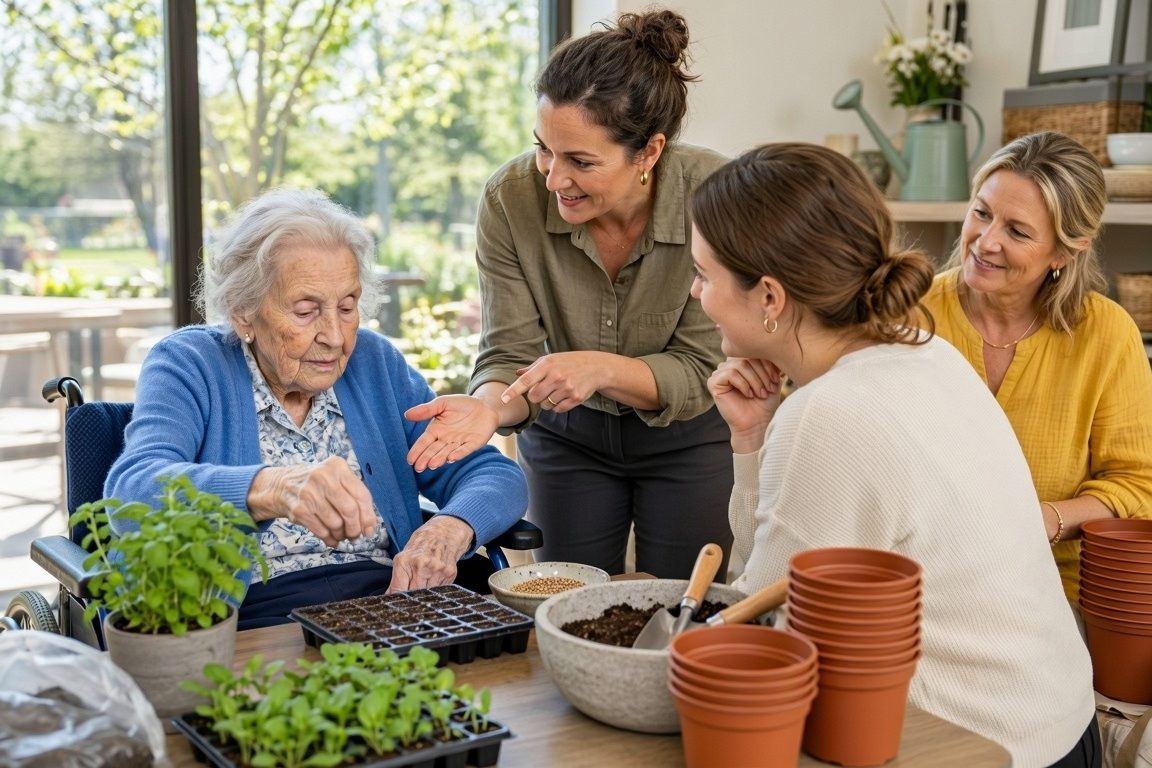
In a traditional adult day program, volunteers might be asked to lead an activity or help with meals. In a PAC community, their role shifts to 'engagement partners.' They learn to observe, connect, and adapt. For example, instead of reading a list of questions from a script, a volunteer might notice a participant who loved gardening and invite them to water plants. This person-centered approach requires training, but it's surprisingly simple to implement once the mindset shifts.
Staff trainers and volunteer coordinators play a key role here. They model the PAC approach in every interaction, with participants, families, and each other. They use positive language, avoid power struggles, and celebrate small wins. As one PAC leader notes, 'When you can figure out some of the components, like creating a safe space for someone to go outside, it makes no sense to keep trying to keep them inside.' This philosophy extends to how staff treat each other: with respect, patience, and a focus on strengths.
Practical tools
6
Gem States Wall Chart
Create a large, laminated chart showing the six gem states (Sapphire, Diamond, Emerald, Amber, Ruby, Pearl) with a brief description and a photo or icon for each. Post it in the staff break room and near the activity area. Use it during daily huddles: 'Who's in an Emerald state today? Let's plan activities that match.' This keeps the framework visible and usable.
The '15-Minute Activity Plan' Template
A one-page template with five slots: Music, Movement, Sensory, Story, and Snack. For a theme like 'Peru,' you fill in: Music = Peruvian flute music; Movement = chair yoga with arm circles; Sensory = touch a llama wool sample; Story = a two-minute story about Machu Picchu; Snack = quinoa crackers. Volunteers can pick any slot and run with it. If one volunteer is absent, another can 'hit play' on the same plan.
Hand-Under-Hand Technique Card
A small laminated card with step-by-step instructions and a photo: '
' Keep these cards in every volunteer's pocket. This technique reduces agitation and builds trust.
PAC Language Scripts for Common Situations
Print a small booklet with phrases for common challenges. For example: When a participant wants to leave: 'I see you want to go outside. Let's walk to the garden together.' When they are upset: 'You seem frustrated. I'm here with you. Let's take a deep breath.' When they can't find a word: 'Take your time. I can wait.' These scripts help volunteers feel confident.
Volunteer 'Gem State' Observation Log
A simple paper form with columns: Participant Name, Date, Observed Gem State, Activity Done, and What Worked. Volunteers fill one out after each shift. Review these logs weekly to spot patterns (e.g., 'Mrs. Lee is often in Amber after lunch, maybe she needs a quiet activity then'). This turns observation into action.
Monthly PAC Circle Agenda Template
A 30-minute meeting agenda:
Keep it positive and focused on learning. End with a round of appreciation.
Different situations
For a program serving mostly early-stage (Sapphire/Diamond) participants
Focus on complex, engaging activities like book clubs, discussion groups, and memory games. Volunteers can lead more independent tasks. Use the gem states to help participants understand their own changes (e.g., 'I'm in a Diamond state today: I need a little more time to find my words'). Avoid over-structuring; give choices and autonomy.
For a program serving mostly moderate-stage (Emerald/Amber) participants
Prioritize sensory and routine-based activities. Use music, gentle movement, and simple crafts. Volunteers should use hand-under-hand and offer one-step instructions. Create a calm, predictable environment with consistent staff and volunteers. Avoid sudden changes in schedule. Use the PAC corner to track daily states and adjust activities on the fly.
For a program with a mix of stages (common in adult day centers)
Use a 'choose your own adventure' activity model. Set up three stations: one for complex tasks (Sapphire/Diamond), one for sensory tasks (Emerald/Amber), and one for quiet rest (Ruby/Pearl). Volunteers guide participants to the station that matches their current state. This prevents boredom for higher-functioning participants and overwhelm for lower-functioning ones.
For a program with limited budget or staff
Start with free resources: watch Teepa Snow's YouTube videos as a team, use the gem states chart you create yourself, and focus on training one or two key volunteers who can then train others. Use the '15-minute activity plan' to reduce prep time. Apply for grants or partner with local dementia organizations to fund formal PAC training. Remember, small steps still make a big difference.
For a program serving diverse cultural or language communities
Translate the gem states and PAC scripts into the primary languages of your participants and families. Adapt examples to fit cultural norms (e.g., use familiar foods, music, and stories). Train volunteers from the same cultural backgrounds to build trust. The core PAC principles, respect, connection, adaptation, are universal, but the expression should feel familiar.
For the doctor
4
- If a participant's gem state seems to change rapidly or dramatically (e.g., from Diamond to Amber in one day), discuss with their clinician whether this could be a sign of infection, medication side effect, or other medical issue.
- Before implementing any new physical activity (like chair yoga or walking programs), check with a clinician or physical therapist to ensure it is safe for each participant's physical condition.
- If a volunteer or staff member expresses personal distress or burnout, encourage them to speak with a healthcare provider or counselor. The PAC approach supports caregivers too, but professional help may be needed.
- When using the Positive Aspects of Caregiving (PAC) scale as a measurement tool, discuss results with a clinician or researcher to interpret them correctly and avoid over-interpretation.