
Step by step
What not to do
- Don't paper over losses with toxic positivity; hold both pain and gains.
- Don't compare your journey to others', your loved one, relationship, and resources are unique.
- Don't isolate yourself; withdrawal is a fast route to burnout and blocked growth.
- Don't treat self-care as selfish, it is the foundation for any growth.
- Don't wait for caregiving to end to start growing; transformation happens in the struggle.
Key points
- Post-traumatic growth is real: caregiving can lead to new strengths, deeper relationships, and a greater sense of purpose.
- Focus on 'benefit-finding', actively looking for the positive gains alongside the losses, to lower depression and increase life satisfaction.
- Self-awareness and a positive mental attitude are skills you can practice; they make the caregiving journey easier and more meaningful.
- Self-care is not selfish; it is essential for your ability to provide good care and to experience growth.
- Seek support from others, including support groups and professional therapy, to process your experiences and fuel your growth.
- Growth happens in the middle of the struggle, not just after it ends. Start small, celebrate wins, and be kind to yourself.
Videos
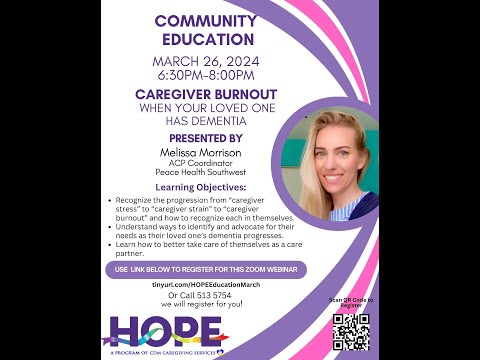 Caregiver Burnout when your Loved One has DementiaThis video helps you recognize the signs of burnout, which is a major barrier to post-traumatic growth. Understanding burnout is the first step to preventing it and creating space for growth.
 Dementia Caregiver Compassion Fatigue and ways to copeCompassion fatigue can drain your ability to see the positive gains. This video offers coping strategies that directly support your emotional resilience and capacity for growth.
 How Do Caregivers Cope With Loss Through Therapy?Therapy is a powerful tool for processing the losses of caregiving and creating the emotional space needed for post-traumatic growth. This video explains how it works.
 Gratitude is Important for Dementia Caregivers: 10 Reasons WhyGratitude is a core practice for benefit-finding and post-traumatic growth. This video gives you concrete reasons and motivation to incorporate it into your daily life.
2 more videos
 Quick Tips: When the Caregiving EndsPost-traumatic growth continues after caregiving ends. This video offers practical tips for navigating that transition and building a new life based on the strengths you have developed.
 Are You a Caregiver?This video helps you identify and validate your role as a caregiver, which is the first step in recognizing the value and potential for growth in your experience.
Background
What is Post-Traumatic Growth in Caregiving?
Post-traumatic growth (PTG) is the positive psychological change that can occur as a result of struggling with highly challenging life circumstances. For caregivers, this doesn't mean the pain or difficulty disappears. Instead, it means that alongside the hardship, you can develop new strengths, deeper relationships, a greater appreciation for life, and a renewed sense of purpose. As one source explains, trauma can be a slow, drawn-out process of things being really hard, but the result of that struggle can be 'the beautiful flower that comes from the growth' (source 1). It is about shifting from a survival brain back to a learning brain, using self-awareness to transform yourself.
Why Can Caregiving Lead to Personal Gains?
The caregiving role forces you to become an amazing crisis manager, developing skills that help you navigate stressful situations every day (source 2). You learn patience, strength, maturity, and a deeper awareness of yourself and your environment (source 16). This process of benefit-finding is a positive form of coping with stress. Caregivers who perceive more benefits from their role report lower levels of depression and greater life satisfaction (source 8). It is not about ignoring the losses, but about also seeing the gains: the resilience, the compassion, the ability to find meaning even in difficult circumstances. As one caregiver noted, 'our journey as a caregiver is a part of our growth and a path of our sanctification' (source 21), suggesting a spiritual or deeply personal transformation.
The Role of Self-Awareness and Mindset
A key part of this growth is developing a positive mental attitude. Reframing your situation in a positive light can make the caregiving days seem easier and better (source 4). This is not about toxic positivity or denying the hard parts. It is about consciously choosing to focus on what you have, rather than what you lack. As one expert puts it, 'it's not the disease that it and it's not what you lack or you don't have it's what you have you have to focus on it the glass has to be half-full at all times' (source 22). This shift in mindset is a skill you can practice, and it directly impacts your emotional well-being and your ability to provide care.
Practical tools
4
Gains List Mantra
Write 3–5 concrete gains from caregiving (e.g., ‘I learned patience,’ ‘I am a better problem-solver’) and repeat them when discouraged.
Future Self Letter
Write a letter from your future self one year ahead, describing the strengths you developed; read it when you need a reminder of your growth potential.
Support Network Map
Draw a map of people and resources (family, groups, therapist) and note next to each how they have or could support you.
Gratitude Jar
Keep a jar and slips of paper; drop in notes of beauty, kindness, or small victories. On hard days, pull some out to read.
Different situations
For adult children caring for a parent with early-stage Alzheimer's
Focus on building a new, adult-to-adult relationship with your parent. The growth here often comes from learning to set boundaries, communicate with compassion, and find meaning in reversing roles. Journal about the new skills you are learning in negotiation and patience. Your 'gains list' might include 'I am learning to be a better listener' or 'I am discovering a deeper appreciation for my parent's life story.'
For spouses caring for a partner with Lewy body dementia
The unpredictable nature of Lewy body dementia (with fluctuations in cognition, hallucinations, and movement issues) can feel especially traumatic. Your growth may come from developing incredible flexibility and crisis management skills. Your 'benefit-finding' might focus on moments of clarity and connection, however brief. Therapy is highly recommended to process the unique grief of losing your partner while they are still present. Your 'support network map' should include a neurologist and a support group specifically for Lewy body dementia.
For caregivers in the late stages of dementia (in-home or facility)
Growth at this stage often shifts from active problem-solving to finding meaning in presence and compassion. Your gains might include learning to find peace in small moments of comfort, developing deep patience, and discovering a profound sense of love that transcends verbal communication. Your 'gratitude jar' might hold notes about a gentle touch, a shared song, or a moment of calm. Self-care becomes even more critical to prevent burnout and compassion fatigue.
For caregivers who are also managing their own health issues or financial strain
Your growth may be deeply tied to resilience and resourcefulness. Focus on the skills you are developing in advocacy, budgeting, and navigating complex systems. Your 'gains list' might include 'I am learning to ask for help' or 'I am becoming a stronger advocate for myself and my loved one.' Consider connecting with a social worker or financial counselor as part of your support network. Professional therapy can help you process the compounded stress.
For the doctor
4
- Ask your doctor: 'Given my caregiving stress, what are safe and effective ways for me to manage my own mental health, including any symptoms of depression or anxiety?'
- Ask your doctor: 'Are there any local or online caregiver support programs or counseling services you would recommend for my specific situation?'
- Ask your doctor: 'How can I best monitor my own physical health (sleep, blood pressure, immune function) given the demands of caregiving, and what signs should I watch for that indicate I need a break?'
- Ask your doctor: 'If I am feeling overwhelmed or having thoughts of harming myself or my loved one, what is the emergency plan or resource I should use?'