Step by step
What not to do
- Don't assume a male resident will be fine with female caregivers for intimate tasks. Always ask the resident about his preferences and offer to arrange a male aide.
- Don't let quiet male residents become invisible. Make a point to engage him in conversation, ask about his interests, and advocate for activities he enjoys.
- Don't blame individual staff for the systemic gender imbalance. Treat them as partners, and you will get much further.
- Don't assume female residents are unaffected by the gender dynamics. Ask the facility how they handle these situations and ensure safety and dignity for everyone.
- Don't sacrifice your own financial security to provide unpaid care without a plan. Talk to a financial planner about how to protect your future while still being there for your loved one.
Key points
- About 80% of nursing home residents are women, primarily because women live longer than men and often outlive their spouses, leaving them without a home caregiver.
- Over 90% of paid direct care staff in facilities are women, reflecting historical gender roles and low wages that attract a predominantly female workforce.
- Male residents may feel embarrassed or resistant to intimate care from female staff; always ask about preferences and request a male caregiver if needed.
- Female family caregivers face significant financial risks, including lost wages and reduced retirement savings; plan ahead and share the caregiving load.
- Advocate for person-centered care that respects gender identity and preferences, using tools like the VIPS framework and regular communication with staff.
- If you see gender-based neglect or discrimination, document it and contact your state's long-term care ombudsman for help.
Videos
 Ep. 203: Let's Talk About The Imbalance of Female versus Male Care Partners in Care FacilitiesThis video directly addresses the gender imbalance you're asking about, with expert commentary from Teepa Snow. It explains the statistics and offers insights into why this happens and what it means for care.
 The Story Behind the Film 'No Country for Old People'This video explores the broader societal context of aging and care, including how gender roles shape the experience of growing old in America. It provides a human perspective on the statistics.
 Being a Working Caregiver in the Sandwich GenerationThis video focuses on the challenges faced by women who are caring for both children and aging parents, which is a key part of the gender imbalance story. It offers practical advice for balancing work and care.
 Ep. 211: Are We as a Society Talking About Dementia Enough?This video discusses the stigma and lack of conversation around dementia, which affects both male and female residents. Understanding this helps you advocate more effectively.
2 more videos
 The Baffled Brain Demystifying Dementia Episode 30 June 26 2021This episode covers how dementia affects behavior and communication, which is crucial for understanding why a male resident might react negatively to female staff. It offers practical tips.
 I Made a Promise: Coping with Caregiver Guilt and Finding PeaceThis video addresses the emotional toll of caregiving, especially for women who feel guilty about placing a loved one in a facility. It helps you process those feelings and find peace.
Background
The Resident Side: Why Women Outnumber Men in Care Facilities
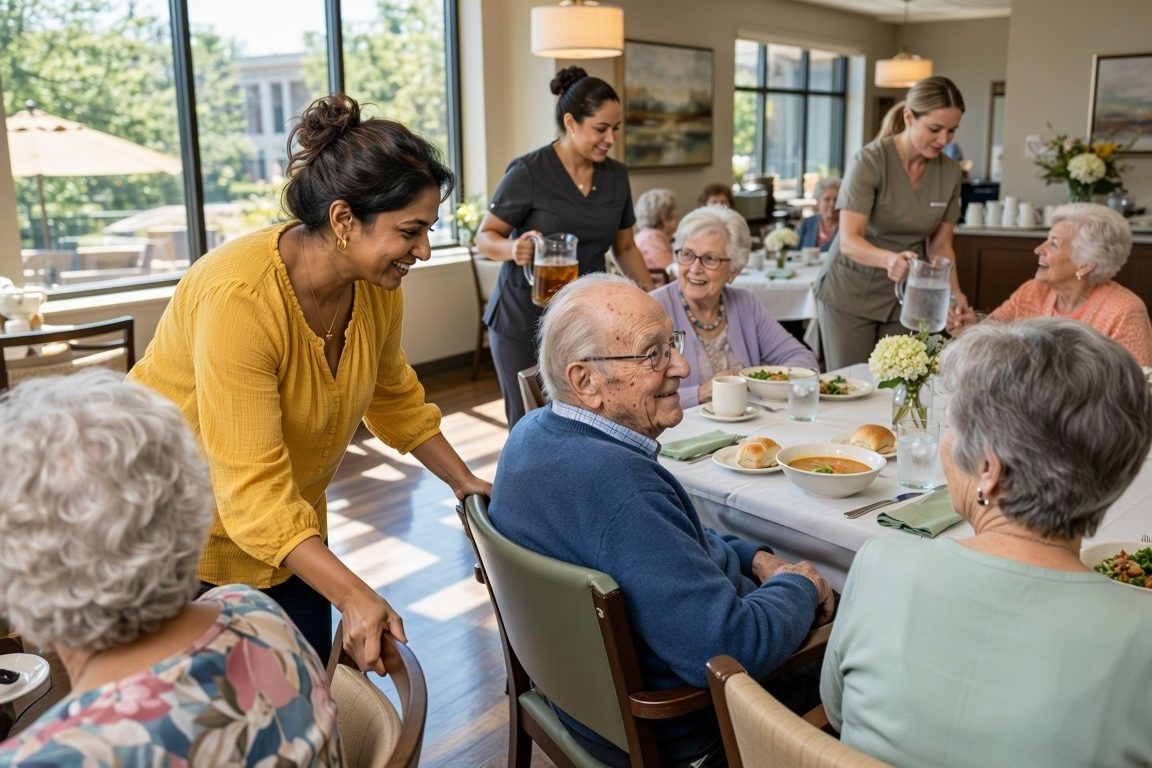
The most straightforward reason is that women live longer than men on average. In the United States, about 80% of nursing home residents are women, and this closely follows mortality patterns, women simply outlive men, so they are more likely to reach an age where they need facility-based care. As one dementia care expert put it, the imbalance 'generally follows the mortality rates.' For every 100 men in long-term care, there are approximately 425 women, four times the number. This isn't a coincidence; it's a statistical reality of aging.
Beyond longevity, women are also more likely to enter a facility because they often outlive their spouses and may not have a partner at home to provide care. Men who develop dementia or other conditions are more frequently cared for at home by a wife or daughter until the situation becomes unmanageable, often triggered by incontinence or the need for intimate care that a male caregiver feels unequipped to handle. In contrast, women who become widowed or who have no available family caregiver may have no choice but to move into a facility sooner. This means the resident population skews female not just because women live longer, but because the social and caregiving structures around them are different.
The Staff Side: Why Most Care Workers Are Women
The workforce in senior care facilities is overwhelmingly female, often 90% or more, and this is a direct reflection of broader societal patterns. Caregiving has historically been seen as 'women's work,' and the low pay, limited benefits, and demanding physical and emotional labor of direct care roles (like certified nursing assistants and home health aides) attract a workforce that is predominantly women, many of whom are from marginalized communities. The demand for paid care providers is expected to grow from 3.27 million in 2014 to 4.56 million by 2024, yet the pool of women aged 25–64, the typical demographic for these jobs, is not growing at the same rate. This creates a chronic staffing shortage that affects the quality of care.
Additionally, family caregivers, the unpaid backbone of long-term care, are also mostly women. Studies show that about two-thirds of family caregivers are women, often daughters or spouses, and they average 49 years of age. One-third have been providing care for more than five years, and most give 20 to 39 hours of unpaid care each week. This unpaid labor often forces women to leave the workforce or reduce their hours, which has long-term financial consequences: by retirement age, a woman may have earned over $1 million less than a man who worked continuously. So the gender imbalance in facilities is not just about who lives there, it's about who does the work, both paid and unpaid.
What This Means for Your Loved One's Care
This gender imbalance has real implications for the quality of care your family member receives. Because most staff are women, male residents may feel uncomfortable with intimate care tasks like bathing, dressing, or toileting, especially if they are cognitively aware and embarrassed. Conversely, female residents may feel more at ease with female staff, but they may also miss having male companionship or conversation. The lack of male staff can also mean that male residents' emotional and social needs are less understood or addressed.
Furthermore, the financial pressures on facilities, driven by low Medicaid reimbursement rates and the profit motives of corporate owners, mean that staffing levels are often inadequate. As one expert noted, 'federal minimum staffing standards would establish a clear standard,' but currently the rule is vague: facilities must have 'sufficient staff' to meet residents' needs, which is hard to enforce. This can lead to rushed care, missed needs, and a lack of person-centered attention. Understanding this context helps you advocate more effectively for your loved one, whether you're asking for a male caregiver for a male resident or pushing for more consistent staffing.
Practical tools
4
The 'Preferences Conversation' Script
A short set of questions to ask your loved one and the facility staff so that gender-sensitive care is built in from the start.
Visit Observation Checklist
A one-page list to bring on each visit, covering:
Note the date and any concerns so you can spot patterns over time.
Facility Evaluation Questions
Key questions to ask when touring or comparing facilities: '
' Write down the answers so you can compare facilities honestly.
Pre-Move-In Conversation Guide
A gentle script for talking with your loved one about the move and the gender reality: 'Most of the people who live here are women, and most of the staff are women too, that is just how most places like this are. The good news is lots of company and conversation. If anything ever feels uncomfortable or wrong, please tell me or a staff member, and we will fix it together. You won't be alone in this.'
Different situations
If your loved one is a male resident in a facility
Prioritize requesting a male caregiver for intimate care tasks. If the facility cannot provide one, ask for a schedule where the same female caregiver always helps him, so he can build trust. Also advocate for male-friendly activities and social groups. Be aware that he may feel lonely or out of place; visit frequently and bring male friends or family members to engage with him.
If your loved one is a female resident in a facility
Use the female-majority environment to your advantage. Encourage her to join women's groups and make friends. However, also watch for signs that she feels unsafe around male residents with behavioral issues, report any concerns immediately. If she misses male companionship, ask if there are male volunteers or if she can participate in co-ed activities like dances or movie nights.
If you are a female family caregiver (daughter or spouse)
Recognize that you are part of the statistic. Protect your own health and finances. Set boundaries on how many hours of care you provide each week, and ask siblings to share the load. Use the '5050 rule' approach: divide tasks equally among siblings, not just by who lives closest. Also, talk to a financial planner about the long-term impact of caregiving on your career and retirement.
If your loved one has dementia and is in a facility
Gender preferences may change as dementia progresses. A man who was once comfortable with female staff may become agitated or confused during bathing. Reassess regularly. Use the 'Positive Approach to Care' techniques: approach from the front, use a calm voice, and offer choices (e.g., 'Do you want to wash your face or your hands first?'). If incontinence becomes an issue, male residents may need a male caregiver to feel less ashamed.
If the facility is a memory care unit versus a general nursing home
In memory care, the gender imbalance may be less pronounced because more men with dementia are placed in these units. However, staffing is still mostly female. Advocate for specialized training for staff on how to handle male residents' needs, especially around aggression or wandering. Also, ask about the facility's policy on intimate relationships between residents, this can be a sensitive issue in mixed-gender memory care.
For the doctor
4
- Ask your loved one's doctor: 'Given my loved one's gender and cognitive status, are there any specific health risks or care needs I should be aware of in a facility setting?'
- If your loved one is male and has a history of prostate issues or urinary incontinence, ask: 'What is the best way to manage this in a facility where most staff are female? Should we request a male aide?'
- If you are a female family caregiver experiencing stress, ask your own doctor: 'I am providing significant care for a family member. What are the signs of caregiver burnout, and how can I protect my own health?'
- If your loved one has dementia and shows agitation during personal care, ask: 'Could this be related to discomfort with the caregiver's gender? Are there medications or non-drug approaches that might help?'