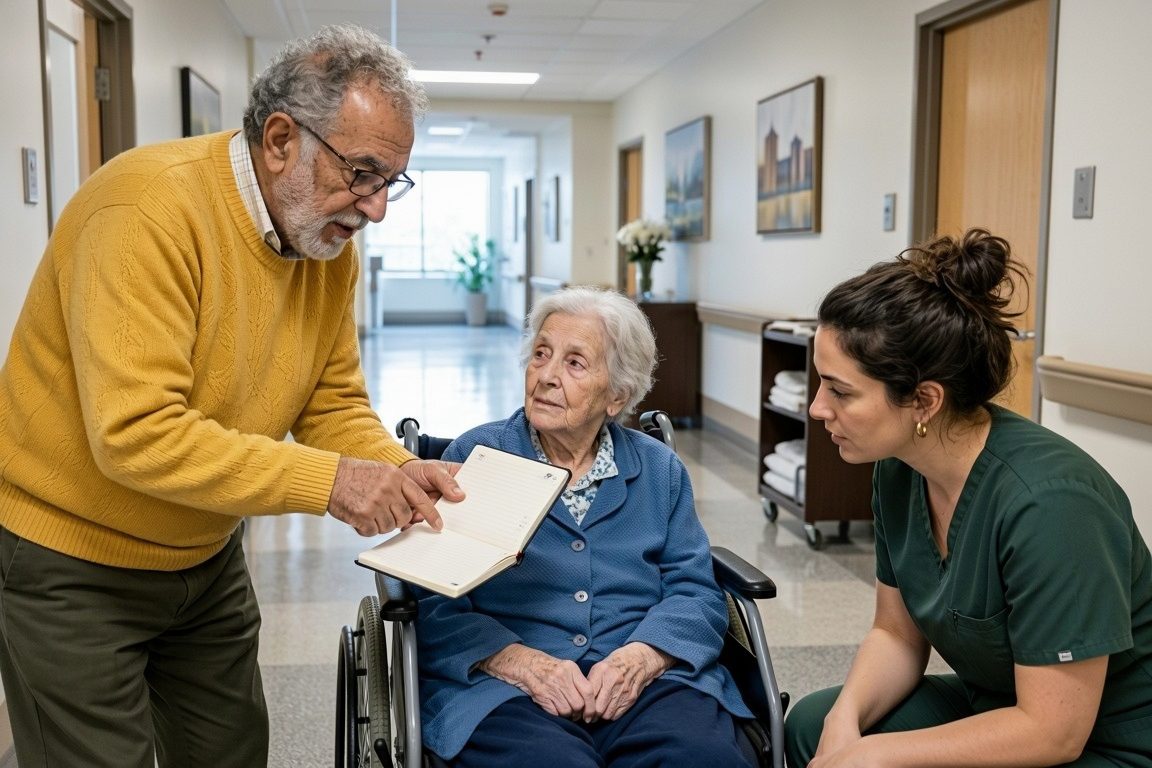
Step by step
What not to do
- Do not assume all staff are trained in dementia care; many receive minimal training. Proactively share what works and ask what training the facility provides.
- Do not blame or yell at staff; an adversarial approach makes them defensive. Use 'I' statements: 'I noticed Mom seems more agitated after lunch. Can we try something different together?'
- Do not accept medications as the first-line response to behaviors; antipsychotic overuse is common in understaffed facilities. Ask: 'What non-drug approaches have you tried first? Can we do a behavioral trial before starting a new medication?'
- Do not ignore your own burnout; exhausted caregivers are weaker advocates. Build support through a support group, respite care, or counseling. The Alzheimer's Association 24/7 Helpline (800-272-3900) is a good starting point.
- Do not assume a good reputation protects a facility from workforce shortages; even top-tier facilities struggle. Always ask about current staffing and turnover, and trust honest facilities over those claiming everything is fine.
- Do not try to do everything yourself. Recruit other family members to share the advocacy load. Consider hiring a geriatric care manager if you live far away or feel overwhelmed.
Key points
- The dementia care workforce is severely understaffed and undertrained, especially in nursing homes and assisted living facilities. This leads to inconsistent care and over-reliance on medications.
- Build a collaborative relationship with facility staff, appreciation and clear communication go a long way in improving care for your loved one.
- Advocate for non-drug approaches first. Create a behavior log and share what works at home to reduce the need for antipsychotics.
- Use simple tools like a 'Getting to Know Me' sheet and a staff appreciation kit to improve care quality and staff morale.
- Take care of yourself. Caregiver burnout is real, and you cannot advocate effectively if you are exhausted. Seek respite and support groups.
- Ask specific questions about staffing ratios, turnover, and dementia training when choosing a facility. A facility that is transparent about challenges is often a better partner.
Videos
 How Do Healthcare Providers Address Caregiver Burnout in Dementia Care? | TestThis video explains how healthcare providers can help you manage burnout, which is critical when you are dealing with workforce shortages and need to stay strong as an advocate.
 Why Do Dementia Caregivers Experience Burnout And Depression? - TestUnderstanding the reasons behind caregiver burnout helps you recognize the signs in yourself and take action before it affects your ability to care for your loved one.
 Agitation and Alzheimer’s: Strategies for Managing Behavioral and Psychological Symptoms of DementiaThis video provides non-drug strategies for managing agitation, which is especially important when staff are undertrained and may default to medications.
 Revolutionizing Dementia CareThis video explores innovative approaches to dementia care that can be implemented even in understaffed settings, giving you ideas to advocate for better practices.
2 more videos
 Caregiver Stress and Depression, Dr. Helen Lavretsky | UCLAMDChatDr. Lavretsky discusses the emotional toll of caregiving and offers evidence-based strategies to protect your mental health, which is essential when navigating workforce shortages.
 Management of Behavioral Disturbances in Dementia: Complexities in Antipsychotic UseThis video explains the risks of antipsychotic use and the importance of non-drug approaches, helping you have informed conversations with facility staff and doctors.
Background
Why Is There a Shortage of Dementia-Capable Workers?
The number of people with Alzheimer’s and other dementias is growing rapidly, by 2025, an estimated 7.1 million Americans will have Alzheimer’s, up from 5.5 million today. At the same time, the workforce that provides direct care, certified nursing assistants, personal care aides, home health aides, and nurses, is not keeping pace. Many of these workers face low pay, high stress, physical injury, and emotional burnout, leading to high turnover and difficulty attracting new staff. Rural areas are especially hard hit, as younger workers often move to cities for better-paying jobs, leaving care homes in the countryside struggling to fill positions.
Direct care workers receive highly variable training in dementia care. Some get excellent preparation, but many receive little to no specialized education on how to handle the behavioral and psychological symptoms of dementia, such as agitation, aggression, or wandering. This lack of training can lead to staff feeling unprepared and frustrated, which increases the risk of burnout and workplace violence. The result is a workforce that is both too small and not adequately equipped to meet the complex needs of people living with dementia.
How Does This Shortage Affect Your Loved One’s Care?
When there are not enough trained staff, your loved one may experience inconsistent care, with different aides coming in each shift. This lack of continuity can be very disorienting for someone with dementia, who relies on familiar faces and routines to feel safe. Staff who are overworked and undertrained may rely more on medications, like antipsychotics, to manage difficult behaviors, rather than using non-drug approaches that are often safer and more effective. You may also notice that care plans are not personalized; instead, a one-size-fits-all approach is used, which does not address your loved one’s unique needs, preferences, or stage of dementia.
As a family caregiver, you may find yourself stepping in to fill the gaps, providing more hands-on care, advocating for better treatment, or even educating staff about your loved one’s specific needs. This can add to your own stress and risk of burnout. The emotional, financial, and physical toll on families is substantial, with 70% of the lifetime cost of dementia care being borne by families through out-of-pocket expenses or unpaid care. Understanding these challenges is the first step toward developing strategies to navigate them.
Practical tools
4
Getting to Know Me Sheet
A one-page document with photo, preferred name, favorite foods and activities, communication style, and calming strategies.
Three Wishes Conversation Starter
Ask staff: 'If you could wave a magic wand and change one thing about care delivery here, what would it be?' Then: 'What is one thing I can do to make your job easier when caring for my loved one?' Reveals practical solutions and builds partnership.
Non-Drug Behavior Log
For 1–2 weeks, record time of concerning behavior, antecedents (e.g., noise, shift change, missed meal), what was tried, and what worked. Bring patterns to care conferences to turn vague concerns into actionable data.
Care Conference Prep Sheet
Before quarterly/annual care conferences, list:
Keeps the meeting focused on your priorities.
Different situations
If your loved one is in a nursing home vs. assisted living
Nursing homes often have higher staff-to-resident ratios and more regulatory oversight, but they may also have higher turnover. In assisted living, staff may have less dementia-specific training. In both settings, ask about the staff’s experience with dementia. In nursing homes, you can request a meeting with the facility’s social worker or director of nursing to discuss staffing concerns. In assisted living, you may need to be more proactive in educating staff about your loved one’s needs, as they may not have a dedicated dementia unit.
If you are a spouse vs. an adult child caregiver
Spouse caregivers often live with the person and may be more physically and emotionally drained. You may need to prioritize your own health and seek respite care early. Adult children may have more energy but also face competing demands like work and children. Both roles can benefit from joining a support group, spouses may find peer support especially helpful, while adult children may need help navigating legal and financial issues. In both cases, do not hesitate to ask the facility for a family care conference to discuss your concerns.
If your loved one has advanced dementia
In late-stage dementia, the focus shifts to comfort and quality of life. Staff shortages can lead to missed opportunities for pain management, positioning, and hydration. Advocate for a palliative care consult or hospice referral, which brings an extra layer of support. Ask the facility: 'How do you ensure that residents who cannot communicate are still assessed for pain?' Request that a pain scale be used regularly. Also, ask that staff be trained in hand-feeding techniques to reduce the risk of aspiration.
If you are relying on Medicaid
Medicaid reimbursement rates are often lower than private pay, which can mean fewer staff and less training. If your loved one is on Medicaid, you may need to be a more assertive advocate. Ask the facility: 'What is your Medicaid-to-private-pay ratio? How does that affect staffing?' You can also contact your state’s Long-Term Care Ombudsman program for help resolving issues. Consider joining a family council if the facility has one, this gives you a collective voice.
If your loved one has behavioral symptoms like aggression or wandering
These behaviors are among the most challenging for staff and often lead to medication use. Be proactive: provide the facility with a detailed behavior log and a list of effective non-drug strategies. Ask for a care plan meeting specifically to address behaviors. Request that staff be trained in techniques like redirection, validation therapy, or the 'Positive Approach to Care' method. If the facility cannot manage the behaviors safely, you may need to consider a specialized memory care unit or a facility with a lower staff-to-resident ratio.
Common questions
7
How can I provide good dementia care with few resources?
Focus on simple, consistent routines and use a 'Getting to Know Me' sheet to help staff connect with your loved one quickly, even when time is short.
Why is it so hard to get good dementia care?
The severe shortage of trained dementia staff in facilities means high turnover and less specialized care, making consistent, quality support hard to find.
Why are caregivers set up to fail by unreasonable time frames in dementia care?
Overworked staff are often given too many residents to care for at once, so small gestures of appreciation and clear communication can help them prioritize your loved one's needs.
Why is it important to question healthcare providers' credentials in dementia care?
With few dementia specialists available, it is vital to ask about staff's specific dementia training to ensure they use non-drug approaches first, not just medications.
Why is there a shortage of behavioral neurologists and what is needed?
There are very few behavioral neurologists, so the guide recommends advocating for non-drug strategies and keeping a behavior log to share with any provider, specialist or not.
How does lack of training contribute to caregiver challenges in dementia care?
Without proper dementia training, staff may not know how to respond to behaviors without relying on antipsychotics, which is why sharing what works at home is so important.
Why should I question providers' credentials given the dementia specialist shortage?
Because dementia specialists are scarce, questioning providers' credentials helps you find staff who understand non-drug methods and can partner with you instead of defaulting to medications.
For the doctor
4
- Ask your loved one’s doctor: 'Given the staffing shortages at the facility, are there any medications that could be used as a last resort for agitation? What are the risks and benefits?'
- Discuss with the facility’s medical director: 'How do you monitor for side effects of antipsychotic medications, and what is your protocol for trying to reduce or stop them?'
- Ask your loved one’s primary care provider: 'Would a referral to palliative care or hospice be appropriate at this stage? How would that affect the care my loved one receives from the facility staff?'
- If you are considering moving your loved one to a different facility, ask their doctor: 'Are there any medical reasons why a move would be risky? What should I watch for during the transition?'