Step by step
What not to do
- Do not assume that any music is good music. Playing music that is too loud, fast, or unfamiliar can cause agitation or confusion.Instead, choose music that is familiar, at a moderate volume, and matches the person's current mood.
- Do not force participation. If your loved one does not want to sing or move, do not push. Simply let the music play in the background. Forcing can lead to frustration or withdrawal.
- Do not use music as a 'babysitter' or mere entertainment without purpose. In aged care facilities, staff may view music this way, but it is more effective when integrated into care plans with specific goals, such as reducing agitation or improving mood.
- Do not sing or encourage singing during meals or when the person is eating, especially in late-stage dementia. This can interfere with swallowing and increase choking risk.Instead, play soft instrumental music before or after meals.
- Do not ignore signs of overstimulation. If the person becomes restless, covers their ears, or tries to leave the room, stop the music immediately. Try a different song or a quieter activity.
- Do not assume that a music therapist is only for facilities. Family caregivers can also consult a music therapist for guidance, even if only for a single session. Many therapists offer virtual consultations.
Key points
- A board-certified music therapist designs clinical interventions for specific goals; family and staff can lead meaningful music activities that support well-being.
- Music activities led by trained CNAs can sustain reductions in depression symptoms when the intervention is designed by a music therapist.
- Always choose familiar, preferred music at a moderate volume; avoid overstimulation.
- Do not sing or encourage singing during meals in late-stage dementia due to choking risk.
- Use music as a tool for connection, not just entertainment; observe and adjust based on the person's response.
- Music benefits caregivers too, use it for your own stress relief and self-care.
Videos
 How to keep a dementia patient busyOffers practical, low-cost activities including music, which can be led by family caregivers.
 Ep. 255: Using Music as a PrescriptionExplores the therapeutic use of music and how it can be prescribed, relevant for understanding the therapist's role.
 Are you sick and tired of the same old Alzheimer's and Dementia training? So was I.Provides training insights for professionals and family caregivers on creative approaches, including music.
 An Interview with Music Therapist Alexis Baker MT-BCDirectly explains the role of a music therapist and how they work with dementia patients.
2 more videos


Background
The Roles: Music Therapist vs. Caregiver-Led Activities
A board-certified music therapist (MT-BC) is a trained professional who uses music as a clinical tool to address specific goals, such as reducing depression, managing agitation, or improving communication. They assess the person's history, preferences, and current abilities, then design individualized interventions. Research shows that music therapy can significantly decrease depression symptoms in nursing home residents with dementia, especially when the intervention is designed by a therapist and then facilitated by certified nursing assistants (CNAs) who have been trained by the therapist. The therapist brings expertise in how music interacts with the brain and mental health, which untrained caregivers may not have.
Why Caregiver-Led Music Activities Are Valuable
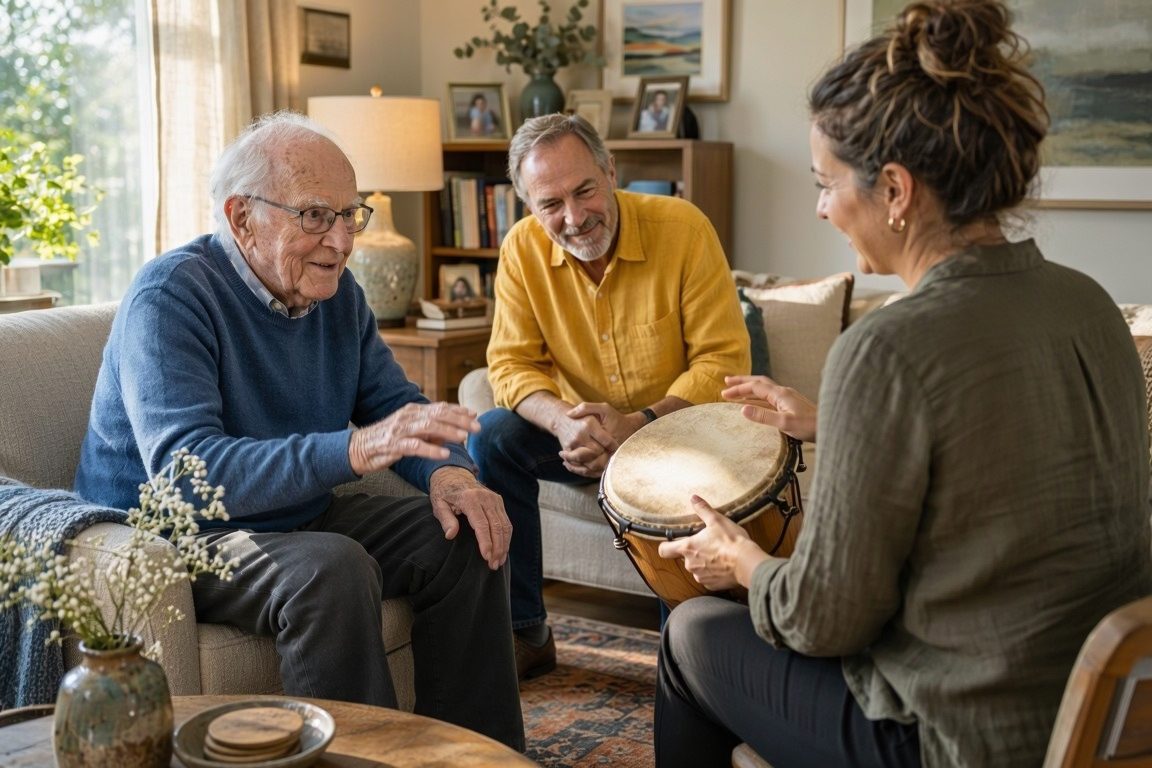
Family caregivers and nursing staff can absolutely lead music activities that bring joy, connection, and engagement. The key is to understand that these activities are not the same as music therapy, but they are still highly beneficial. For example, playing a familiar song from the person's youth can spark memories, reduce anxiety, and improve mood. Singing along, clapping, or using simple instruments like bells or rhythm sticks can provide gentle physical activity and emotional connection. The Alzheimer's Association notes that music and art can enrich the lives of people with dementia, allowing for self-expression and engagement even after the disease has progressed. Caregivers can also benefit: music reduces stress and anxiety for the caregiver, creating a sense of calm and escape.
When to Seek a Music Therapist
If your loved one has significant depression, severe agitation, or complex behavioral symptoms that do not respond to simple music activities, a music therapist should be involved. The therapist can create a structured plan that addresses these issues and train you or nursing staff to carry out the interventions. In aged care facilities, staff may view music as mere entertainment rather than a therapeutic tool, so a music therapist can help shift that perspective and integrate music into care plans. Administrators of senior living communities often hear: 'Hire a music therapist, you will never regret it.' The therapist's assessment ensures that music is used safely and effectively, especially when the person has advanced dementia or other medical conditions.
Practical tools
6
Simple Instrument Kit
Keep a small basket with
Use these during music time to encourage gentle physical activity and engagement. Let the person hold and shake them along with the beat. This works well in early to middle stages.
Personalized Playlist
Create a playlist of songs from the person's youth (ages 15-25 are often most meaningful). Use a music streaming service or a simple MP3 player. Programs like Music & Memory can help. Play this during calm times or when the person seems anxious. For late-stage, use headphones to reduce background noise.
Phrases to Use During Music
Say: 'Let's listen to this song together.' 'Do you remember this one?' 'I love this part.' 'You can tap your foot if you like.' 'Let's hum along.' Keep your tone warm and encouraging. Avoid asking too many questions if the person cannot answer.
Seated Dance or Movement Program
Programs like 'Active for Life' offer seated dance and fitness routines designed for people with dementia. These can be done at home or in a facility. They exercise both brain and body while spreading positivity. Look for videos or classes online.
Music and Memory Headphones
These are specialized headphones that deliver a personalized playlist. They are designed for people with dementia and can be used by family or staff. The headphones block out distracting noise and allow the person to focus on the music. This is especially helpful in late-stage dementia.
Observation Log
Keep a simple notebook or digital note to track what songs you played, the person's mood before and after, and any changes in behavior. This helps you and any music therapist adjust the approach. Note: 'Played 'Blueberry Hill' - she smiled and tapped her foot for 5 minutes.'
Different situations
Early-stage dementia
In early stages, the person can often tell you their favorite music and even participate in choosing songs. Encourage them to sing along, dance, or play an instrument if they used to. This can be a joyful shared activity. You can also use music to help with memory recall, asking about the song's memories.
Middle-stage dementia
The person may have more difficulty with verbal communication but can still respond to music. Use simple, repetitive songs. Focus on rhythm and movement, like clapping or swaying. Avoid complex instructions. If they become agitated, switch to a calming song. This is a good stage to involve a music therapist if you see depression or anxiety.
Late-stage dementia
The person may be bedridden or have limited movement. Use soft, familiar music at a low volume. Avoid singing during meals. Use headphones if they are comfortable with them. Watch for subtle responses like a change in breathing, a slight smile, or opening their eyes. Music can still provide comfort and connection. A music therapist can help with end-of-life care.
In a memory care facility or nursing home
Nursing staff can lead group music activities, but they should be trained by a music therapist for best results. The therapist designs the intervention, and CNAs facilitate it. This model has been shown to sustain reductions in depression symptoms. Administrators should hire a music therapist to train staff and create personalized plans. Staff should not view music as just entertainment but as part of the care plan.
Family caregiver at home
You can lead music activities daily without a therapist. Start with simple, familiar songs. Use the tools above. If you are struggling with your loved one's mood or behavior, consult a music therapist for a one-time session or virtual guidance. Remember that music also benefits you, use it for your own stress relief.
For the doctor
4
- If your loved one has a history of seizures triggered by music (musicogenic epilepsy), discuss safe music use with their neurologist.
- If the person has a pacemaker or other implanted device, ask their doctor if any musical instruments or headphones could cause interference.
- If your loved one has severe hearing loss, ask an audiologist about using headphones or bone conduction devices for music.
- If the person is on medications that affect mood or behavior, discuss with their doctor how music activities might interact with those medications.