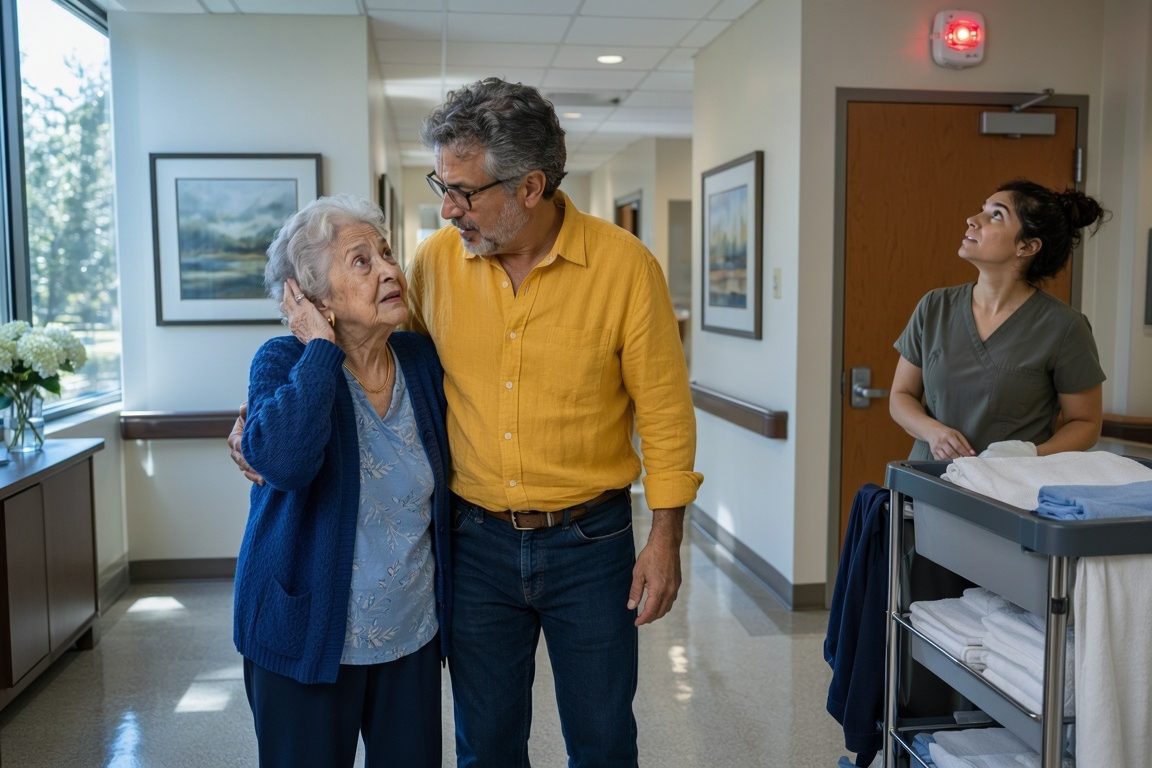
Step by step
What not to do
- Don't tell them to 'calm down' or dismiss the fear. Acknowledge it: 'I see you're upset. Let's find a quiet spot.'
- Don't explain what the alarm is or how it works; reassurance and redirection work better.
- Don't assume the alarm is the only issue. Check pain, hunger, tiredness, or overstimulation first.
- Don't disable or remove an alarm without care team input. Safety comes first; work on a less distressing alternative.
- Don't criticize the facility or staff in front of the person with dementia. Hold difficult conversations privately.
Key points
- Alarms can cause distress because the person with dementia may not understand what they mean and may perceive them as a threat.
- Always check for pain, hunger, or overstimulation before assuming the alarm is the main problem.
- Work with staff to find quieter alternatives like silent alerts, pressure mats, or eye-level locks (ensuring they meet fire and safety codes and can be instantly overridden by staff).
- Use validation and redirection instead of explanation when the person is upset by an alarm.
- Create a consistent daily routine with outdoor time to reduce the urge to wander and the number of alarm triggers.
- Document incidents and communicate regularly with the care team to adjust the care plan.
Videos
 Memory Care Assisted Living Facility vs Memory Care Nursing HomeThis video helps you understand the different types of memory care settings, which can affect what alarm systems are used and how they are managed.
 How to Manage Wandering, Pacing, Eloping ~ Smart Tricks When You Are DesperateOffers practical, low-cost alternatives to alarms, such as door locks at eye level and pressure mats, which can reduce the need for loud alert systems.
 What Caregivers Should Know: Medical AlertsExplains the pros and cons of medical alert devices, including how they can cause confusion if the person does not remember what they are for.
 What To Ask When Looking For A Memory Care Facility?Provides key questions to ask about safety systems, including alarm types and pain assessment tools, which are critical for preventing alarm-related distress.
2 more videos
 Choosing the Right CareHelps you evaluate whether a memory care unit is the right fit, especially if alarm systems are causing ongoing distress and the facility is not responsive.
 What To Do When A Dementia Patient Won't Take Medication?Offers strategies for medication refusal that can be adapted to other situations, like refusing to wear a tracking bracelet or accept an alarm system.
Background
Why Alarms Can Cause Distress Instead of Safety
Another layer is that the person may not connect the alarm to their own action. For example, if a door chime sounds when they open a door, they may not realize they caused it. Instead, they might think someone else is making the noise or that the environment is unsafe. This can lead to repetitive questioning or attempts to 'fix' the problem, like trying to silence the alarm by pulling at wires or covering the device. Staff and family caregivers need to understand that the alarm is not just a tool for safety, it is also a potential source of emotional distress that must be managed with empathy and creativity.
Practical tools
4
Calming Phrases for Alarm Distress
When an alarm sounds and the person becomes upset, try: 'I hear that noise too. It's surprising. Let's go to the kitchen for a glass of water,' or 'That sound means someone is at the door. Let's check it together.' Keep your voice low and slow. Avoid 'It's just an alarm', it may not make sense to them.
Silent Alert Alternatives Checklist
Ask the facility which of these they can implement:
Confirm any lock meets fire and safety codes and can be instantly overridden in an emergency.
Daily Rhythm to Reduce Wandering
A simple, repeatable schedule:
Predictability lowers overall stress and can reduce alarms triggered.
Alarm Incident Log
A notebook or spreadsheet to track: date and time, what the person was doing, the alarm type, their reaction, what you tried, and the outcome. Share with the care team, patterns are far easier to see in writing than from memory.
Different situations
For a person with Lewy body dementia
People with Lewy body dementia are often very sensitive to noise and may have visual hallucinations. Alarms can be especially frightening. Use very soft tones or silent alerts. Keep the environment quiet and dimly lit. Avoid sudden changes in routine. If the person sees things that are not there, do not argue; instead, say 'I see you are worried. Let's move to a different room.'
For a person in late-stage dementia
In late stages, the person may not react to alarms at all, or they may become very still and withdrawn. The alarm may still cause distress but in a quieter way. Focus on comfort: keep the bed alarm volume low, use a weighted blanket to reduce restlessness, and play calming music. Staff should check for pain frequently, as the person cannot communicate it.
For a family caregiver visiting the facility
You may feel powerless, but you are an important advocate. Visit at different times of day to see how alarms affect your loved one. Build a relationship with the care team. Use 'I' statements: 'I notice Mom seems more upset after the door alarm. Can we try a different approach?' Offer to help fund a silent alert system if the facility is open to it.
For a staff caregiver in a memory care unit
You are on the front line. If you see a resident distressed by an alarm, take a moment to sit with them and offer reassurance. Do not rush to silence the alarm without addressing the person's fear. Consider adjusting the alarm settings for that individual if the system allows. Document the behavior and bring it up in team meetings to advocate for person-centered solutions.
For a resident on Medicaid or with limited funds
Not all facilities have the budget for expensive silent alert systems. In that case, focus on low-cost alternatives: use a door lock at eye level (ensuring it meets fire and safety codes and can be instantly overridden by staff), add a pressure mat that triggers a simple light, or place a familiar object near the door to discourage wandering. Ask the facility if they can apply for grants or donations for safety upgrades.
For the doctor
6
- Ask the doctor if the person's agitation could be related to an underlying medical issue like a urinary tract infection or pain, which can make them more sensitive to alarms.
- Discuss whether a change in medication might help reduce anxiety or agitation related to noise sensitivity. Do not make any changes without medical guidance.
- If the person is removing a medical device like a tracking bracelet or a fall alert pendant, ask the clinician about alternative devices that are less likely to cause confusion or skin irritation.
- If the person has a history of falls, ask the doctor whether a bed alarm is medically necessary or if other fall prevention strategies (like a low bed or floor mats) could be used instead.
- Ask the doctor: 'Are there any specific safety concerns I should know about before using a door lock at eye level? What about fire code requirements or the need for staff to override it quickly?'
- Ask the doctor: 'Is there a specific type of silent alert system you recommend that is both safe and effective for someone with dementia?'