Step by step
What not to do
- Do not turn the clip into a quiz. Asking 'Do you remember when that happened?' or 'What year was that?' puts pressure on your loved one and can cause frustration or withdrawal.Instead, ask open-ended questions like 'What does that make you think of?'
- Do not correct or contradict their memories. If your loved one says they remember a clip from their childhood, even if the clip shows a scene from the 1950s and they were born in the 1960s, do not correct them. The emotional truth of the memory matters more than factual accuracy. Correcting can damage trust and shut down communication.
- Do not use clips that are too long or complex. V-Clips are short for a reason. Longer videos can overwhelm someone with dementia, leading to zoning out or agitation. Stick to clips under 2 minutes, and always watch together so you can gauge their reaction.
- Do not force engagement if they are not interested. If your loved one looks away, closes their eyes, or seems restless, do not insist. Say, 'That's okay, we can try another time.' Forcing engagement can create negative associations with the activity.
- Do not leave them alone with the clip. The value of V-Clips comes from the shared experience and the conversation that follows. Watching alone can be isolating and may not produce the same benefits. Always watch together and be present.
Key points
- Photavia V-Clips are short, curated video segments designed to spark reminiscence and conversation without pressure or testing.
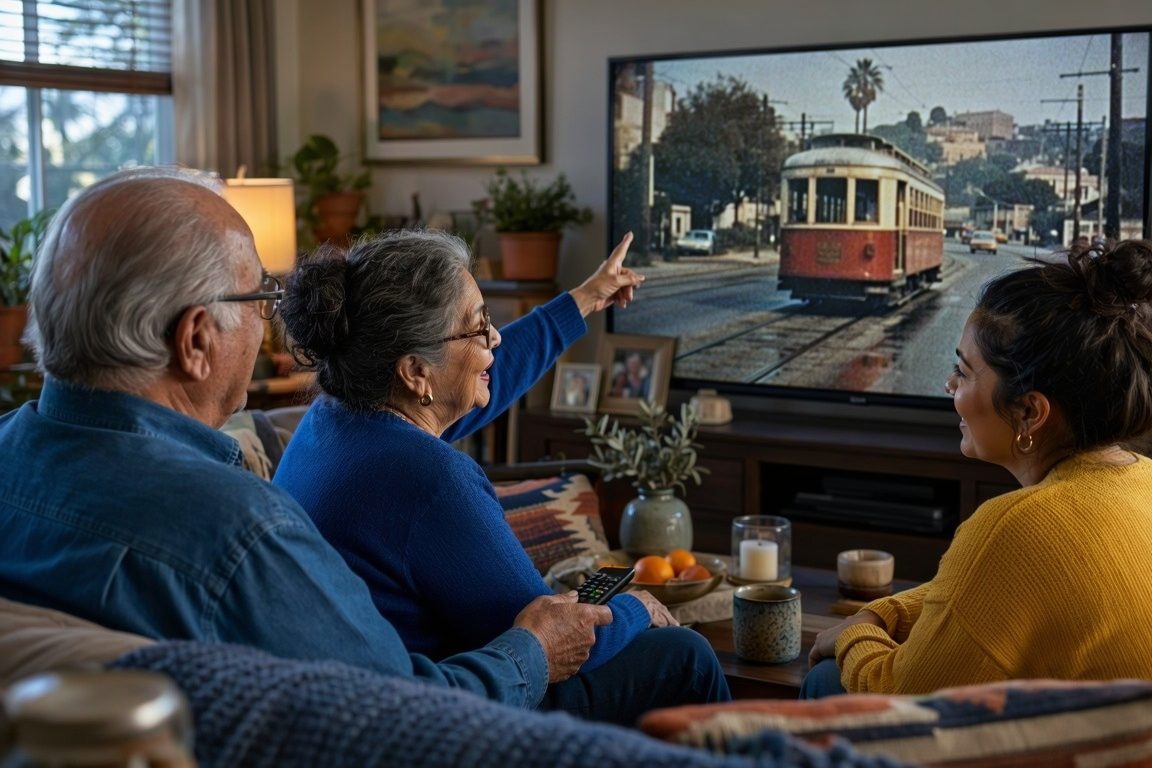
- The most effective approach is to watch together, then ask two simple questions: 'What did you see?' and 'What did that remind you of?'
- Repetition is okay, watching the same clip multiple times can deepen connection and comfort.
- Always follow your loved one's lead: if they are not engaged, stop and try later. The goal is joy, not completion.
- V-Clips can bridge generations, making them a wonderful tool for family visits and meals.
- Personalize the experience by choosing clips that match your loved one's interests, stage of dementia, and current mood.
Videos
 Discover PhotaviaThis video introduces Photavia and shows how V-Clips are used in real care settings. It demonstrates the 'two-question' technique and explains the cognitive enhancement tool concept.
 Top dementia caregiving lessons to bring into 2021This video includes practical advice on using reminiscence therapy, including the importance of asking open-ended questions and following the person's lead. It reinforces the approach used with V-Clips.
 Using Reminiscence Therapy To Help Dementia PatientsThis video explains the science behind reminiscence therapy and offers five simple ways to start. It provides context for why V-Clips are effective and how they fit into a broader therapeutic approach.
 Connections with Christine - September Online Dementia JournalThis video features a discussion about Memory Lane TV and Photavia, including how to use clips for different stages and symptoms. It offers insights into customizing content for individual needs.
2 more videos
 Why Meal Refusal Happens with Dementia (And How to Tackle It Without a Fight)While focused on meals, this video teaches the importance of redirection and positive engagement, skills that are directly transferable to using V-Clips during difficult moments.
 Simple dementia trick to get your loved one talking and feeling happy.This video shows a real-life example of using a simple visual prompt to spark conversation. It mirrors the V-Clip approach and demonstrates how effective a short, focused stimulus can be.
Background
What Are Photavia V-Clips and Why Do They Work?
Photavia V-Clips are short, themed video segments that show scenes from everyday life across decades, from the 1930s all the way to the 2000s. They might show a vintage car, a child playing with a toy, a family gathering, or a familiar street corner. The idea is not to quiz or test, but to gently invite your loved one to share what they see and what it reminds them of. As one expert put it, after asking what someone saw, you ask, 'What's your life experience?', and that is where the most profound understanding of who they are emerges, no matter where they are on their cognitive journey.
This approach works because dementia often spares long-term memories far longer than recent ones. A 2018 Cochrane review found that reminiscence therapy can improve quality of life, communication, and mood for people living with dementia, even if the effect size is small. The key is that these clips create a shared focus, a 'common thread', that makes conversation easier and more natural. They also serve as an intergenerational bridge: a teenager and a grandparent can watch the same clip and find something to talk about at dinner, replacing the usual 'What did you do at school?' with a genuine shared moment.
How V-Clips Differ from Other Reminiscence Tools
Unlike photo albums or memory boxes, which require you to gather and organize personal items, Photavia V-Clips are ready-made and curated by experts. They are designed to be used on any screen, a tablet, computer, or even a phone, and you can choose clips based on your loved one's stage of dementia, the symptoms you want to address, or simply the mood you want to create. Some clips are high-energy and engaging, while others are calming and dreamy, perfect for redirecting anxiety or agitation, especially in the evening.
Another unique feature is the subscription service at photavia.tv, which gives you access to the full library. You can pick and choose clips like a palette, making it easy to tailor each session to your loved one's interests. For example, if you are caring for a veteran, you can find clips that resonate with military life. If Black History Month is meaningful, there are themed series available. This flexibility means you are never stuck with content that doesn't fit, you can always find something that feels personal and relevant.
Practical tools
5
The 'Two-Question' Conversation Starter
After watching a clip, use this exact phrase: 'What did you see?' Then: 'What did that remind you of from your own life?' This simple structure works because it starts with observation (easy) and then invites personal reflection (meaningful). Practice saying it in a warm, curious tone. If your loved one struggles, you can model an answer: 'I saw a red bicycle. It reminded me of my first bike when I was 10.'
The 'Common Thread' Dinner Talk Setup
Use a V-Clip as a conversation starter for family meals or visits. Before a meal, show a short clip to the whole family, including children or grandchildren. Then ask everyone, 'What did you notice?' and 'What did it remind you of?' This creates a shared topic that includes your loved one, rather than leaving them out of conversations about school or work. It works especially well with clips that show everyday scenes like a family dinner, a parade, or a pet.
The 'Mood Match' Playlist
Photavia.tv allows you to filter clips by stage of dementia and by the symptom you want to address, such as agitation, anxiety, or low mood. Create a 'calming' playlist of nature and water scenes for evening use, and an 'engaging' playlist of lively, colorful clips for morning or afternoon. Label them clearly on your device so you can grab the right one quickly. This is especially helpful when your loved one is restless and you need a redirection tool.
The 'Personalized Theme' Request
If your loved one has a strong interest, like trains, gardening, or military history, you can request or search for themed V-Clips. Photavia has created custom series for Black History Month and for veterans. Contact their support or browse the library for topics that resonate. This makes the experience feel deeply personal and shows your loved one that you value their history.
The 'Intergenerational Bridge' Activity
If you have a teenager or young adult in the family, invite them to pick a V-Clip to show to your loved one. Ask the young person to come up with one question about the clip. This gives the younger person a structured way to connect, and it often leads to surprising conversations. For example, a clip of a 1950s soda fountain might lead a teen to ask, 'What was your favorite thing to order?' and a grandparent might share a story about their first date.
Different situations
Early stage dementia
In early stages, your loved one may still have strong verbal skills and insight. You can ask more detailed questions, like 'What do you think the people in the clip were feeling?' or 'If you could step into that scene, what would you do?' You can also let them choose the clip themselves from a small selection. This preserves their sense of autonomy and agency.
Middle stage dementia
At this stage, your loved one may have more trouble finding words or following complex narratives. Keep your questions simple and concrete: 'What color was the car?' or 'Was it a sunny day?' Use gestures and point to the screen. If they become frustrated, switch to a calming clip or end the session. The goal is to reduce anxiety, not to push for answers.
Late stage dementia
In late stages, your loved one may not be able to speak or respond verbally. Focus on sensory engagement: play clips with soothing music, nature scenes, or gentle movement. Watch their face and body language for signs of comfort, relaxed shoulders, a slight smile, or slower breathing. You can narrate softly: 'Look at the birds flying. They are so peaceful.' Even without words, the shared experience can be calming and connecting.
Lewy body dementia
People with Lewy body dementia often have visual hallucinations and fluctuating attention. Choose clips with simple, clear images and avoid fast cuts or flashing lights. Stick to nature scenes or slow-moving content. If your loved one seems confused or frightened by a clip, stop immediately and switch to a different activity. Always prioritize their sense of safety.
Vascular dementia
Vascular dementia can cause more uneven cognitive abilities. Your loved one may have good days and bad days. On good days, try more engaging clips; on bad days, use calming clips. Be prepared to repeat the same clip on multiple days, it can become a comforting ritual. Also, be aware that mood swings are common, so watch for signs of frustration and stop early if needed.
Spouse vs. adult child caregiver
As a spouse, you may have decades of shared memories to draw on. Use clips that relate to your life together, like a clip of a 1960s dance or a 1970s kitchen. Say, 'Remember when we used to dance to that song?' As an adult child, you may not have those shared memories. Instead, use clips to learn about your parent's life before you were born. Ask, 'What was your favorite thing to do when you were my age?' This can be a beautiful way to discover new stories.
In a facility or with limited space
If you are in a shared room or a busy facility, use headphones or a small speaker at low volume to avoid disturbing others. Choose a time when the environment is quiet, like after meals or before bedtime. You can also use a tablet with a stand so your loved one can watch from their bed or chair. If staff are available, ask if they can help set up a regular 'V-Clip time' in the activity room.
Medicaid or low-budget situation
If a subscription to photavia.tv is not affordable, look for free alternatives: YouTube has many short, vintage clips and nature videos. You can also create your own 'V-Clip' by recording short scenes from your home, a pet playing, a bird at a feeder, or a child blowing bubbles. The key is the shared watching and conversation, not the production quality.
For the doctor
3
- If your loved one becomes agitated or distressed after watching a clip, discuss this with their doctor. It may be a sign of unmet needs or a change in their condition.
- If your loved one has a history of seizures or photosensitive epilepsy, check with their neurologist before using any video content, even short clips.
- If your loved one is on medications that affect alertness or mood, ask their clinician if the timing of V-Clip sessions should be adjusted to avoid drowsiness or overstimulation.