Step by step
What not to do
- Do not ask 'Do you want to go outside?' This often triggers a reflexive 'no.' Instead, use a leading statement like 'Let's go see the garden' or 'I need your help with the plants.'
- Do not overload the person with instructions or questions. Avoid saying 'Look at that bird! What color is it? Do you remember what it's called?' This can feel like a test.Instead, just share your own observation: 'I see a blue bird.'
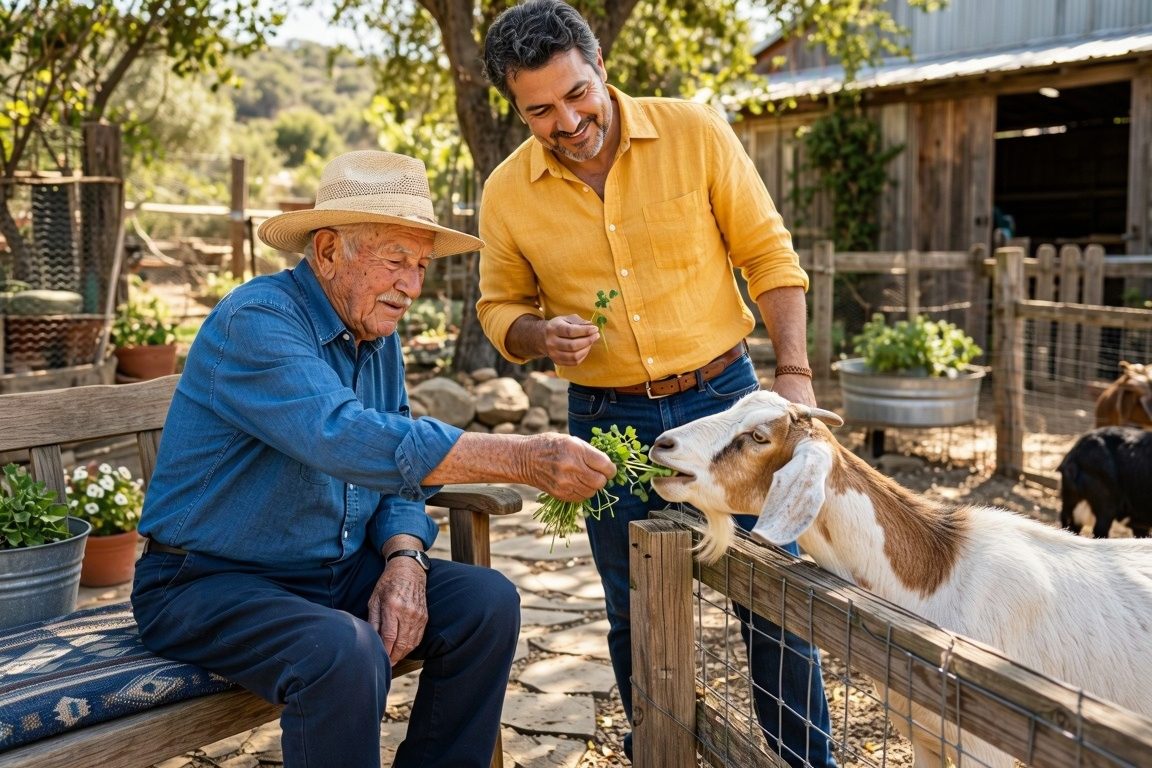
- Do not force interaction with an animal if the person seems scared or unsure. Respect their hesitation. Start with a stuffed animal or a photo, or simply watch the animal from a distance. The goal is comfort, not confrontation.
- Do not expect a 'correct' response. The person might not smile or say thank you. That is okay. The benefit is in the doing, not in the outcome. A calm, quiet time together is a success.
- Do not choose a busy, noisy outdoor environment. A crowded park or a street with traffic can be overwhelming. A quiet backyard, a garden, or a calm nature trail is far better.
- Do not leave the person alone with an animal, even a gentle one. Always supervise to ensure safety for both the person and the pet. A sudden movement or a startled animal can cause distress.
Key points
- Nature and animals engage the senses directly, bypassing the need for memory or complex thought.
- Use a leading invitation ('Come with me') instead of a yes/no question to reduce resistance.
- Keep activities short, slow, and sensory-focused. The goal is connection, not completion.
- Bring nature indoors with a window bird-watching station, a sensory box, or a simple plant.
- Therapeutic robotic pets are a safe, evidence-based alternative to live animals.
- Always supervise interactions with animals and respect the person's comfort level.
Videos
 Important 'vitamin' for caregivers and people with dementiaThis video reinforces the idea that simply being in nature is enough to provide benefits, without needing to structure an activity.
 Dementia Care Partner Talk Show Podcast: Ep. 88 - How to Engage with Someone in a Meaningful WayTeepa Snow discusses the concept of engagement as a two-way connection, which is the foundation for all nature and animal activities.
 106. 10 Strategies to combat caregiver stressCaregiver stress can make it hard to be present. This video offers strategies to help you stay calm and patient during shared activities.
 149. Replay: 10 Strategies to combat caregiver stress from the Alzheimer's AssociationA replay of the above, reinforcing stress management techniques that support positive engagement.
2 more videos
 Time with Teepa – How Can We Make Time for Friendsgiving?While about a holiday, this video shows how to adapt social activities for someone with dementia, which can be applied to nature walks or animal visits.
 Why Meal Refusal Happens with Dementia (And How to Tackle It Without a Fight)Though about meals, the communication techniques (e.g., using leading statements, avoiding questions) are directly transferable to inviting someone into a nature or animal activity.
Practical tools
6
The 'Come With Me' Invitation
Instead of asking a yes/no question, use a warm, leading statement. Examples: 'I have something to show you in the garden,' 'Let's get some fresh air together,' 'I need your help with the bird feeder.' This reduces resistance and frames the activity as a shared, positive experience.
Sensory Nature Box
A small basket or box filled with safe, natural items:
Sit together and explore each item one at a time. Describe the texture, smell, or sound. This is especially good for days when going outside is not possible.
Window Bird-Watching Station
Set up a comfortable chair by a window that overlooks a bird feeder or a tree. Keep a simple bird identification book or a tablet with bird sounds nearby. You can sit together and watch, or just let the person enjoy the view. This is a low-effort, high-reward activity.
Therapeutic Robotic Pet
A realistic-looking robotic cat or dog that responds to touch (purrs, meows, wags tail) can provide companionship without the risks of a live animal. Research shows these can improve mood and reduce behavioral symptoms. Look for brands like Joy for All or similar. Always introduce it gently and let the person explore it at their own pace.
Simple Plant Care Kit
Invite the person to help you water or dust the plant. This provides a sense of purpose and a daily ritual.
Short, Slow Walk Checklist
Before you go:
Different situations
Lewy Body Dementia (LBD)
People with LBD often have visual hallucinations and fluctuations in alertness. Avoid complex or rapidly moving stimuli (like a flock of birds or a busy farmyard). Stick to calm, predictable environments. A single, slow-moving animal (like a cat) or a quiet garden is best. Watch for signs of overstimulation (agitation, confusion) and end the activity early if needed.
Late-Stage Dementia
Focus on passive sensory experiences. The person may not be able to walk or participate actively. Simply sitting outside in a comfortable chair, feeling the sun and breeze, can be beneficial. Use a soft blanket, hold their hand, and describe what you see. A robotic pet that can be placed in their lap may provide comfort. Do not expect a response; the benefit is in the gentle sensory input.
Spouse vs. Adult Child Caregiver
A spouse may feel more comfortable with intimate, quiet activities like sitting together in the garden or holding hands while watching a sunset. An adult child might find it easier to structure a short, purposeful activity like 'helping' with a plant or feeding a pet. Both approaches are valid. The key is to match the activity to the relationship and the person's current abilities.
In a Group Home or Farmstead Setting
In a group setting, nature and animal activities can be done in small groups (2-3 residents) to avoid overstimulation. Assign simple roles: one person waters the plant, another holds the watering can, another wipes the leaves. For farm animals, ensure the animal is calm and used to people. Always have a staff member or volunteer present to supervise and to gently guide the interaction. A scheduled 'nature time' each day can provide a comforting routine.
For Someone with a History of Fear of Animals
Start with no animal at all. Use nature first: a plant, a bird feeder, a sensory box. If you want to introduce an animal, begin with a stuffed animal or a photo. Gradually, if the person seems curious, introduce a very calm, small animal (like a guinea pig) in a controlled setting. Always let the person set the pace and never force contact.
For the doctor
4
- If the person has a known allergy to animals or plants, discuss safe alternatives with their doctor before introducing any new element.
- If the person has a history of falls, ask the doctor about safe outdoor walking surfaces and appropriate mobility aids before starting a nature walk program.
- If the person is on medications that cause photosensitivity (increased sensitivity to sunlight), ask the doctor about safe sun exposure limits and whether sunscreen is recommended.
- If the person has a history of wandering or elopement, discuss strategies for safe outdoor time (e.g., enclosed garden, supervision plan) with the care team.