Step by step
What not to do
- Do not play music loudly or with competing noises like the TV. This causes sensory overload and can increase agitation.Instead, turn off the TV, close windows, and keep the volume low. Watch their face, if they wince or turn away, it is too loud.
- Do not quiz them on the music ('Do you remember this song?'). This puts pressure on their memory and can cause frustration or shame.Instead, just let the music play and enjoy it together. If they spontaneously name the song, great, but do not ask.
- Do not force participation in art or music. If they are not interested, put the supplies away and try again another time. Pushing can lead to agitation and a negative association with the activity.Instead, model the activity yourself and invite them gently: 'I'm just going to paint a little, you can watch if you like.'
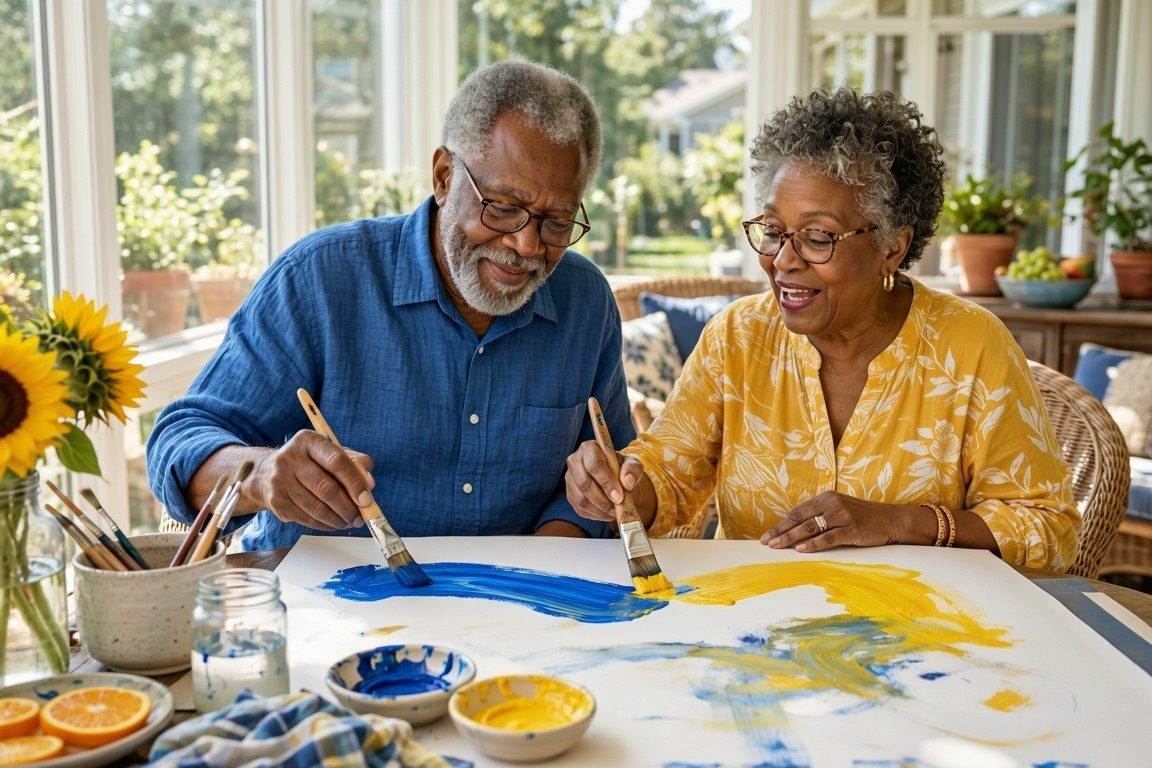
- Do not use complex art projects that require many steps or fine motor skills. This can be overwhelming and highlight what they cannot do.Instead, keep it simple: one color, one brush, one piece of paper. The goal is success, not complexity.
- Do not assume that because they do not respond visibly, the music or art is not having an effect. In late-stage Alzheimer's, a person may not smile or move, but their breathing may slow, their heart rate may calm, or their facial muscles may relax. These are signs of engagement and comfort. Keep trying.
- Do not play music that is associated with a traumatic or sad memory. If a song makes them cry or look distressed, turn it off and switch to something neutral or happy. You can ask family members about songs that were played at joyful events like weddings or birthdays.
Key points
- Music and art tap into preserved brain functions, rhythm, emotion, and sensory memory , that remain even in late-stage Alzheimer's.
- Use music from the person's 'music set' (ages 10-25) for the strongest emotional connection.
- Keep activities simple, short, and failure-free, the goal is connection, not a finished product.
- Watch for non-verbal cues: a smile, relaxed breathing, or a gentle sway are all signs of engagement.
- Build a routine with calming music in the evening to reduce sundowning anxiety.
- Share what works with other caregivers and facility staff to create consistency.
Videos
 Mary Crescenzo, Author, Artist, Alzheimer's Advocate, and 2022 Maude Award RecipientMary shares her personal experience using art to communicate with her husband with Alzheimer's, offering real-life inspiration and practical tips for caregivers.
 Music and Alzheimer's DiseaseThis video explains the science behind why music remains accessible in Alzheimer's and shows examples of music triggering positive responses in late-stage patients.
 Top 5 Indoor Activities for Seniors with Dementia (For Free)Provides free, low-cost activity ideas including simple music and art projects that can be done at home with minimal supplies.
 Radio Show VoiceAmericaDiscusses the role of music and reminiscence therapy in reducing anxiety and agitation, especially during evening hours.
2 more videos
 Free Alzheimer's/Dementia Caregiver-Support Resources: Money, Info, More!Lists resources for finding support groups and professional help, which can be useful if you need guidance on implementing music or art therapy.
 PAC 10 at 5 - Language on the Left...Rhythm on the RightTeepa Snow explains how rhythm and music can unlock language in the right temporal lobe, providing a practical framework for using music to connect.
Background
Why Music and Art Still Work When Words Fail
Music is processed across the entire brain, and research shows that the ability to recognize familiar tunes and lyrics often remains functional even in advanced Alzheimer's. This is because the bonds formed early in life between highly familiar songs and emotions are stored in parts of the brain that are less affected by the disease. So while your loved one may not be able to hold a conversation or remember what they had for breakfast, they might still hum along to a song from their teenage years or tap their foot to a favorite rhythm. The key is that music and art tap into preserved abilities, rhythm, emotion, and procedural memory , that don't rely on the damaged language and memory centers.
For art, the act of creating , whether with a paintbrush, clay, or even just arranging flowers , provides a sense of accomplishment and purpose. It offers a non-verbal way to express feelings that may be hard to put into words. In late-stage Alzheimer's, when a person may lose the ability to respond to their environment or carry on a conversation, a simple art activity can still provide a moment of calm engagement. The goal is never to produce a masterpiece; it is to share a moment of connection and to let the person with dementia feel capable and valued.
What's Happening in the Brain During Music and Art
When you play a song from your loved one's 'music set', the music they listened to between ages 10 and 25 , it can activate the right temporal lobe, which often remains more intact than the left. This activation can then help 'free up' words in the left temporal lobe that were previously inaccessible. This is why a person who cannot speak in sentences might suddenly sing along to an old hymn or hum a lullaby. The rhythm and melody provide a scaffold that supports language retrieval, even briefly.
Art activities stimulate multiple brain regions at once , the visual cortex, motor planning areas, and the emotional centers. For a person with dementia, the process of choosing a color, making a stroke, or squeezing clay can be grounding and calming. It shifts focus away from anxiety or agitation and toward a simple, achievable action. In late-stage Alzheimer's, even the sensory experience of feeling the texture of clay or watching watercolor bloom on paper can be soothing, reducing the 'floating anxiety' that often worsens in the evening.
The Power of Familiarity and Routine
Familiar tunes and lyrics are recognized across all stages of Alzheimer's because they are tied to strong emotional memories from early life. This is why a song from your loved one's wedding or a lullaby they sang to their children can be so powerful. The emotional connection bypasses the damaged memory centers and speaks directly to the parts of the brain that still work. This is not a cure, and not every person will respond the same way, but many people with dementia show positive reactions, a smile, a laugh, even dancing , when they hear music that matters to them.
For art, the routine of a simple, repeated activity , like painting with watercolors every Tuesday morning , can create a sense of predictability and safety. The person may not remember doing it before, but the body remembers the motions, and the calm feeling associated with the activity can carry over into the rest of the day. This is especially helpful in middle-stage Alzheimer's, when anxiety and agitation are common.
Practical tools
6
The 'Music Set' Playlist Builder
A short checklist to create a personalized playlist:
The 'No-Fail' Art Kit
A small box with:
Keep the kit in a visible spot so you can grab it when the mood strikes. Set up the workspace before inviting them, lay out the paper, wet the brush, and squeeze a little paint onto a palette.
The 'Gentle Invitation' Script
Exact phrases to use when starting an activity: For music: 'I found some old songs I thought we could listen to together. Let's just sit and enjoy.' For art: 'I have some paints here: I'm going to make a little something. Would you like to try with me?' If they hesitate: 'No pressure , we can just watch the colors mix.' If they seem confused: 'It's just for fun. See how the blue spreads?' Always use a warm, calm tone and avoid questions that require a memory recall.
The 'Evening Wind-Down' Routine
A 15-minute evening ritual to reduce sundowning anxiety:
This routine can be repeated nightly to signal that it is time to rest.
The 'Observation Log' Template
A simple notebook page with columns: Date, Time, Activity (song title or art project), Their Reaction (smile, humming, relaxation, agitation, no response), Notes (e.g., 'Seemed calmer after the lullaby' or 'Liked the color blue'). Share this log with other caregivers so they know what works. Over time, you will see patterns, for example, that a certain song always calms them before bed, or that painting in the morning lifts their mood.
The 'Bed-Bound Engagement' Kit
For a person in late-stage Alzheimer's who is bed-bound:
The goal is sensory stimulation without overwhelming them. Do one thing at a time and watch for any sign of comfort or interest.
Different situations
Late-stage Alzheimer's (severe)
In late-stage, the person may not be able to speak, follow instructions, or control movement. Focus entirely on sensory input: play music at a very low volume, use gentle touch (holding a hand or stroking an arm), and offer textures like a soft blanket or a smooth stone. Do not expect any verbal or motor response, a change in breathing rate, a relaxed facial expression, or a slight turn of the head is a sign of connection. Art may be limited to watching you paint or holding a paintbrush while you guide their hand. The goal is comfort, not engagement.
Middle-stage Alzheimer's (moderate)
In middle-stage, the person may still be able to follow simple instructions and participate in art or music with prompting. They may enjoy singing along, clapping, or making simple brush strokes. This is a good time to build a routine, for example, a 15-minute music time every morning after breakfast. Be patient with frustration; if they cannot remember how to hold a brush, gently place your hand over theirs and guide them. Praise every attempt. Avoid activities that require multiple steps or fine motor control.
Spouse vs. adult child caregiver
A spouse may have shared memories of songs from their courtship or wedding, use those. The emotional connection can be very powerful but also bittersweet; be prepared for tears. An adult child may need to ask other family members or look through old records to find the parent's 'music set.' For both roles, it is important to take care of yourself , if the activity triggers your own grief, take a break and return later. You can also ask a friend or another family member to do the activity with your loved one so you can have respite.
In a facility or with professional caregivers
Share the personalized playlist and art kit with the facility staff. Write down the person's favorite songs and any that cause distress. Ask staff to play the calming playlist during evening hours to reduce sundowning. For art, request that they use the 'No-Fail Art Kit' and avoid complex projects. If possible, visit during activity time to participate, your presence can make the person feel more secure. If the facility has a music or art therapist, ask for a consultation to tailor activities to your loved one's stage and preferences.
Person has hearing or vision loss
If hearing is impaired, use a speaker with good bass (so they can feel the vibration) or place headphones on them at a low volume. If they wear hearing aids, make sure they are in and working. For vision loss, focus on tactile art: clay, fabric textures, or arranging objects by feel. Describe what you are doing: 'I am painting a blue sky, it feels smooth on the paper.' For music, choose songs with strong rhythms that can be felt through the body.
For the doctor
5
- If your loved one has a history of seizures, ask the doctor if flashing lights or certain types of music (e.g., very fast tempos) could trigger a seizure.
- If the person has severe agitation or aggression that does not respond to music or art, discuss with the doctor whether a referral to a music therapist or occupational therapist might help.
- If your loved one has a pacemaker or other implanted device, ask if using headphones or earbuds could interfere with the device.
- If the person has a latex allergy, check that any art supplies (like Play-Doh or paint) are latex-free.
- If the person is on medications that affect heart rate or blood pressure, ask if vigorous movement (like dancing) is safe.