
Step by step
What not to do
- Do not throw items away without consent; surprise cleanouts erode trust and often worsen hoarding.
- Do not clean out the entire home in one day; it is overwhelming and can trigger agitation or hostility.
- Do not argue about an item's value; acknowledge the person's attachment and help find a safe place for it.
- Do not buy more storage containers; extra space usually leads to more accumulation.
- Do not ignore safety hazards like blocked exits or fire risks; prioritize safety even if it requires contacting authorities.
- Do not manage this alone; involve a therapist, professional organizer, doctor, or social worker.
Key points
- Hoarding disorder is a mental health condition, not laziness or stubbornness, it involves real brain differences and often co-occurs with depression, anxiety, or ADHD.
- Hoarding usually starts in adolescence but becomes more severe with age, especially after major life changes like divorce, widowhood, or children moving out.
- In dementia, clutter is often due to executive dysfunction (inability to plan or organize) rather than true hoarding, but a sudden escalation can be a warning sign of cognitive decline.
- Safety first: clear pathways, remove fire hazards, and dispose of spoiled food. Work in small, manageable sessions (15 minutes at a time) to avoid overwhelm.
- Involve the person in decisions when possible, throwing things away without consent can cause trauma and worsen the hoarding.
- Seek professional help: a therapist, professional organizer, or local hoarding task force can make a huge difference. You don’t have to do this alone.
Videos
 Hoarding Behaviors | Insights and InnovationsThis video provides a clear overview of hoarding behaviors and practical insights for caregivers, including how to approach the situation with empathy.
 Hoarding Disorder in Geriatric PatientsFocuses specifically on older adults, explaining how hoarding changes with age and what triggers are common in later life.
 Discussing the Issue of Hoarding with USA Bio Care LLC Founder, Steve VenturaOffers a real-world perspective from a professional who works with hoarding situations, including tips on cleanup and safety.
 How Hoarding Can Impact Decision MakingExplains the cognitive side of hoarding, how it affects executive function and decision-making, which is key for caregivers to understand.
2 more videos
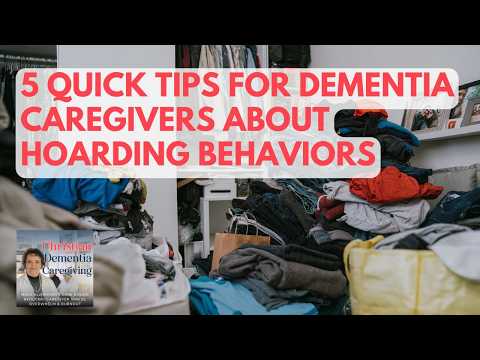 160. 5 Quick Tips for Dementia Caregivers About Hoarding BehaviorsShort and practical, this video gives five actionable tips specifically for caregivers of people with dementia who show hoarding or clutter behaviors.
 Ep. 239: Hoarding, How Do We Get Here?Explores the psychological and emotional roots of hoarding, helping caregivers understand the 'why' behind the behavior.
Background
What Is Hoarding Disorder?
Hoarding disorder is an ongoing difficulty throwing away or parting with possessions because the person believes they need to save them. They may feel intense distress at the thought of getting rid of items, and over time they accumulate a huge number of things, regardless of their actual value. This leads to extremely cramped living conditions, with only narrow pathways winding through stacks of clutter. Countertops, sinks, stoves, desks, stairways, and all other surfaces become piled with stuff, and many areas can no longer be used for their intended purpose, for example, you may not be able to cook in the kitchen or sleep in the bed. This is different from collecting, where people actively search for specific items, organize them, and display them without distress or functional problems.
Who Is at Risk and Why Does It Happen?
Hoarding disorder affects about 4% of the population, and it does not discriminate by socioeconomic status. It often begins between ages 11 and 15, but symptoms of severity increase with each decade of life, so every ten years, the clutter and cognitive challenges worsen. The condition is linked with other mental health issues like depression, anxiety disorders, obsessive-compulsive disorder (OCD), and attention-deficit/hyperactivity disorder (ADHD). In fact, according to the DSM-5, about 92% of people with hoarding disorder have at least one co-occurring diagnosis. For older adults, common triggers include divorce, widowhood, children moving out, cognitive decline, or financial stress. When a person loses the spouse or family member who was 'keeping the hoarding in check,' the clutter can suddenly become overwhelming. There is also a biological component: brain functioning differences, especially in areas related to executive function (planning, organizing, impulse control), make it hard for them to follow through on their intentions to clean up.
How Hoarding Differs in Dementia
In dementia, what looks like hoarding is often actually clutter caused by changes in the brain. The person may no longer be able to plan, organize, or initiate tasks, so items pile up not because of a deliberate need to save them, but because the person cannot manage the process of discarding. They may also hoard food, paper products, or small objects like stones or silverware because it gives them a sense of security or control. Unlike classic hoarding disorder, which is a lifelong pattern with some insight (though limited), dementia-related clutter is more about executive dysfunction. However, an escalation in hoarding can be a warning sign of Alzheimer's or frontotemporal dementia, especially if it appears alongside poor judgment, difficulty with tasks, or problems with organization and spatial relationships. Always discuss any sudden change with a clinician.
Practical tools
6
Safety First Checklist
A short checklist to audit the home:
Use it to prioritize and track progress.
Three-Box Sorting System
Three bins labeled Keep, Donate, Trash. Work one small area at a time. Let the person handle the Keep box. Offer to donate to a trusted charity to ease disposal anxiety.
15-Minute Timer Technique
Set a timer for 15–20 minutes and tackle one counter, corner, or drawer. Stop immediately when the timer goes off to prevent overwhelm and build accomplishment. Repeat daily or weekly.
One In, One Out Rule
Agree that for every new item entering the home, one old item must leave. Post a note by the door as a reminder to prevent re-accumulation.
Compassionate Conversation Script
Use phrases like 'I'm worried about your safety, can we make a clear path together?' or 'I see this matters to you. Where's a safe spot to keep it?' Avoid 'you need to get rid of this'; instead say 'let's find a place for this.'
Professional Organizer Referral
Seek a professional organizer specializing in hoarding, ideally trained to work alongside a therapist. Contact local aging services, social-service agencies, or the National Association of Productivity and Organizing Professionals (NAPO).
Different situations
If the person has dementia (Alzheimer's or frontotemporal dementia)
Focus on redirection rather than reasoning. The person may not understand why they need to discard items. Use gentle guidance: 'Let’s put this in the donation box together.' If they resist, drop it and try later. Prioritize safety over decluttering, remove fire hazards and spoiled food, but leave sentimental items alone. Involve the person in the process only if it reduces anxiety; otherwise, do the work when they are not present (e.g., during a nap or outing) to avoid agitation.
If the caregiver is an adult child vs. a spouse
Adult children may have more emotional distance but less authority. Approach as a team: 'Mom, I’m worried about you. Can we work on this together?' Spouses may feel more personally affected but also more able to set boundaries. In either case, avoid power struggles. If the person resists, consider bringing in a neutral third party like a therapist or professional organizer.
If the person lives in a facility (e.g., assisted living or nursing home)
The facility may have rules about how much clutter is allowed. Work with staff to create a plan. Focus on the person’s room or personal space. Use small storage bins that fit under the bed or in a closet. If the person hoards food, work with staff to limit access to the communal kitchen or pantry. Advocate for the person’s emotional needs, they may need extra reassurance and comfort objects.
If the person is on Medicaid or has limited financial resources
Cleanup services can be expensive. Look for community-based programs, faith-based organizations, or volunteer groups that offer free or low-cost help. Some counties have hoarding task forces. If the person is at risk of eviction due to hoarding, contact adult protective services or a legal aid clinic for advice. Focus on safety compliance first to avoid legal consequences.
If the person hoards animals
This is a serious health and safety risk for both the person and the animals. Contact your local animal control or humane society for guidance. They may be able to help with spay/neuter, rehoming, or veterinary care. Do not try to remove animals yourself, this can be traumatic and may lead to legal issues. Work with a mental health professional who specializes in animal hoarding.
For the doctor
5
- Ask the person’s doctor whether their hoarding could be related to an underlying medical condition, such as dementia, depression, or a medication side effect.
- If the person has dementia, ask the doctor whether a sudden increase in hoarding could be a sign of worsening cognitive decline or a new medical issue like a urinary tract infection (UTI).
- Ask about whether medications for anxiety, depression, or OCD might help reduce the urge to hoard. Never start or stop medications without a doctor’s guidance.
- If the person is at risk of eviction or legal action due to hoarding, ask the doctor or a social worker about how to document the condition for legal protection or housing assistance.
- If the person hoards food and you find spoiled or expired items, ask the doctor about the risk of foodborne illness and how to handle safe disposal.