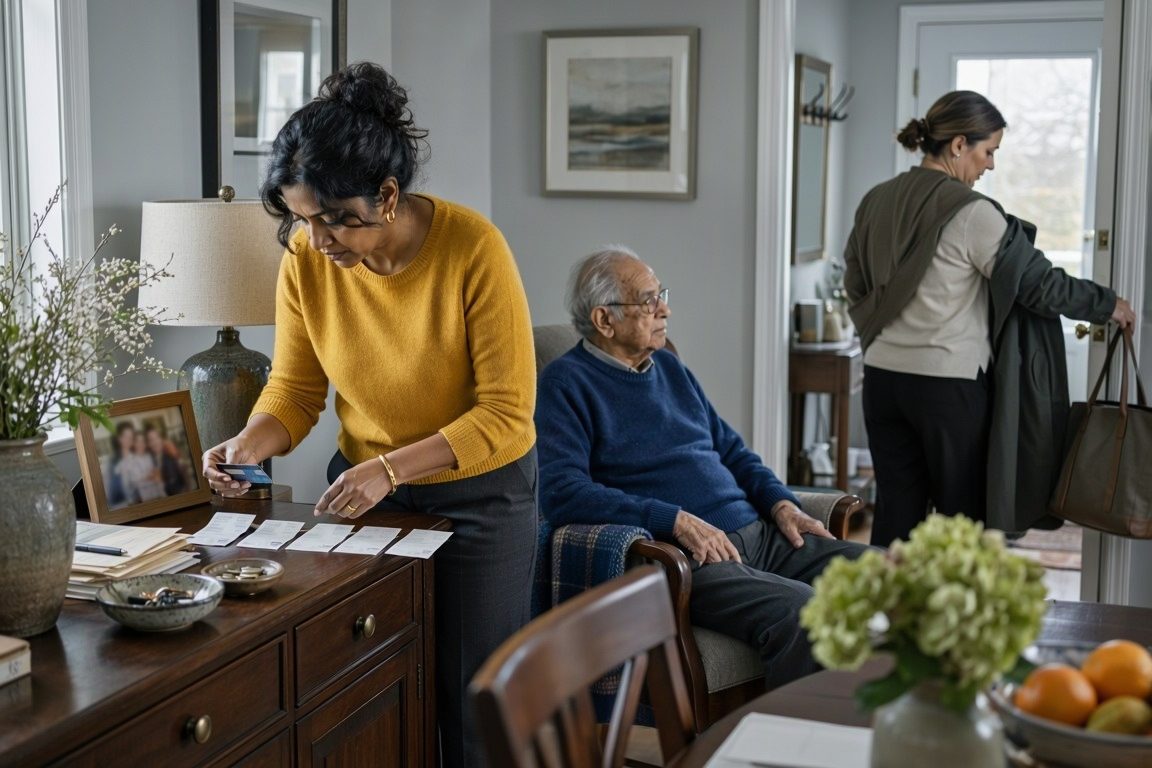
Step by step
What not to do
- Do not confront the caregiver directly without solid evidence, they may deny, destroy evidence, or quit abruptly, leaving your loved one without care.
- Do not dismiss missing money as 'just dementia'; memory loss can mask theft, so every unexplained financial change deserves investigation.
- Do not leave checkbooks, bank cards, or extra cash where a caregiver can easily reach them (purse, wallet, unlocked drawer); easy access invites temptation.
- Do not rely solely on the home care agency to investigate itself, they have a financial stake; also follow up with your state's licensing board and local law enforcement.
- Do not delay consulting an elder law attorney; without power of attorney, conservatorship, or a trust, you may be unable to access accounts, freeze assets, or pursue recovery.
Key points
- Financial exploitation by a paid caregiver is a serious concern, but you can take proactive steps to prevent it and respond effectively if it occurs.
- Always consult an elder law attorney before taking control of a senior's financial accounts or removing their valuables, to ensure you have legal authority.
- Document everything: keep a log of suspicious events, take photos of valuables, and save copies of bank statements and receipts.
- If you suspect theft, do not confront the caregiver directly. Instead, report your concerns to the agency and/or law enforcement.
- Involve the senior in financial discussions as much as possible, using a gentle and non-accusatory tone.
- After an incident, implement long-term protections like automatic bill payments, a financial power of attorney, or a revocable living trust.
- Take care of your own emotional health by seeking support from therapists, support groups, or helplines.
Practical tools
8
Documentation journal and smartphone camera
Log dates, times, and observations of unusual incidents; photograph valuables and their locations before anything goes missing.
Locked drawer or safe deposit box
Physically removes theft opportunity without accusing anyone; keeps essentials accessible to you and the senior (if capable).
Power of attorney or revocable living trust
Grants legal authority to manage accounts and assets; set up in advance with an elder law attorney, especially if dementia is involved.
Elder law attorney specializing in financial exploitation
Navigates power of attorney, trusts, civil suits, and state-enhanced penalties for elder abuse.
National Elder Abuse Hotline (1-800-677-1116)
Free, confidential support, reporting guidance, and referrals to local resources for suspected exploitation.
State home care licensing board
File a formal complaint if the home care agency is uncooperative or fails to investigate properly.
Automatic bill pay through the bank
Moves recurring expenses out of the checking account, reducing cash available for skimming.
Credit bureau fraud alert and credit freeze
Contact Equifax, Experian, and TransUnion to flag the senior's identity and block new accounts or loans.
Different situations
For a person with Alzheimer's disease (early stage)
In early-stage Alzheimer's, the senior may still be able to participate in financial decisions. Involve them in the process by saying, 'Let's look at your bank statement together. I want to make sure everything is okay.' Use the 'Financial Check-In' script. If they become defensive, do not argue; instead, say, 'I'm just trying to help you stay safe.' You may also need to gently limit their access to credit cards and checkbooks, explaining that it is to protect them from scams.
For a person with Lewy body dementia
Lewy body dementia often causes visual hallucinations and paranoia, which can make the senior suspicious of family members. If you try to take over their finances, they may accuse you of stealing. To avoid this, involve a neutral third party, such as a care manager or a trusted friend, to help with financial monitoring. Use a calm, reassuring tone and avoid sudden changes. If the senior is paranoid about a specific caregiver, take their concerns seriously, as they may be picking up on real exploitation.
For a spouse caring for a partner with dementia
As a spouse, you may share a bank account and have joint access to finances. This makes it easier to spot theft, but it also means the caregiver may target you as well. If you suspect a paid caregiver is stealing, immediately freeze joint accounts and open a new account in your name only for ongoing expenses. Also, consider having a trusted adult child or friend help with financial oversight, as you may be too emotionally close to the situation to see clearly. Remember, the caregiver may also be manipulating your partner to give them money or gifts.
For an adult child caring for a parent from a distance
Long-distance caregiving makes it harder to spot theft because you are not in the home regularly. Use technology to your advantage: set up a nanny cam (with the senior's consent, if they are capable) in common areas like the living room or kitchen, but never in private spaces like bathrooms. Also, ask a neighbor or a trusted friend to do 'drop-in' visits at random times and report any unusual behavior. Have the senior's bank statements mailed to your address instead of theirs, and review them online weekly. If you cannot visit often, hire a geriatric care manager to do periodic financial check-ins.
If the caregiver is a family member (e.g., a sibling or adult child)
Financial exploitation by a family caregiver is more common than people realize, and it is often driven by the caregiver's own financial strain or addiction. If you suspect a family member is stealing, the approach must be different because you are dealing with a loved one. First, gather evidence quietly, as described above. Then, have a private, non-accusatory conversation with that family member, saying, 'I've noticed some unusual activity in Mom's account, and I'm worried about her. Can you help me understand what's going on?' If they admit to theft, offer to help them get financial counseling or addiction treatment. If they deny it but the evidence is strong, you may need to involve a neutral third party, such as a social worker or an elder law attorney, to mediate. In extreme cases, you may need to report them to Adult Protective Services or the police, but this should be a last resort after all other options have been failed.
For the doctor
6
- Ask your loved one's doctor: 'Given my loved one's cognitive decline, what is the safest way to manage their finances? Should we consider a financial power of attorney or a representative payee?'
- If you suspect the caregiver has been pressuring the senior to change their will or add them as a beneficiary, discuss this with an elder law attorney, not a doctor. But you can ask the doctor: 'Are there any cognitive assessments that could help determine if my loved one is capable of making financial decisions?'
- If the senior is on medications that affect cognition (e.g., for dementia or depression), ask the doctor: 'Could these medications be making my loved one more vulnerable to financial exploitation? Should we adjust the dosage?'
- If the theft has caused the senior significant financial loss, ask the doctor: 'Are there any resources or social workers who can help us apply for financial assistance or food stamps to cover the loss?'
- Ask your doctor: 'Before I set up online access to my loved one's accounts or remove their financial items, what legal steps should I take to ensure I have proper authority, such as a power of attorney?'
- Ask your doctor: 'If my loved one becomes distressed or confused when I try to secure their finances, what should I do? Should I stop and seek professional guidance?'