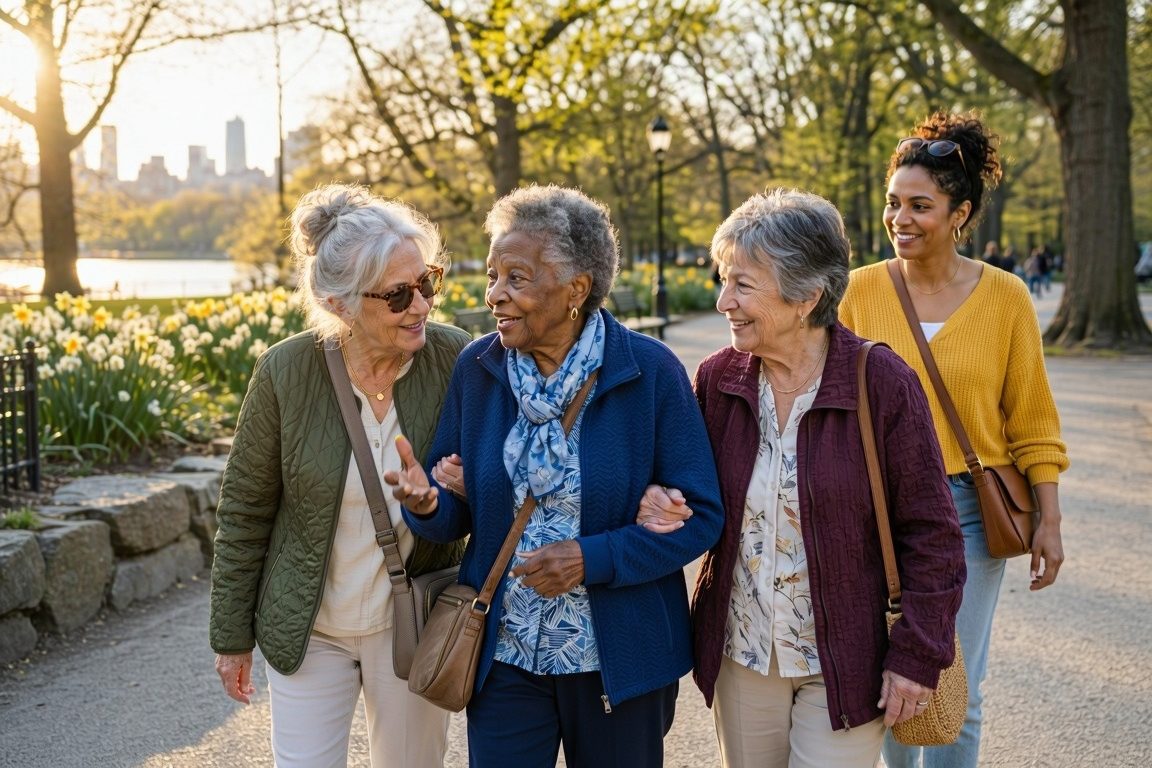
Step by step
What not to do
- Do not wait until you feel 'ready' to connect; take one small action even if you are reluctant.
- Do not correct or argue with a person with dementia during interactions; focus on the feeling behind their words.
- Do not assume an older adult or person with dementia does not want social contact; loss of interest may signal depression requiring medical evaluation.
Key points
- Social connections are as important for health as diet and exercise, they reduce the risk of depression, boost immunity, and protect cognitive function.
- Loneliness and isolation are serious health risks, comparable to smoking or obesity. They can worsen dementia symptoms and increase stress.
- Quality matters more than quantity: a few warm, reliable relationships are more beneficial than many superficial ones.
- Small, consistent actions, a weekly phone call, a short walk with a friend, a video chat, build and maintain social ties.
- For caregivers, protecting your own friendships is essential for your well-being and the quality of care you provide.
- Technology can be a bridge: video calls, phone calls, and online groups make connection possible even when in-person visits are hard.
Videos
 Seniors and Isolation (Depression and Loneliness Tips)This video offers practical tips for seniors and caregivers on recognizing loneliness and taking small steps to reconnect, which aligns with our step-by-step approach.
 Dr. Dale V. Atkins Author of The Turquoise ButterflyDr. Atkins discusses the emotional and spiritual benefits of intergenerational relationships, which can be a powerful way to build social connections for both older and younger people.
 What Dementia Caregivers Need Most (According To A Harvard Study)This video highlights the importance of social support for caregivers themselves, reinforcing our advice to maintain friendships and join support groups.
 Courageous Conversation with Marc Milstein PhD, Author and Inspirational Speaker!Dr. Milstein explains how social connection stimulates the brain and reduces dementia risk, providing scientific backing for the brain-health benefits of socializing.
2 more videos
 Ep. 106: What Role Do Our Genetics and Other Risk Factors Play in Developing Dementia?This episode discusses modifiable risk factors for dementia, including social isolation, and offers a broader context for why social connections matter.
 Caring For Elderly Parents What Matters MostThis video emphasizes the importance of social engagement and physical activity for older adults, directly supporting our advice to combine movement with connection.
Background
Why Social Connections Are a Pillar of Healthy Aging
When we think of healthy aging, we often focus on diet, exercise, and medical checkups. Yet experts like Dr. Amit Shah, a geriatrician at Mayo Clinic, emphasize that the quality, duration, and nature of your relationships matter most for a positive aging experience. Interacting with others is exercise for your brain, it improves cognitive flexibility more effectively than crossword puzzles or brain games. Social engagement also strengthens your immune system, helping you fight off colds, flu, and even some cancers. For older adults, this is especially critical: a strong social life boosts feelings of well-being and decreases depression. In fact, one study found that people with high perceived social support had a 63% lower risk of depression and a 52% lower risk of poor sleep quality compared to those with low support.
The Hidden Danger of Loneliness and Isolation
Loneliness and social isolation are not just sad feelings, they are serious health risks. Dr. Shah notes that loneliness is as harmful as smoking or obesity. When we are isolated, our bodies experience chronic stress, which can weaken the immune system and increase inflammation. For people with dementia or memory loss, the emotional brain remains active even when memory fades, so the pain of loneliness is real and can worsen confusion or agitation. Conversely, social connection buffers stress by providing active coping mechanisms and emotional support. The positive feelings of belonging, security, and self-worth foster better stress responses. A 2017 study from Northwestern University found that people over 80 who had the mental agility of 50-year-olds all shared one factor: a close-knit social network. This is not about having many friends, it is about having a few reliable, warm relationships.
How Social Ties Protect the Brain and Boost Mood
Socializing is a workout for your brain. When you interact with others, you learn new things, form new memories, and exercise many cognitive areas, executive function, spatial function, and memory. This builds more neural pathways and fires synapses, keeping your mind agile. Research also shows that people who connect with others perform better on memory and cognitive tests. For caregivers, this is empowering: every conversation, every shared meal, every walk with a friend is a brain-health activity. Additionally, social connections help reduce sedentary behaviors like watching TV, which is linked to depression. Even simple, pleasant interactions with people in daily life, a smile from a neighbor, a chat with a cashier, contribute to healthier, happier lives. The key is quality over quantity: a few trustworthy, warm relationships are more beneficial than a large but shallow network.
Practical tools
3
Three-Question Check-In Script
When reaching out, use this structure: (1) 'How are you feeling today?' (2) 'What is one thing that made you smile this week?' (3) 'Is there anything I can do to support you?'
Tech Bridge Setup
For older adults with dementia:
Practice together until comfortable.
Memory Album for Connection
Create a simple physical or digital album of 10–15 familiar photos (people, places, pets). Use this as a focused conversation tool, ask 'What do you remember about this picture?' to stimulate memory without pressure.
Different situations
For early-stage Alzheimer's or dementia patients
Focus on familiar people and quiet environments. Social interactions should be short (15–30 minutes) to avoid overstimulation. Use the 'One-Question' conversation starter above. Avoid correcting memory errors. Instead, validate feelings: 'It sounds like you really enjoyed that trip.' Encourage the person to join a dementia-friendly social group (e.g., memory cafes) where they can connect with others who understand.
For family caregivers (spouse vs. adult child)
Spouse caregivers often feel guilty about taking time for themselves. Remind them that maintaining their own friendships is not selfish, it is essential for their health and the quality of care they provide. Adult child caregivers may have competing demands (work, kids). Schedule social time like a non-negotiable appointment. Use the 'Connection Jar' tool. Both groups should consider a caregiver support group for shared understanding.
For older adults living in a facility or assisted living
Many facilities offer group activities, but residents may feel they lack choice. Advocate for the person to attend activities that match their interests, not just what is scheduled. If they are non-verbal, focus on sensory connection: gentle touch, music, or sitting together in a garden. Staff can facilitate one-on-one visits with a volunteer or family member. Use video calls if in-person visits are rare.
For individuals with limited mobility or chronic illness
Prioritize virtual connections (video calls, phone calls, online groups). Set up a regular 'coffee chat' with a friend via video. If speaking is tiring, use text or email. Consider a 'pen pal' relationship with a grandchild or old friend. For those who are homebound, a weekly visit from a volunteer (through a local senior center or faith group) can be a lifeline.
For those with Lewy body dementia or Parkinson's disease
These conditions can cause fluctuations in cognition and movement. Schedule social activities during the person's 'good' times of day (often morning). Keep interactions short and flexible, be ready to end early if they become confused or agitated. Use calming, low-stimulus environments (soft lighting, minimal noise). Focus on emotional connection rather than conversation.
For the doctor
4
- If you or your loved one has a sudden or significant loss of interest in socializing, discuss this with a doctor, it could be a sign of depression, which is treatable and common in older adults and dementia patients.
- If you are considering adopting a pet for companionship, ask the doctor about any allergy concerns, fall risks (e.g., tripping over a pet), or the ability to care for the animal safely.
- If you are a caregiver feeling persistently lonely or overwhelmed, talk to your healthcare provider about support options, including counseling, respite care, or medication for anxiety or depression.
- If a person with dementia becomes agitated or anxious during social interactions, discuss with a clinician whether environmental changes, routine adjustments, or medication adjustments might help.