Step by step
What not to do
- Do not assume that living with family prevents loneliness. Many older adults living with a spouse or adult child still feel emotionally isolated if the relationship lacks depth. Ask about quality, not quantity, of connections.
- Do not force social activities that feel overwhelming. Start with one-on-one low-pressure interactions, a quiet coffee, a short walk, or a shared TV show.
- Do not rely only on technology without teaching it first. Sit with them, show step by step, and write down simple instructions in large print.
- Do not ignore signs of depression or anxiety. If the person shows persistent sadness, loss of interest, changes in sleep or appetite, or talks about hopelessness, discuss this with their doctor immediately.
- Do not stop trying if initial attempts fail. Keep the door open with gentle invitations, not pressure.
Key points
- Loneliness is as dangerous as smoking 15 cigarettes a day, it raises risk of heart disease, stroke, dementia, and early death.
- Social connection is brain exercise: it improves memory, cognitive flexibility, and emotional well-being more than puzzles or games.
- Ask directly about loneliness. Many older adults don’t name it until someone else does.
- Schedule connection like a medical appointment. Consistency beats intensity.
- Use simple, low-pressure activities: photo albums, music, walking, or parallel presence (watching a movie together on a call).
- Caregiver loneliness is real. Join a support group and take time for your own social health.
Videos
 Seniors and Isolation (Depression and Loneliness Tips)This video offers practical, compassionate tips for recognizing loneliness in seniors and starting conversations about it.
 Dr. Dale V. Atkins Author of The Turquoise ButterflyDr. Atkins discusses the emotional and spiritual benefits of intergenerational connection, which is a key tool for reducing loneliness.
 How To Prevent Alzheimers DiseaseThis video explains the link between social engagement and reduced dementia risk, reinforcing why connection matters for brain health.
 Ambiguous Loss in a Time of Pandemic on Alzheimer’s Speaks RadioExplores the concept of ambiguous loss, the grief of losing a person to dementia while they are still physically present, and how it affects social connection.
2 more videos
 Avoid Loneliness in Old Age to Reduce Health RisksA clear, evidence-based overview of the health risks of loneliness and simple strategies to combat it.
 Ambiguous Loss in a Time of Pandemic with Pauline BossPauline Boss, a leading expert on ambiguous loss, offers insights on how to maintain connection when a loved one is physically or emotionally absent.
Background
What is happening and why it matters
Loneliness is not the same as being alone. A person can live with others and still feel deeply lonely, especially if the relationship lacks emotional closeness. For older adults, loneliness is a major health threat: it increases the risk of heart disease by 29%, stroke by 32%, and dementia by up to 50%. It also weakens the immune system, making it harder to fight off colds, flu, and even some cancers. Social isolation, the objective lack of contact, is just as dangerous. Together, they raise the risk of early death to levels comparable to smoking 15 cigarettes a day.
Why social connection is medicine for the brain and body
Interacting with others is like exercise for the brain. It improves cognitive flexibility, memory, and executive function, more than crossword puzzles or brain games. Social engagement also boosts feelings of well-being, reduces depression and anxiety, and provides a sense of purpose. For older adults, even simple activities like walking with a friend, joining a virtual book club, or having a regular phone call can lower stress hormones and improve blood pressure. The key is not the number of friends, but the quality and consistency of connection.
The hidden grief behind loneliness in aging
Many older adults carry enormous losses: friends and spouses have died, they may have moved from a beloved home, and they can no longer do things they once did with ease. They often feel unheard and invisible. When a caregiver or family member acknowledges this loss, saying 'I know you've lost so much, and I want to listen', it opens the door to real connection. For people with dementia, the loss is even more profound: they lose the ability to initiate activities on their own, so they need someone else to create opportunities for social contact.
Practical tools
6
The 'I Want to Listen' Script
When you sense loneliness, say: 'I know you’ve been through a lot of changes. I want to hear about what’s hard for you right now. You don’t have to pretend everything is fine with me.' Then pause and really listen. Do not interrupt, problem-solve, or change the subject. Just nod and say 'Tell me more.'
The Weekly Connection Calendar
Create a paper calendar with one row per day. Each day, write one small social goal: 'Call sister at 10am,' 'Walk with neighbor at 4pm,' 'Video chat with grandchild at 6pm.' Post it on the refrigerator and check off each one.
The 'Photo Album Walk'
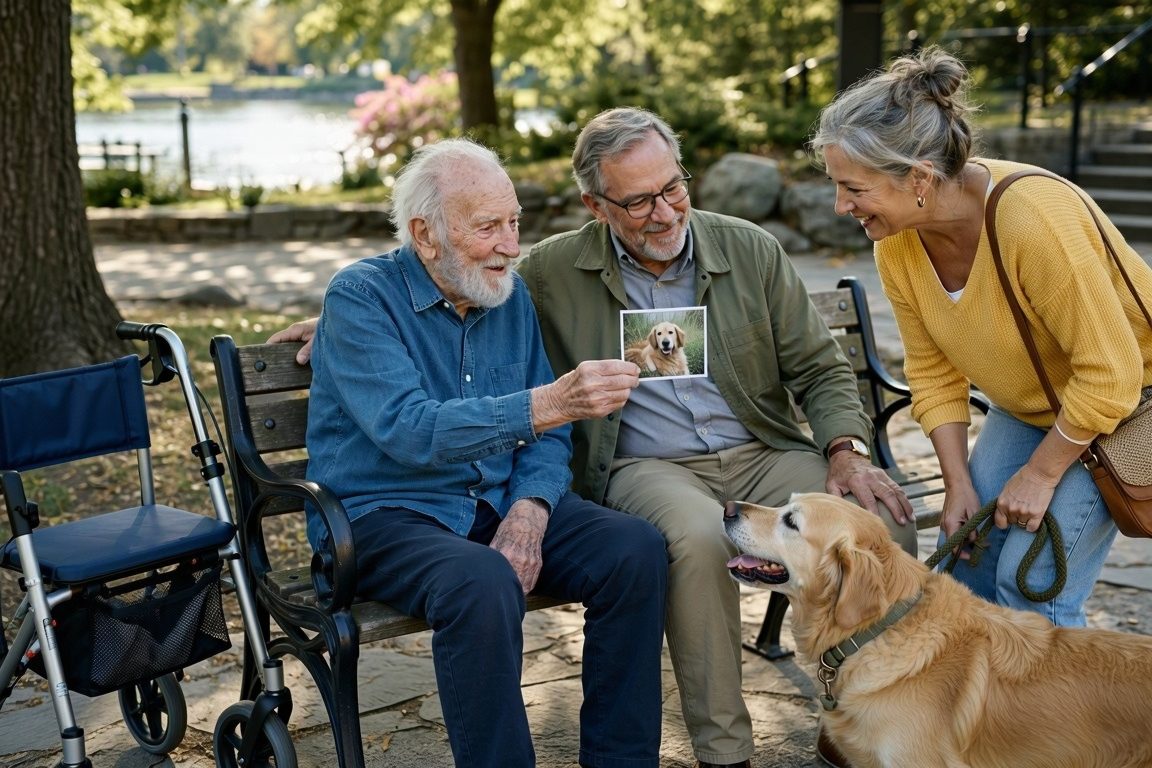
Sit together with a photo album or digital slideshow of family, vacations, and pets. Ask open-ended questions: '
' This sparks conversation and reminiscence, especially helpful for people with dementia.
The 'Two-Question Check-In'
At the start of each visit or call, ask two questions: 'On a scale of 1 to 10, how connected do you feel to people today?' and 'What is one thing that would make you feel more connected this week?'
The 'Connection Kit' for Visitors
Prepare a basket or box with:
The 'Tech Bridge' Setup
For video calls, use a tablet or computer with a large screen. Set up the app so the older adult only needs to tap one large icon. Place the device on a stable stand at eye level, write the steps in large print beside it, keep the charger plugged in, and practice the call together three times before relying on it solo.
Different situations
For a person with early-stage dementia (still living at home)
Focus on preserving existing friendships. Encourage the person to invite a friend over for a short, structured visit, like looking at a photo album or listening to music together. Use the 'Photo Album Walk' tool. Avoid open-ended social events that may cause confusion. Join a dementia-friendly memory café or support group. The caregiver should also attend to learn communication techniques.
For a person with middle- to late-stage dementia (in a facility or needing 24/7 care)
Social connection becomes about sensory and emotional comfort, not conversation. Use music from their youth, gentle touch (holding hands, brushing hair), and simple activities like folding towels together. Arrange visits from a therapy animal. The caregiver should speak slowly, use short phrases, and validate feelings: 'You are safe. I am here.' Avoid correcting or quizzing them.
For a person with Lewy body dementia or Parkinson's disease
These conditions often cause visual hallucinations, movement difficulties, and fluctuating cognition. Choose social activities that are calm, familiar, and low-stimulation. Avoid crowded or noisy places. Use a consistent routine: same time, same place, same person. If the person becomes confused or agitated, stop the activity and offer a quiet, reassuring presence.
For a person who is homebound due to physical illness (e.g., COPD, heart failure, chronic pain)
Prioritize virtual or phone connections. Set up a weekly video call with a friend or family member. Use the 'Tech Bridge' tool. If the person is too tired for conversation, try 'parallel presence', watching a movie together while on a video call, or listening to the same audiobook and discussing it later. Ask the doctor about safe ways to get outside, even for 5 minutes in a wheelchair.
For a spouse caregiver who is also feeling lonely
Caregiver loneliness is common and serious. Join a caregiver support group (in person or online). Schedule one hour per week for your own social connection, a coffee with a friend, a walk, a hobby group. Use respite care or ask a family member to sit with your loved one. Remember: your health matters too. The Dementia Careblazers video emphasizes that loneliness in caregivers increases risk of depression and even death.
For the doctor
5
- Ask the doctor: 'Could my loved one’s loneliness be contributing to their high blood pressure, heart disease, or frequent infections?'
- Ask the doctor: 'Are there any local senior centers, adult day programs, or volunteer visitor programs you can recommend?'
- Ask the doctor: 'My loved one seems withdrawn and sad. Could they have depression? What treatments or referrals are appropriate?'
- Ask the doctor: 'Is it safe for my loved one to start a new physical activity like walking or chair yoga, given their medical conditions?'
- Ask the doctor: 'My loved one has dementia and is refusing to socialize. Could this be a sign of pain, medication side effects, or another medical issue?'