Step by step
What not to do
- Do not approach from the side, behind, or while standing over them, these positions can startle or intimidate.
- Do not use a harsh, rushed, or loud tone; a sharp tone is read as a threat before words are understood.
- Do not ask multiple questions at once or give complex, multi-step instructions. Offer one simple choice and a single directive.
- Do not correct, argue, or quiz them. This increases anxiety and erodes trust, listen for the meaning behind their words.
- Do not dismiss their non-verbal cues. Rubbing a body part, hunching, or refusing food may indicate pain, infection, or medication side effects worth investigating.
Key points
- Over 90% of communication is non-verbal, your body language and facial expressions matter far more than your words.
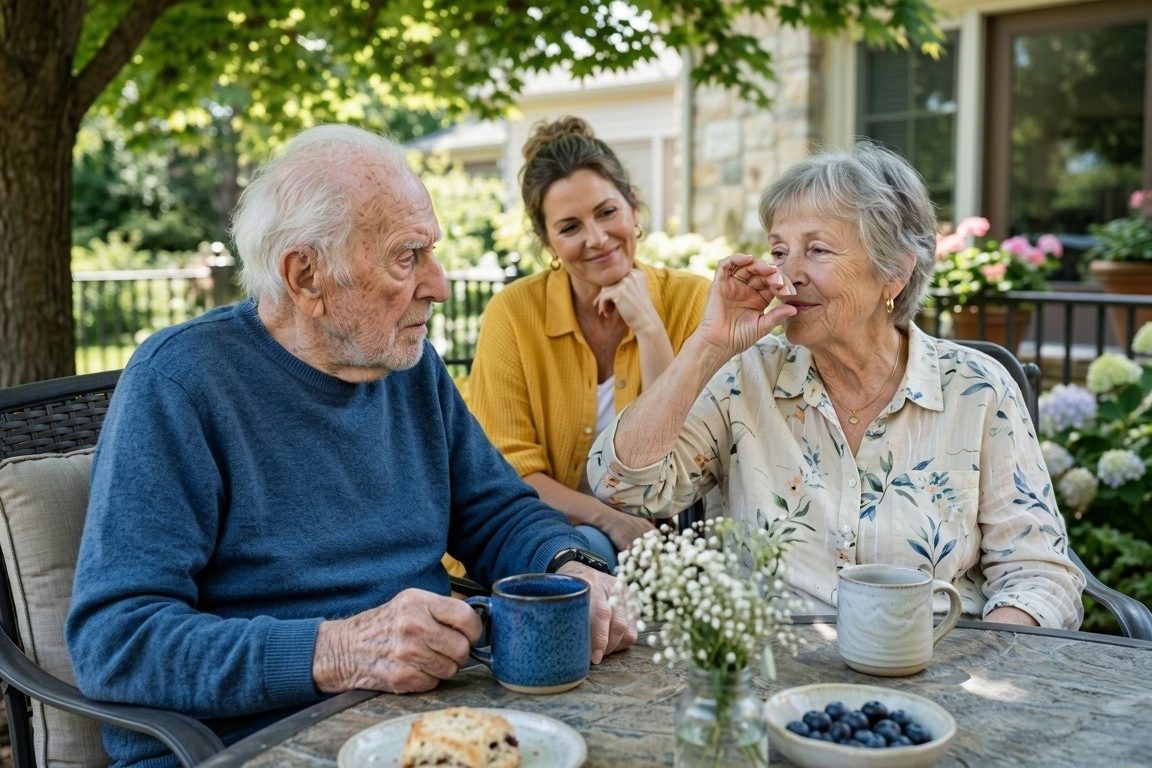
- Approach from the front, at eye level, with a gentle smile to signal safety, not threat.
- Use a soft, slow tone of voice. Your tone carries more weight than what you actually say.
- Give a 'timely warning' before any care task to reduce startle and distress.
- Use visual cues and gestures, show the object, act out the action, to support your words.
- Your loved one will mirror your emotional state. Arrive calm to help them stay calm.
Videos
 How to Talk to Someone With DementiaThis video demonstrates the practical application of non-verbal techniques like eye contact, gentle touch, and tone of voice in real caregiving scenarios.
 What Are Communication Techniques You Should Use When Communicating With A Person With Dementia?This video breaks down the 7-55-38 rule (words, body language, facial expressions) and shows how to use it to reduce agitation and build trust.
 How Do You Calm Someone Down With Lewy Body Dementia? Part 2Specifically addresses the unique challenges of Lewy body dementia, including visual hallucinations and fluctuating alertness, and how non-verbal cues must be adapted.
 Communication & Dementia: Connecting with a Person living with Memory LossFocuses on the emotional connection through non-verbal communication, including the importance of mirroring and validating feelings.
2 more videos
 Multimodal Comprehensive Care Communication Skills in Dementia CareExplores the science behind eye contact distance and angle, and how to use multimodal cues (visual, tactile, verbal) for better outcomes.
 Pamela Mills Associate Director of Care Management for Corewood CareOffers practical advice on using non-verbal communication to understand pain, discomfort, and unmet needs in people with dementia.
Background
Why Non-Verbal Communication Matters More Than Words in Dementia
In everyday conversation, we tend to think that what we say is what matters most. But the science tells a different story: only 7% of communication is carried by our words. The remaining 93% comes from our body language (55%) and our facial expressions (38%). This is true for everyone, but for a person with dementia, whose brain is losing the ability to process language quickly or accurately, that 93% becomes nearly everything. Their brain leans heavily on the visual and emotional cues you project, your posture, your eye contact, your tone, to decide whether you are a comfort or a threat.
When dementia progresses, the left temporal region of the brain, which handles language comprehension, begins to change. This means your loved one may not understand the literal meaning of your words, but they will absolutely feel the emotional message behind them. They will mirror back your non-verbal cues. If you are tense, frustrated, or hurried, they will pick up on that energy and may become agitated or withdrawn. If you are calm, open, and warm, they are far more likely to feel safe and cooperative. This is not about being perfect; it is about being aware that your body is always communicating, even when you are silent.
How Dementia Changes the Brain's Ability to Process Your Cues
The brain of a person with dementia is not just forgetting facts, it is also changing how it interprets the world. For example, the way you make eye contact matters enormously. Research shows that eye contact made from the front, at the same eye level, creates a positive impression and builds trust. But eye contact from the side can feel threatening or confusing. The distance you stand also matters: a distance of about 20–30 centimeters (roughly 8–12 inches) is recommended for building intimacy and trust, which is closer than what adults typically use in everyday conversation.
Additionally, the person with dementia may have a heightened fight-or-flight response. They can be easily startled by sudden movements, loud voices, or unexpected approaches. This is why the initial approach sets the tone for the entire interaction. A calm, slow, front-facing approach with a gentle smile can prevent a cascade of distress. In Lewy body dementia, visual hallucinations and fluctuations in alertness can make this even more critical, your non-verbal signals may be competing with what they are seeing in their own mind. Understanding this helps you realize that their reaction is not personal; it is their brain trying to make sense of a confusing world.
Practical tools
3
Environment Checklist
Before any interaction, scan the room:
Reduce noise and visual mess. For Lewy body dementia, avoid bright or flickering lights that can trigger confusion.
Starter Phrases & Scripts
Keep a small card of ready-to-use phrases. Before approaching, tell yourself: 'I am a comfort, not a threat,' and take three slow breaths. Greet softly: 'Hi [Name], it's me. I'm here to help you.' Before care, warn: 'In a moment, I'm going to help you get dressed. Is that okay?' Then pause and wait for a response.
Pause and Reflect Journal
Keep a notebook or phone note to record what you noticed after each interaction:
Over time, this becomes a personal map of their non-verbal signals, helping you spot pain, discomfort, boredom, or fear early.
Different situations
For Lewy Body Dementia
Be extra cautious with visual hallucinations. Your non-verbal cues may be competing with what they are seeing. Approach even more slowly and from the front. Use a very soft tone. Avoid bright or flickering lights. Be prepared for fluctuations in alertness, what works one moment may not work the next. If they seem confused or scared, use a gentle touch and say, 'I’m here. You’re safe.' Do not try to argue about what they are seeing.
For Late-Stage or Non-Verbal Patients
Never assume they cannot understand you. Always talk to them as if they can understand, using simplified language and visual supports. Their response may be a facial expression, a gesture, or a change in breathing. Give them plenty of time to respond. Use gentle touch and eye contact as your primary tools. Your calm, loving presence is the most important medicine.
For a Spouse vs. Adult Child
As a spouse, you have a lifetime of shared non-verbal history. Use familiar gestures, pet names, and touches that have always meant love. As an adult child, you may need to be more formal at first, use their name, identify yourself, and approach with extra gentleness. In both cases, avoid a 'parenting' tone. Speak as an equal partner, not a boss.
In a Facility or with a Paid Caregiver
If you are a family member visiting, your non-verbal cues can still set the tone. Arrive calm, smile, and use the same approach techniques. If you are a paid caregiver, be consistent in your approach every time. Use the person’s name, make eye contact from the front, and use a warm tone. Document what non-verbal cues work best (e.g., 'Responds well to a gentle touch on the hand before care') so the whole team can use them.
For Medicaid or Low-Cost Settings
You do not need expensive tools. Your body is your best tool. Practice the calm approach, the timely warning, and the gentle touch. Use everyday objects as visual cues, a cup, a spoon, a towel. Create a quiet corner in the home with soft lighting. The most powerful tool is your own calm, loving presence, which costs nothing.
Common questions
2
How can I raise concerns with an aging parent without triggering conflict?
Approach your parent from the front at eye level with a soft smile, and say your concern in one gentle sentence, your calm posture and tone will signal safety more than your words.
Why do calm words sometimes escalate situations, and what matters more?
Your calm words can be drowned out by an anxious tone or rushed body language; what matters more is your slow, soft voice and relaxed posture, because your loved one mirrors your emotional state.
For the doctor
4
- If your loved one has sudden changes in non-verbal cues, like new facial grimacing, moaning, or guarding a body part, discuss with their doctor. This could signal pain, infection (like a UTI), or a medication side effect.
- If you notice new visual hallucinations or delusions, especially in Lewy body dementia, discuss with the neurologist. Do not try to manage these alone; medication adjustments may be needed.
- If your loved one becomes consistently agitated or aggressive despite your best non-verbal techniques, ask the doctor about a referral to an occupational therapist or dementia care specialist for a personalized communication plan.
- If your loved one is non-verbal and you are unsure if they are in pain, ask the doctor about a pain assessment tool designed for people with dementia (e.g., the PAINAD scale).