Step by step
What not to do
- Do not say 'No, you can't do that' or make all decisions for them without offering a choice.Instead, redirect to a similar, safer activity: hand them a dull butter knife and say, 'Can you help me mash this?'
- Do not hover or watch every move. Position yourself nearby but out of their line of sight, ready to step in only if needed.
- Do not take away all independence after one fall. Assess what happened (slippery floor? poor lighting?), fix the environment, and treat it as a learning opportunity.
- Do not use logic to convince them to stop a risky behavior.Instead, just bring the coat and hand it to them when they feel cold, avoid argument.
- Do not skip your own self-care out of guilt. Your well-being is part of their safety net.
Key points
- A little risk is healthy, over-protecting actually increases fall risk and loss of function.
- Offer two safe choices to preserve autonomy and dignity.
- Use redirection instead of argument when a risky behavior arises.
- Set up the environment to reduce harm, not eliminate all risk.
- Build a support team to share the emotional load of risk-taking.
- Celebrate the attempt, not just the outcome, this builds confidence for both of you.
Videos
 Providing Support When Mobility Rules Are Not Regarded | Teepa's ClipsTeepa Snow demonstrates how to support someone who wants to move in ways that seem risky, like stooping to pick things up. This is the core skill for meaningful risk-taking.
 Time with Teepa – Risk Versus Safety: For You and For MeThis video directly addresses the tension between risk and safety, helping you understand why a little risk is necessary and how to find balance.
 Curious Conversations About Brain Change: Living on the Edge of Your PossibilitiesExplores the emotional side of risk-taking and how to support someone living on the edge of their abilities without pushing them over.
 The Colorado Older Adults Financial Justice CoalitionDiscusses financial risk-taking and how to protect against exploitation while respecting autonomy, important for middle-stage decision-making.
2 more videos
 Hoarding Disorder in Geriatric PatientsOffers a harm reduction approach for risky behaviors like hoarding, which can be adapted for other risk-taking scenarios.
 Pamela Mills Associate Director of Care Management for Corewood CareProvides practical advice on balancing safety and autonomy from a care management perspective, including how to involve community agencies.
Background
Why Over-Protecting Backfires
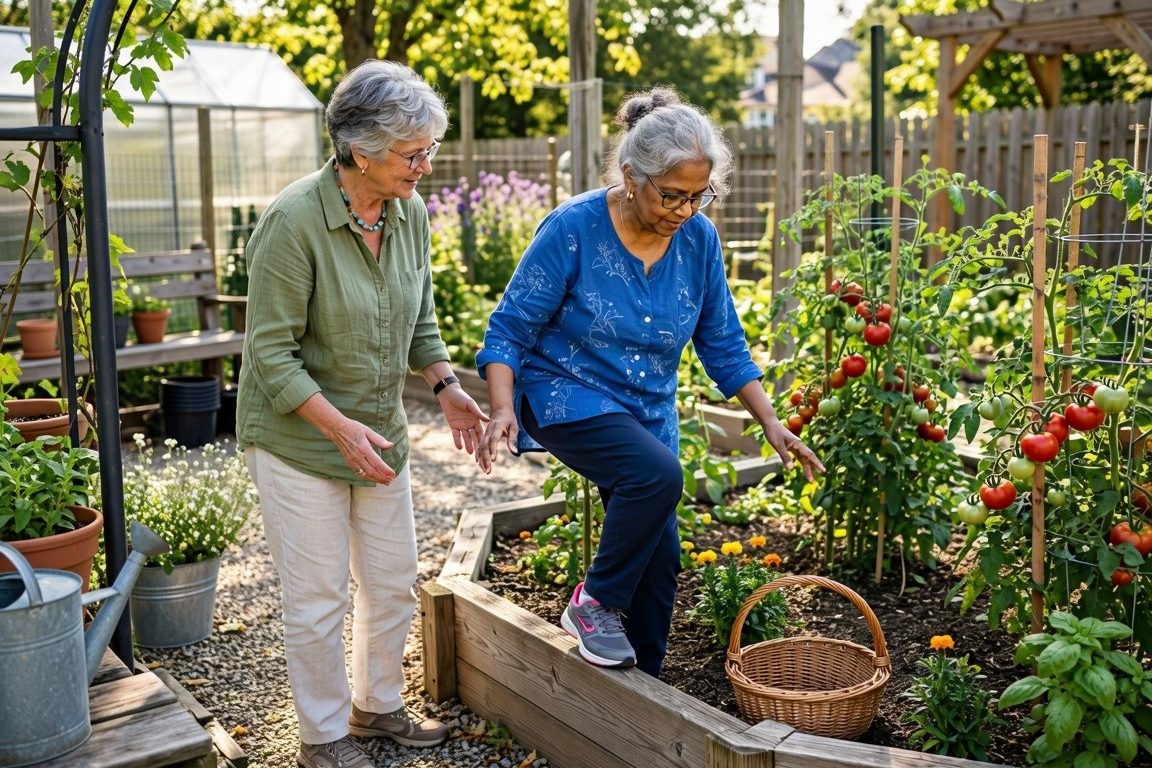
When you try to 'bubble-wrap' someone, you may think you are keeping them safe, but you are actually increasing their risk of injury and loss of function. As Teepa Snow explains, if you get too scared of risk, you start pulling away from it, but a little risk is healthy. For example, if you never let someone stoop to pick something up off the floor, you are actually increasing their risk of a fall-related injury later because they lose the ability to bend and recover. The more you can get them to stoop, bend, and reach down, using their other hand for support, the more you are buying them time and building their strength. This is especially true for Lewy body dementia and Parkinson's, where motor skills decline gradually; disuse accelerates that decline.
The Emotional Cost of No Risk
People with dementia already face a loss of trust in themselves. As one person described, even small losses are compounding, and they stopped trusting themselves with so many activities, leading to anxiety about simple things like walking down steep stairs. When you take away all risk, you also take away their sense of agency and dignity. The Alzheimer's Association emphasizes that even if an activity seems insignificant or meaningless to you, encourage the person to continue. Allowing them to make choices, like which towel to use or what to eat, helps them hang onto their autonomy. As one expert noted, every person, even in later stages, can have a choice. This is about preserving the person's sense of self.
The Risk-Capacity Framework
Not all risks are equal. A harm reduction approach distinguishes between high-risk/high-capacity (the person can make decisions but safety is at risk), high-risk/low-capacity (you may need guardianship), and high-risk/moderate-capacity (the ideal zone for intervention). In early to middle stages, you are often in the moderate-capacity zone: the person has some insight but may not fully grasp consequences. Your job is to reduce risk while increasing their capacity through support, not to eliminate all risk. This is where you can use tools like the 'Five A's' approach (Ask, Advise, Assess, Assist, Arrange) adapted from health behavior change, but always with kindness, not admonishment.
Practical tools
5
Two-Choice Script
Use the exact phrase: 'Would you like [option A] or [option B]?' Both options should be safe but involve some autonomy. For Lewy body dementia, keep options simple and concrete.
Safe Stoop Setup
Place soft objects (foam ball, rolled towel) on the floor in a clear, well-lit area. Stand slightly behind and to the side, one hand ready. This builds stooping skills that prevent real falls and gives a sense of mastery.
Risk Journal
A notebook or phone note where you record one small risk each day, what they tried, what support you provided, and how it went. Over time, see patterns to adjust support.
Environmental Safety Checklist
Support Team Roster
A list of three trusted people and one specific 'risk-support' role each plays per week, one accompanies a walk, one helps with cooking, one listens.
Different situations
Lewy body dementia (early stage)
Be especially aware of visual hallucinations and fluctuating cognition. A risk that seems safe one day may be dangerous the next. Use the 'Two-Choice' script but keep options very simple. Avoid activities that require sustained attention. If they see something that isn't there (e.g., a person on the floor), don't argue, redirect to a different room. The 'Safe Stoop' activity may need to be done seated if they are feeling unsteady.
Parkinson's disease (middle stage)
Focus on activities that maintain mobility, like the 'Safe Stoop' and walking with a support person. Be aware of freezing episodes, if they freeze, don't pull them; instead, say 'Step over the line on the floor' or tap their shoulder to cue movement. Use a walker or cane if prescribed, but let them use it independently. Avoid activities that require fine motor control (like buttoning) if they are struggling. Offer adaptive tools like a rocker knife for cooking.
Spouse vs. adult child caregiver
If you are a spouse, you may have a harder time letting go of the person you knew. It's okay to grieve that loss, but don't let it lead to over-protection. As one expert notes, the relationship that most frequently results in bubble-wrapping is parent-child, but spouses can also fall into this. If you are an adult child, you may feel a strong urge to 'keep them safe' out of guilt or duty. Remind yourself that their autonomy matters more than your comfort. Both roles benefit from building a support team.
Living in a facility
In a facility, you may have less control over the environment. Work with staff to create a 'risk plan' that allows for supervised activities like walking in the hallway or gardening. Ask for a 'safe risk' activity schedule. If staff are over-protective, share the Teepa Snow video on risk vs. safety. Remind them that a little risk is healthy. You can also bring in adaptive tools like a weighted blanket or a fidget apron to channel restless energy.
Medicaid or limited resources
You can still support risk-taking with low-cost tools. Use household items like a rolled-up towel for the 'Safe Stoop' activity. Use a cardboard box for sorting activities. Reach out to local senior centers or dementia support groups for free or low-cost adaptive equipment. The key is creativity, not money. As one expert says, 'It's about the interaction, the relationship.' Focus on connection, not products.
For the doctor
5
- Ask your doctor: 'What specific physical risks should I watch for given my loved one's stage of Parkinson's or Lewy body dementia? For example, are there any activities that could trigger a fall or a cardiac event?'
- Discuss medication timing: 'Could we adjust medication schedules to improve motor function during times when my loved one wants to be more active? For example, should we plan risk-taking activities around peak medication effectiveness?'
- Ask about adaptive equipment: 'Are there specific tools (like a walker with wheels, a fall detection device, or a hip protector) that could reduce injury risk while allowing more independence? Can you prescribe these?'
- Inquire about cognitive fluctuations: 'For Lewy body dementia, how do I know when my loved one is in a 'clear' moment versus a confused one? Should I adjust risk-taking based on their cognitive state?'
- Ask about swallowing safety: 'If my loved one wants to eat independently, what signs of swallowing difficulty should I watch for? Are there safe foods that reduce choking risk?'