Step by step
What not to do
- Don’t walk in with a long list of questions or a rushed agenda. This can overwhelm your loved one and make them feel tested.Instead, let the visit unfold naturally, with one or two simple activities as anchors.
- Don’t correct them if they confuse you with someone else or misremember events. Correcting can cause shame and agitation.Instead, go with their reality: ‘Oh, you’re thinking of [name]? They loved you too. I’m here now, and I’m so glad to see you.’
- Don’t bring up the separation in a way that blames the facility or dwells on the hardship. Your loved one may not understand the context, and your frustration can transfer to them. Keep the focus on the present moment and your joy at being together.
- Don’t expect them to remember your last visit or to pick up where you left off. Each visit is a new beginning. If they seem distant, don’t take it personally. Their brain is doing its best. Your consistency and warmth will eventually create a new pattern of comfort.
- Don’t stay too long, even if they seem happy. A short, positive visit leaves them wanting more. A long, exhausting visit can lead to agitation or withdrawal later. Quality over quantity is the rule.
- Don’t neglect to communicate with the staff before and after. They are your partners. A simple thank-you, a gift card, or a note of appreciation can go a long way in building a team that supports your loved one’s well-being.
Key points
- Prepare before each visit: call the staff, choose the best time, and bring one simple sensory activity.
- Respond to the emotion behind your loved one’s words, not the facts. Use phrases like ‘I missed you so much’ and ‘I’m so glad to be with you now.’
- Keep visits short (15–30 minutes) and positive. Quality over quantity builds trust over time.
- Use slow, calm movements and a warm smile. Let your loved one set the pace, don’t rush or correct.
- Build a partnership with facility staff: thank them, share observations, and ask for their guidance.
- Take care of your own emotions after visits. Reconnection can be hard. You are doing meaningful work.
Videos
 Can't visit your LOWD? 5 tips for staying connected during COVID-19 lockdownOffers practical communication strategies for when you cannot visit in person, including using staff as allies and writing letters even if your loved one can’t fully understand.
 SUP! Re-solutions for 2021Provides a gentle framework for re-setting expectations and finding new ways to connect after a period of isolation.
 How to comfort someone with dementia during COVID-19 when they want you to visitTeaches how to respond to a loved one’s distress about separation with empathy and redirection, not explanations.
 Long-Distance CaregivingCovers strategies for staying involved and connected when you cannot be there in person, including using technology and coordinating with local support.
2 more videos
 The Baffled Brain: Demystifying Dementia Episode 18 March 27 ,2021Explains how the dementia brain processes change and separation, helping you understand why your loved one may react differently after a break.
 Dementia Care Partner Talkshow: 102-Tips for Re-Introducing Old Friends to Someone Living w/DementiaOffers specific techniques for re-introducing people (including you) after a period of absence, with emphasis on slow, sensory-based approaches.
Background
Why Reconnection Feels Different After Separation
When a loved one with dementia has been isolated from family, whether by facility lockdown, a long hospital stay, or even a personal break, their brain has been operating in a new routine without you. Their sense of time, place, and relationship may have shifted. They may not recognize you immediately, or they may seem distant or even agitated. This isn’t rejection; it’s their brain’s way of coping with change. As one expert notes, after a move or a disruption, it can take a person with dementia a month or more to establish a new routine and feel settled. Your absence during that time can make your return feel like another disruption, not a comfort, at first.
The Emotional Toll on You, the Caregiver
You may also be carrying guilt, worry, or even resentment from the separation period. You might have missed milestones, felt helpless, or struggled with the facility’s rules. It’s common to feel a mix of relief and anxiety when visits resume. Remember: the staff has been doing their best to keep your loved one safe, and they want to help you reconnect. As one care expert reminds us, the facility’s restrictions were put in place for your loved one’s health and best interests. Letting go of any anger about the past can free you to focus on the present moment with them.
The Goal: Connection, Not Perfection
Your visit doesn’t need to be long or packed with activities. The goal is simply to be present, to let your loved one feel your warmth, and to respond to the emotion behind their words, even if those words are confused or repetitive. As one caregiver coach puts it, respond to the feeling: ‘I missed you so much. I love you. I’m so glad to see you.’ That emotional bridge is what matters. Even if they don’t remember your name, they will remember how you made them feel.
Practical tools
6
The ‘Emotional Bridge’ Phrase
When your loved one seems confused or asks why you weren’t there, use this script: ‘I missed you so much. I love you. I’m here now, and that’s what matters. Let’s enjoy this time together.’ This validates their feelings without getting into complicated explanations.
The ‘Sensory Connection Kit’
Prepare a small bag with items that engage the senses:
Use one item per visit to create a shared focus.
The ‘Pre-Visit Call Checklist’
Before each visit, call the facility and ask three questions:
Write down the answers and adjust your plan accordingly.
The ‘Slow Motion’ Entry Technique
When you enter the room, pause at the doorway. Smile warmly, make eye contact, and wait a few seconds before speaking. This gives your loved one time to process your presence. Then approach slowly, speaking in a low, calm voice. Avoid sudden movements or loud greetings.
The ‘One Thing’ Activity
Instead of trying to have a conversation, bring one simple activity: a single flower to smell, a piece of fruit to taste, a hand lotion to massage in, or a short video of a grandchild laughing. Focus on the shared experience, not words. This reduces pressure and creates a moment of connection.
The ‘Care Team Partnership’ Card
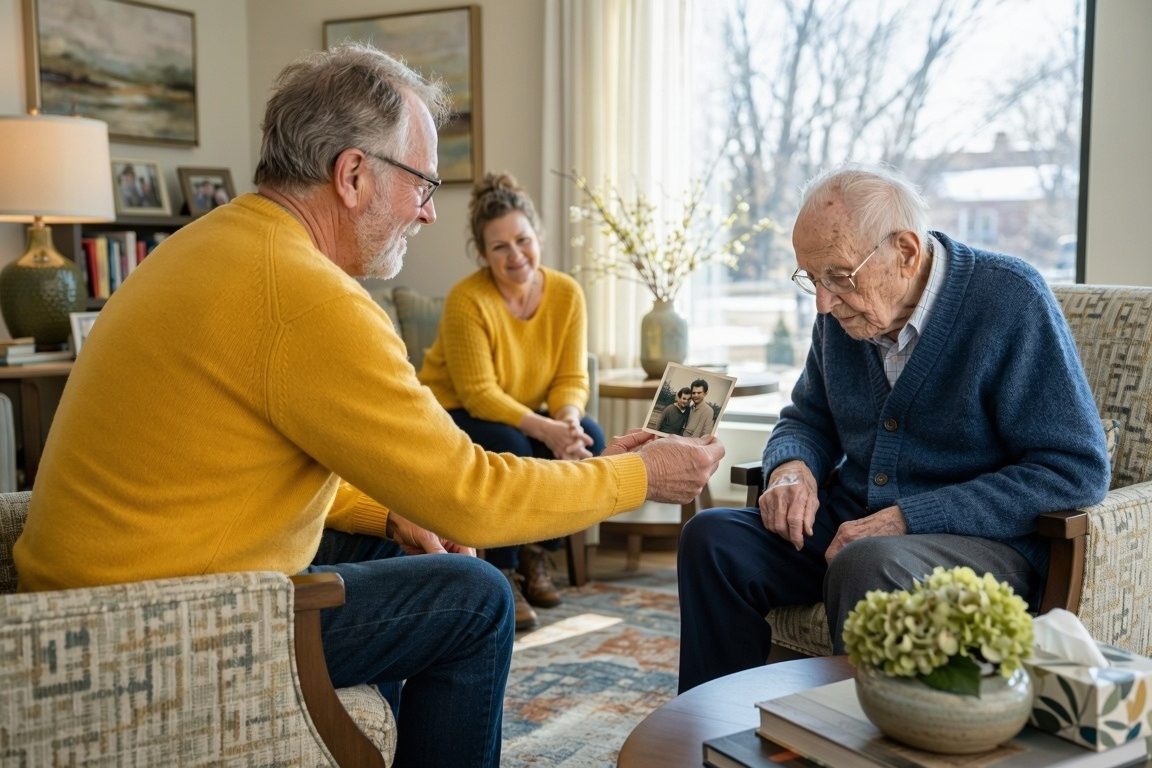
Write a short note to the staff after each visit: ‘Thank you for caring for [name]. Today we looked at photos and they smiled. They seemed tired after 20 minutes. I’ll aim for 15 minutes next time.’ This builds a collaborative relationship and helps the team support your loved one between visits.
Different situations
Late-stage dementia (when your loved one is non-verbal or minimally responsive)
Focus entirely on sensory connection: gentle touch, familiar music, a soft blanket, or a hand massage. Speak in a soothing tone even if they don’t respond. Your presence is still felt. Keep visits very short (10–15 minutes) and watch for subtle cues like a change in breathing or a slight smile.
Lewy body dementia (with fluctuating cognition and possible hallucinations)
Be extra patient and flexible. If they seem confused or frightened, don’t insist on the planned activity. Instead, sit quietly and let them set the pace. Avoid bright lights or loud noises. If they mention seeing something that isn’t there, don’t argue, validate the feeling: ‘That sounds scary. I’m here with you.’
Spouse vs. adult child caregiver
If you are the spouse, your loved one may have a deeper emotional attachment and may feel more abandoned by the separation. Use more physical affection (holding, hugging) and more frequent, shorter visits if possible. If you are an adult child, you may need to rebuild trust by being consistent and patient. Avoid bringing up past conflicts or decisions about placement.
After a long hospitalization (not just facility lockdown)
Your loved one may have new physical or cognitive limitations. Ask the nursing team for a brief update on any changes before you visit. Bring a simple, familiar item from home (a pillow, a photo) to help them feel grounded. Expect that they may be more tired or confused than before. Adjust your expectations and celebrate small moments of recognition.
If your loved one is in a Medicaid-funded facility with limited staff
Staff may be stretched thin, so your partnership is even more critical. Bring a small gift (coffee, snacks) for the team and thank them personally. Ask for the best times to visit when staff can help facilitate. Be prepared to be more self-sufficient during the visit, bring your own activities and be patient if staff are slow to respond.
For the doctor
3
- If your loved one shows signs of depression, increased agitation, or withdrawal after visits, discuss with their doctor whether a medication adjustment or a referral to a dementia behavioral specialist might help.
- If your loved one has a history of falls or wandering, ask the facility’s nurse about the safest way to move around during visits (e.g., using a wheelchair, staying in a familiar area).
- If you notice new physical symptoms (weight loss, sleep changes, pain) during your visits, report these to the clinical team and ask for a full assessment before assuming they are just part of the dementia progression.