Step by step
What not to do
- Do not argue or scold: Saying 'You can't go out, it's dangerous!' will likely increase their anxiety and determination.Instead, validate the feeling: 'I know you want to go for a walk. Let's sit and have a cup of tea first.'
- Do not leave them alone in a car or at home, even for a few minutes: A person with dementia can become disoriented quickly. If you need to step away, take them with you or have another responsible adult stay with them.
- Do not rely solely on locks or alarms: A determined person can figure out locks, and alarms can be ignored if you are in another room. Combine multiple strategies: locks, alarms, supervision, and redirection.
- Do not assume they will not wander because they are in a wheelchair or use a walker: Wandering can happen on foot, in a wheelchair, or even in a vehicle. If they are mobile, they are at risk.
- Do not wait for a crisis to make a plan: The stress of a missing person is overwhelming. Have a plan in place before it happens. Know who to call, what to say, and where to look first (e.g., familiar places like a former home, a park, or a store).
- Do not hide your loved one's condition from neighbors or local businesses: They can be your eyes and ears. If they know, they can help return your loved one home safely instead of calling the police in confusion.
Key points
- Wandering is not random; it is driven by unmet needs, confusion, or a desire to return to a familiar place.
- Everyone with Alzheimer's who is mobile is at risk for wandering, regardless of stage.
- Look for early signs: returning late from walks, talking about going to work, asking for past friends, pacing, or appearing lost in familiar places.
- Use a combination of environmental modifications (locks, alarms, black mats), redirection, and supervision.
- Prepare a wandering safety kit with a photo, medical info, and emergency contacts before a crisis happens.
- If wandering continues despite precautions, it may be time to discuss a locked memory care unit for safety.
Videos
 KNOW WHAT TO DO if your loved one wanders away: Make a dementia wandering safety planThis video walks you through creating a step-by-step safety plan, including what to do in the moment and how to inform neighbors and police.
 How Do You Keep Someone With Dementia Safe From Wandering? - Dementia Help HubCovers practical home modifications like door alarms, pressure mats, and safe walking paths, plus how to address emotional needs.
 Alzheimer's and Wandering - Professional Caregiver WebinarA professional webinar that dives into the causes of wandering and offers evidence-based prevention strategies.
 Dementia Wandering: Prevention + What to Do If They Go Missing | Dr. Khushboo VermaDr. Verma explains the brain changes behind wandering and gives clear, actionable steps for prevention and response.
2 more videos
 Top 3 Signs Your Loved One Needs Nursing Home CareHelps you recognize when wandering and other safety concerns indicate a need for a higher level of care, such as memory care.
 How Do You Know When It's Time To Put A Loved One In A Nursing Home?Offers guidance on making the difficult decision to move to a facility, with a focus on safety and wandering risk.
Background
Why Wandering Happens
Wandering is not a behavior problem; it is a reflection of a need your loved one can no longer express. As Alzheimer's progresses, parts of the brain that control memory, spatial orientation, and impulse control shrink. This means your loved one may not recognize familiar places, may become confused about time, and may act on an impulse to go somewhere without considering the risks. For example, they might believe they need to go to a job they retired from decades ago, or they might feel anxious and decide to 'go home' even though they are already home.
The Most Common Warning Signs
According to the Alzheimer's Association, everyone with Alzheimer's is at risk for wandering, especially if they are still mobile. Look for these specific signs: returning from a walk later than usual, talking about fulfilling former obligations (like going to work or picking up children from school), trying or wanting to 'go home' even when at home, being restless or pacing, having difficulty finding the bathroom or bedroom, asking the whereabouts of past friends and family, acting as if doing a hobby or chore but nothing gets done, appearing lost in a new or changed environment, and becoming nervous or anxious in crowded areas. If you notice any of these, it is time to act.
The Role of Impulsivity and Time of Day
As the front part of the brain shrinks, impulsivity increases. Your loved one may not have the 'brake' that tells them it is not a good idea to go outside in the cold at midnight. Wandering often happens at specific times of day, such as late afternoon or evening (sundowning), or during transitions like after a nap or a meal. Pay attention to these patterns. If you notice your loved one becoming more restless or anxious at a certain time, that is a high-risk window.
Practical tools
6
The 'Wandering Safety Kit' Checklist
Create a small folder or envelope with:
Keep this by the phone or on the fridge.
The 'Redirection Script' for Exit-Seeking
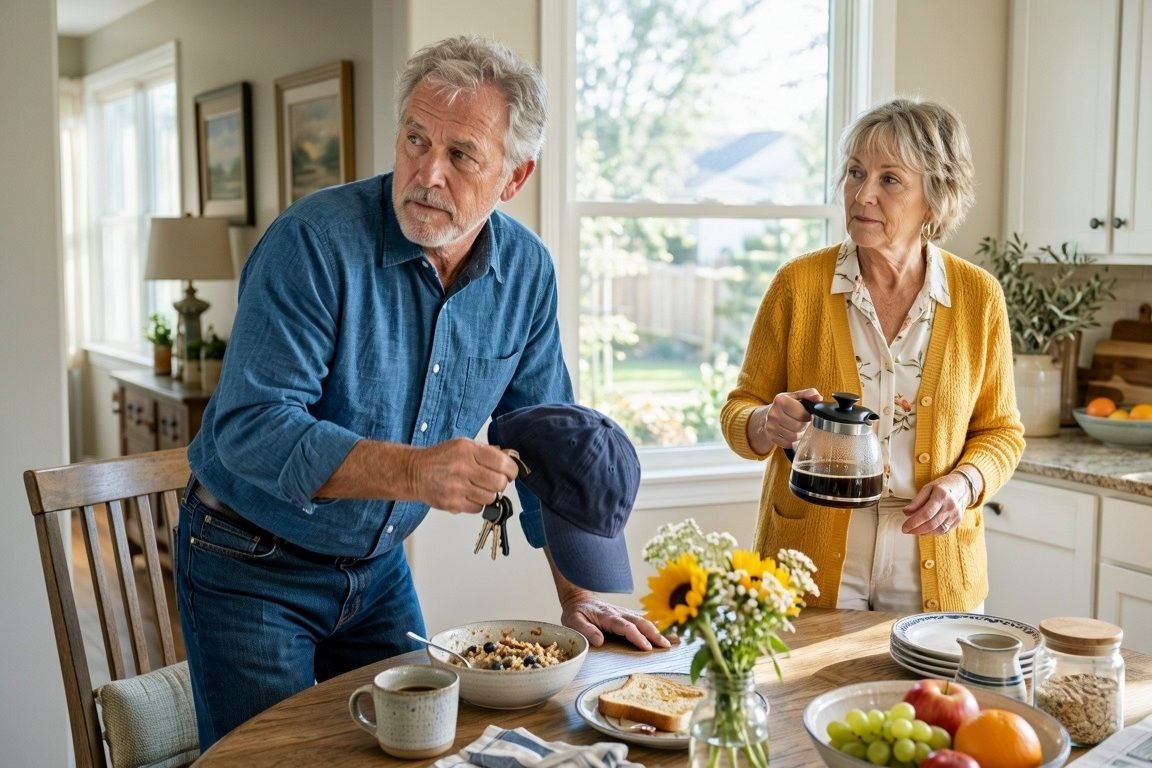
When you see them heading for the door, use this script: 'Oh, I see you are ready to go. I was just about to make some tea. Would you like to help me set the table first?' Or: 'I need your help with something in the kitchen. Can you come with me for a moment?' The key is to offer a meaningful activity that involves them, not just a distraction.
Environmental Modifications for Safer Wandering
Use nightlights or rope lighting to create a clear path from the bedroom to the bathroom. Remove clutter from hallways. Place a black mat or a painted black square in front of the door, it can look like a hole or a drop-off. Use door knob covers or install a deadbolt out of sight (high or low on the door). Consider a fence around the yard with a locked gate.
The 'Daily Photo' Habit
Each morning, take a quick photo of your loved one with your phone, showing what they are wearing that day. This gives you an immediate, accurate description to share with police or neighbors if they wander. Store it in a special album on your phone labeled 'Wandering Safety'.
The 'Wandering Risk Log'
Keep a simple notebook or a note on your phone. Each time you notice a potential sign (e.g., they asked about going home, they paced for 20 minutes, they tried to open the door), write down the time, what they were doing, and what you did. After a week, look for patterns. This helps you predict and prevent.
GPS Tracking Device Considerations
Discuss with your clinician about devices like GPS watches, shoe inserts, or bracelet trackers. Some are designed specifically for dementia. They can give you peace of mind and help locate your loved one quickly. Test the device regularly and make sure it is charged.
Different situations
Early stage Alzheimer's
In early stage, the person may still be aware of their diagnosis and can participate in planning. Have an open conversation: 'I've noticed you sometimes feel confused about where you are. Let's make a plan together so you stay safe.' They may agree to wear a GPS device or to tell you when they feel restless. Focus on preserving their dignity and autonomy while adding safety measures.
Middle stage Alzheimer's
This is the highest risk period. Impulsivity increases, and they may not recognize familiar places. Use all the environmental modifications (locks, alarms, black mats). Do not rely on their memory or cooperation. Supervision is key. If they are still mobile, consider a locked memory care unit if home safety becomes impossible.
Late stage Alzheimer's
In late stage, mobility often decreases, but wandering can still happen in a wheelchair or by crawling. Focus on fall prevention and safe indoor wandering paths. Use bed alarms and pressure-sensitive mats. The risk of injury from a fall is higher, so keep the environment clutter-free and well-lit.
Spouse caregiver vs. adult child caregiver
Spouse caregivers may feel a stronger emotional pull to keep the person at home and may downplay risks. Adult children may be more objective but may struggle with guilt. Both need to prioritize safety over sentiment. If you are a spouse, ask a trusted friend or adult child to help you assess the situation honestly. If you are an adult child, approach the conversation with compassion: 'Mom, I am worried about Dad's safety. Let's look at some options together.'
Living in a facility (assisted living or nursing home)
Even in a facility, wandering can happen. Ask the staff about their wandering prevention protocols: Are doors alarmed? Is there a secured outdoor area? Do they have a Silver Alert plan? If your loved one is in a facility that is not locked, and they are a known wanderer, advocate for a transfer to a memory care unit. The facility should have a plan for when a resident goes missing.
For the doctor
4
- Ask your doctor: 'Given my loved one's stage of Alzheimer's, what is the most appropriate type of GPS tracking device? Are there any risks (e.g., skin irritation, battery safety)?'
- Ask your doctor: 'My loved one is becoming very restless and tries to leave frequently. Are there any medications or non-drug approaches that could help reduce this urge?'
- Ask your doctor: 'If my loved one has a history of wandering and we are considering a memory care unit, what medical criteria should we look for to ensure they are safe?'
- Ask your doctor: 'My loved one has access to a car. How do I assess if they are still safe to drive, and what is the best way to stop them from driving if they are not?'