Step by step
What not to do
- Do not hire a general junk removal company that lacks training in hoarding. They may simply haul everything away without regard for the person's emotional attachment or the underlying issues. This can cause severe distress and lead to the person re-hoarding even more quickly.Instead, choose a service that specializes in hoarding and works with a harm-reduction approach.
- Do not attempt to clean the home yourself without professional help, especially if there are biohazards (mold, animal waste, needles) or structural risks. You could injure yourself or become overwhelmed. The emotional toll can also be immense.Instead, let professionals handle the physical work while you focus on supporting your loved one.
- Do not throw away items without the person's knowledge or consent, even if you think it is for their own good. This can shatter trust and cause a major setback.Instead, involve them in the sorting process as much as possible, or at least explain what will be removed and why.
- Do not expect a single cleanup to solve the problem. Hoarding is a chronic condition that often requires ongoing support, therapy, and maintenance. Without addressing the root causes, the clutter will likely return.Instead, plan for follow-up visits and connect your loved one with mental health resources.
- Do not ignore safety hazards like blocked exits, unstable piles, or spoiled food. These are urgent risks that require immediate professional intervention.Instead, prioritize safety first, even if it means making difficult decisions about what to remove.
Key points
- Professional hoarding cleanup services are specialized and should be chosen for their experience with hoarding, not just general junk removal.
- Involve your loved one in the process as much as possible to preserve trust and reduce the risk of re-hoarding.
- Address the underlying psychological causes (depression, anxiety, trauma) alongside the physical cleanup for lasting change.
- Safety comes first: blocked exits, unstable piles, and biohazards must be addressed immediately by professionals.
- Hoarding is a chronic condition; plan for ongoing support and maintenance, not a one-time fix.
- Use tools like memory books, the Clutter Image Rating Scale, and calm, reassuring language to make the process less traumatic.
Videos
 How Hoarding Can Impact Decision MakingThis video explains the cognitive and emotional factors that make it hard for a person with hoarding behaviors to make decisions about their possessions, which is crucial for understanding why a professional cleanup must be handled with patience and care.
 Ep. 282: Unpacking Hoarding and Brain Health: A Fresh Approach to Understanding and CareThis episode offers a compassionate, brain-based perspective on hoarding, helping caregivers understand that hoarding is not a moral failing but often a symptom of underlying brain health issues, which informs how to approach cleanup services.
 Hoarding Behaviors Insights and InnovationsThis video provides innovative strategies and insights into hoarding behaviors, which can help caregivers and professionals work together more effectively during the cleanup process.
 Discussing the Issue of Hoarding with USA Bio Care LLC Founder, Steve VenturaThis interview with a professional cleanup service founder gives a firsthand look at what families can expect, including the emotional and logistical challenges, and how to choose the right service.
2 more videos
 Hoarding Disorder in Geriatric PatientsThis video focuses on hoarding in older adults, covering the unique medical and psychological considerations that affect cleanup decisions and the need for a multidisciplinary approach.
 Connecting with the CaregiverThis video emphasizes the emotional toll on family caregivers and offers support strategies, which is essential when navigating the stress of hiring and working with a cleanup service.
Background
What Professional Hoarding Cleanup Services Actually Do
Professional hoarding cleanup services are not the same as a standard cleaning crew or a junk removal company. They specialize in homes where clutter has reached a level that interferes with daily living, safety, and health. These teams are trained to handle biohazards (like mold, animal waste, or spoiled food), structural hazards (like blocked exits or unstable piles), and the emotional distress that both the person with hoarding behaviors and their family feel. They often work alongside mental health professionals, social workers, or elder care coordinators to ensure the cleanup is done in a way that does not cause further trauma or simply lead to re-hoarding. As one expert explains, the goal is not just to clean but to 'deal with the psychological reasons why this is happening' and to help the person move forward, not just clear a room.
Why a Professional Service Is Often Necessary
Family members often underestimate the scale and danger of a hoarded home. What looks like 'just clutter' may involve blocked pathways that are a fall risk, piles that can shift and trap someone, or hidden mold and pests that cause respiratory issues. Attempting to clean it yourself can be overwhelming, unsafe, and emotionally devastating for both you and your loved one. Professionals have the equipment, training, and emotional detachment to handle the situation efficiently and humanely. They also understand that hoarding is not a choice or a sign of laziness, it is often tied to depression, anxiety, trauma, or cognitive decline. As one source notes, 'It's not oh this is just a hoarder; it's a hoarder, this is depression, this is isolation, this is not wanting to move, feeling unsuccessful.' A professional service can help address the physical mess while you focus on supporting your loved one's emotional needs.
What to Expect During the Initial Assessment
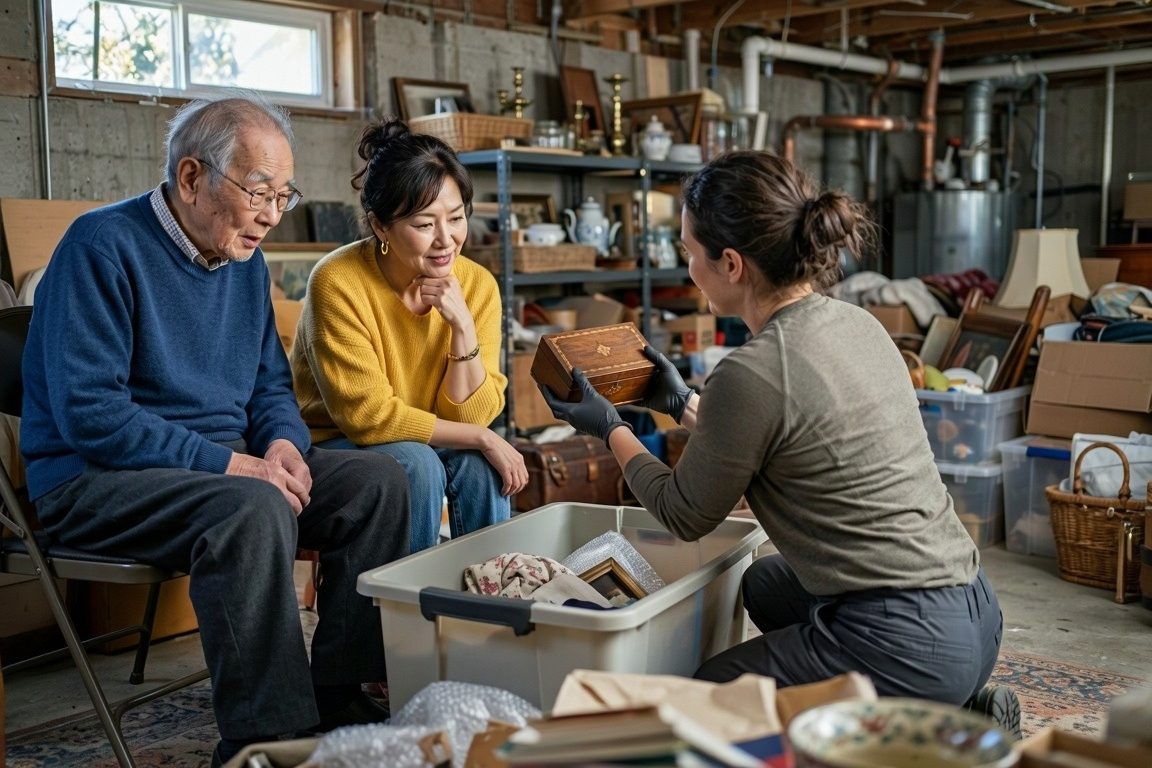
Most reputable services will begin with a walk-through of the home, ideally with the person who lives there present if they are willing and able. They will assess the scope of work, identify safety hazards, and discuss the family's goals, whether that is making the home safe for the person to stay, preparing it for sale, or moving the person to a new residence. They will also ask about the person's emotional state and any history of trauma, because a one-size-fits-all approach can backfire. As one professional explains, 'We sit down with them, let them know we are not there to take your things... we work for you, so whatever this finished look needs to be, that is what we are going to do.' This collaborative approach helps build trust and reduces the person's fear of losing everything.
Practical tools
5
The 'Memory Book' Approach
If your loved one is attached to items because of memories (e.g., a deceased family member's belongings), consider creating a memory book. Take photos of the items, write down the stories behind them, and bind them into a book. This allows the person to 'keep' the memories without the physical clutter. As one expert describes, 'We made her a memory book of all these pictures and all the possessions that her daughter had... when she got that memory book, she felt comfortable that she could then move and take those things with her.'
The Clutter Image Rating Scale (CIRS)
A 'Keep' Box and a 'Maybe' Box
During the sorting process, have two clearly labeled boxes: one for items the person definitely wants to keep, and one for items they are unsure about. Items in the 'maybe' box can be stored temporarily and revisited later. This reduces the pressure of making immediate decisions and gives the person a sense of control.
Safety-First Checklist
Before any cleanup, walk through the home with a professional and identify the top three safety hazards:
Address these first, even if it means removing items the person wants to keep. Explain that safety is non-negotiable and that you will help them find a safe place for their treasured items.
Phrases to Say During the Process
Use calm, reassuring language: 'We are here to help you, not to take everything away.' 'You will be part of every decision about what stays and what goes.' 'Let's start with just this one corner and see how it feels.' 'I know this is hard, and I am proud of you for letting us help.' Avoid shaming or blaming statements like 'How can you live like this?' or 'You need to get rid of all this junk.'
Different situations
If the person has dementia (e.g., Alzheimer's or Lewy body)
In dementia, hoarding may be driven by confusion, memory loss, or a need for control in a world that feels increasingly unfamiliar. The person may not remember why they saved an item or may become agitated if things are moved. Work with a dementia-trained professional who understands that the person's brain is changing. Use redirection and validation rather than logic. For example, if they insist on keeping a broken lamp, say 'I see this is important to you. Let's put it in a special place where it will be safe.' Avoid arguing about the item's value. Also, consider that the person may have a 'rummaging' behavior, they may go through trash or drawers looking for lost items. Provide a designated 'rummage box' with safe, interesting objects to satisfy this urge.
If the person is a senior living alone with no dementia
Hoarding in seniors without dementia is often linked to depression, grief, or a lifetime of difficulty discarding items. The person may have full cognitive capacity but deep emotional attachments. They may be more able to participate in decision-making but also more resistant to change. Work with a therapist who specializes in hoarding disorder. The cleanup should be slow and collaborative, with the person leading the process as much as possible. Consider a 'harm reduction' approach: focus on making the home safe (clear pathways, remove fire hazards) rather than achieving a perfectly clean home.
If you are an adult child managing the cleanup from a distance
If you live far away, hire a local professional organizer or hoarding specialist who can act as your eyes and ears. They can send you photos and updates, and you can participate in decisions via video call. Make sure the service has a clear contract and that you have power of attorney or other legal authority if needed. Also, consider hiring a geriatric care manager who can coordinate the cleanup, mental health support, and any needed home modifications.
If the home is being sold or the person is moving to a facility
This changes the goal from 'making the home safe for the person to stay' to 'preparing the home for sale or move.' The cleanup may need to be more thorough and faster. However, still involve the person as much as possible to reduce trauma. Work with a real estate agent who has experience with hoarding homes, they can advise on what needs to be done to make the home marketable. If the person is moving to a facility, plan for a 'transition box' of favorite items to bring to the new space, so they have familiar comforts.
For the doctor
4
- If your loved one is on medications for anxiety, depression, or dementia, ask their doctor if any adjustments might help reduce hoarding behaviors before or during the cleanup process.
- If the home has significant mold, animal waste, or other biohazards, ask the cleanup service about the need for medical evaluation for your loved one (and yourself) for respiratory or infectious disease risks.
- If your loved one has a history of falls or mobility issues, discuss with their doctor whether a home safety assessment by an occupational therapist is needed before or after the cleanup.
- If you are considering guardianship or conservatorship to legally compel a cleanup, consult with an elder law attorney and the person's doctor to determine if they lack capacity to make decisions about their living environment.