
Step by step
What not to do
- Do not throw items away secretly or without your loved one present.
- Do not confront, judge, or reason with them about clutter.
- Do not discard emotionally comforting belongings without providing an alternative.
- Do not give multi-step instructions or expect them to follow a sequence.
Key points
- Clutter in dementia is a symptom of lost executive function, not a choice. Never judge.
- Safety first: clear walking paths, remove tripping hazards, lock up dangerous items, and check for spoiled food.
- Involve your loved one in simple, one-step tasks to give them a sense of purpose and reduce resistance.
- Work slowly, in small areas, and stop if agitation occurs. Redirect to a calming activity.
- Use positive, neutral language. Frame cleanup as organizing, not discarding.
- Personalize your approach based on the stage of dementia and the type of dementia (e.g., Lewy body).
Videos
 House of Hazards: An Alzheimer's Proofing Case Study: Grandma's HomeThis video shows a real-life example of severe clutter in a dementia home and explains why starting in unused rooms (like a basement) is a safe first step.
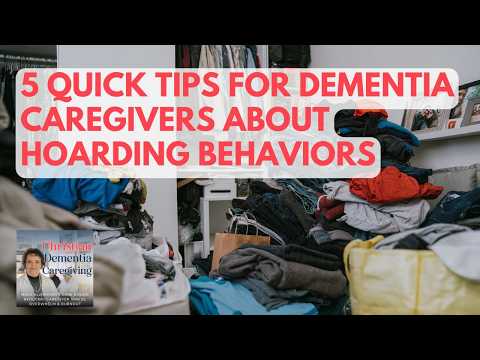 160. 5 Quick Tips for Dementia Caregivers About Hoarding BehaviorsThis video offers quick, practical tips for understanding and managing hoarding behaviors, including the importance of involving the person and never judging.
 Dementia Proofing Your HomeThis video provides a comprehensive overview of home safety modifications, including removing tripping hazards and creating clear pathways.
 Dementia Bathroom TipsThis video offers specific advice for making the bathroom safer and more organized, which is often a cluttered area in dementia homes.
2 more videos
 Alzheimer's and Wandering - Professional Caregiver WebinarThis webinar discusses how clutter and overstimulation can trigger wandering, and how reducing clutter can help prevent this behavior.
 How to Manage Repetitive Behaviors in Alzheimer's DiseaseThis video covers how to redirect repetitive behaviors, which can be useful when a person with dementia fixates on holding onto clutter.
Background
Why Clutter Happens in Dementia
Clutter in a dementia home isn't laziness or stubbornness. It stems from changes in the brain that affect higher-level executive functions, planning, organizing, and decision-making. As these abilities decline, a person may not notice piles of items, forget to throw away trash, or feel overwhelmed by the task of cleaning. They might also hold onto objects for comfort or a sense of control, especially if they feel anxious or disoriented. This is a common early sign of dementia and can worsen as the disease progresses.
The Emotional and Safety Risks
A cluttered home is not just an eyesore, it's a safety hazard. Tripping over loose rugs, stacks of books, or piles of clothes can lead to falls, which are especially dangerous for older adults. Spoiled food in the fridge can cause illness. Fire risks increase when clutter blocks exits or accumulates near heat sources. For the person with dementia, clutter can also cause confusion and agitation because their brain struggles to process a chaotic environment. They may feel lost in their own home, which can trigger anxiety or wandering.
Why Involving the Person Matters
Many caregivers assume it's best to clean up secretly to avoid upsetting their loved one. But for someone with dementia, throwing things away without warning can feel like a violation. It can increase anxiety, anger, and a sense of loss of control. Involving them, when possible, gives them a sense of purpose and dignity. Even if they can only help with small tasks, like folding a towel or sorting a few items, it can reduce their resistance and make the process feel collaborative rather than confrontational.
Practical tools
5
Help Me Task Basket
Prepare a laundry basket of towels and ask, 'Could you help me fold these?' to keep the person focused while you quietly remove unneeded items.
Safe Path Checklist
For each room:
Spoiled Food Scan
Once weekly, check the fridge and pantry for expired items, remove them quietly while the person is in another room, using a small bin.
Redirect and Distract Kit
Keep a bag with
ready to shift attention if agitation arises.
Lock Up Safety Kit
Different situations
Early-stage dementia
In early stages, the person may still have insight into their clutter and feel embarrassed. Involve them in planning the cleanup. Ask, 'What would make this room feel better for you?' Let them choose what to keep and what to donate. Use a 'two-step' task like sorting items into 'keep' and 'donate' boxes.
Middle-stage dementia
At this stage, the person may not recognize clutter as a problem. Focus on safety first. Use the 'help me' script to involve them in simple tasks. Do not explain why you are removing items, just do it quietly. If they become agitated, stop and redirect. Work in very small areas.
Late-stage dementia
In late stages, the person may be bedridden or have very limited mobility. Focus on clearing pathways for caregivers and medical equipment. Remove all tripping hazards. Lock up all hazardous items. The person will likely not notice changes, so you can clean more thoroughly.
Lewy body dementia
People with Lewy body dementia may have visual hallucinations and extreme sensitivity to changes in their environment. Make changes very slowly, one small item at a time. Avoid moving furniture or changing the layout. Use soft lighting and reduce visual clutter to prevent confusion and agitation.
Spouse vs. adult child caregiver
A spouse may feel more comfortable cleaning because they share the home, but they may also feel guilt or resentment. An adult child may need to be more diplomatic, especially if the parent is still independent. In either case, frame the cleanup as 'helping us both' or 'making the home safer for you.' Avoid power struggles.
For the doctor
4
- Ask your doctor: 'Is the clutter a sign of a new or worsening medical condition, such as a urinary tract infection or depression?'
- Ask your pharmacist: 'Are any of my loved one's medications causing confusion or disorganization that might contribute to hoarding?'
- Ask a dementia specialist: 'How can I tell if the hoarding is a safety risk that requires professional intervention, like a geriatric care manager or social worker?'
- Ask your loved one's neurologist: 'Are there any medications that might help reduce anxiety or compulsive hoarding behaviors?'