Step by step
What not to do
- Do not skip meals or rely on vending machine food, pack simple, healthy snacks (nuts, fruit, yogurt) you can eat in two minutes.
- Do not wait until exhausted to take a break, schedule 60-second micro-breaks every hour.
- Do not use guilt to avoid self-care, remind yourself that caring for yourself allows you to keep caring for them.
- Do not forget to hydrate, keep a water bottle nearby and sip every time you pass it.
Key points
- Micro-breaks of 60 seconds to five minutes can significantly reduce stress and improve your ability to care for your loved one.
- Self-compassion, acknowledging your struggle and reminding yourself you are not alone, is a practical tool, not just a concept.
- Habit stacking (attaching a tiny self-care action to an existing routine) makes self-care automatic and guilt-free.
- The 'done list' shifts your focus from what you haven't done to what you have accomplished, reducing feelings of failure.
- Combining two needs into one activity (a 'twofer') saves time and energy.
- Self-care is not selfish; it is essential for sustaining the marathon of caregiving.
Videos
 Self-Care Hacks Every Caregiver Needs to KnowThis video offers practical, time-efficient self-care strategies specifically for busy caregivers, including micro-breaks and mindset shifts.
 The Care Advocates with Lance A. Slatton & Sharon's Son, George 'Caregiver Confessions'Hear real caregivers share their struggles and small victories, which can help you feel less alone and more empowered to take tiny self-care steps.
 How to keep a dementia patient busyWhile focused on activities for your loved one, this video can free up small pockets of time for you by giving you simple, engaging ideas to use in the hospital.
 How to Deal with 'Caregiver Guilt' in DementiaDirectly addresses the guilt that often blocks self-care, offering scripts and mindset shifts you can use immediately.
2 more videos
 Manage dementia caregiver stress: 4 tips to cope with difficult dementia behaviorsTeaches stress management techniques that can be applied in the moment, even during challenging hospital situations.
 Coping with Caregiver BurnoutProvides a broader understanding of burnout and reinforces why micro-moments of self-care are critical for prevention.
Background
Why self-care feels impossible in the hospital
In a hospital setting, you are likely the primary advocate, comforter, and decision-maker for your loved one. The environment is unfamiliar, the schedule is unpredictable, and your own needs often come last. Many caregivers report feeling guilty for even thinking about themselves, believing that any moment spent on self-care is a moment stolen from their loved one. This is a natural response, but it is also a dangerous one. As one expert notes, when you go day after day doing nothing for yourself, stress builds until you can end up with depression or anxiety, which then makes it harder to care for your person.
The science of micro-breaks and cumulative stress
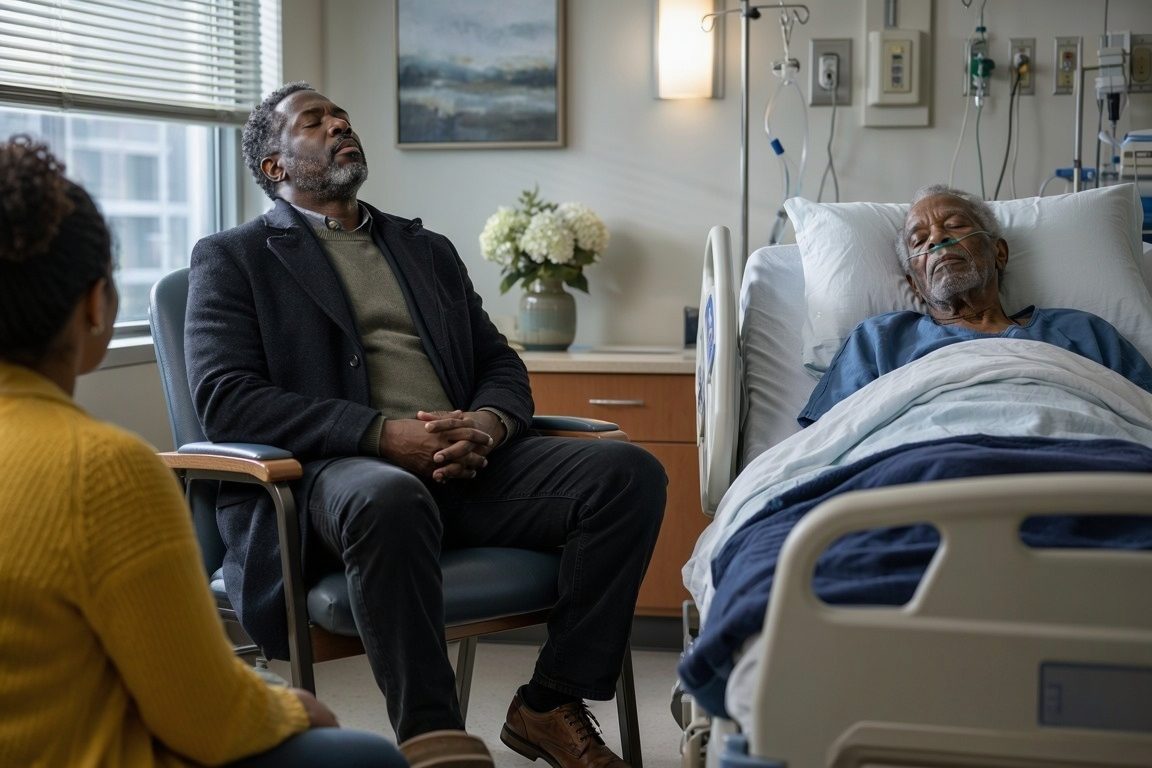
Research and caregiver wisdom both point to the same truth: tiny, frequent breaks can restore cognitive, emotional, and physical resources. Even a 60-second pause to close your eyes, breathe deeply, or feel the sun on your face can reduce fatigue and improve mood. These micro-moments are not a luxury; they are a necessary part of sustaining your ability to provide good care. When you feel refreshed and more positive, your care actually improves. It is a win-win, not a trade-off.
Self-compassion as a practical tool
Self-compassion means acknowledging that you are not alone in this struggle. Other caregivers are also feeling exhausted, guilty, and stretched thin. Instead of criticizing yourself for what you haven't done, try noticing what you have accomplished, the thousands of small acts of love you have already performed today. This shift from 'I should have done the vitamins' to 'look at all I just did' can lift your spirits and keep you from burning out.
Practical tools
3
Done List
Keep a small notebook or phone note; each hour write down three things you accomplished, no matter how small.
Chair Stretch Sequence
Seated:
Hospital Comfort Kit
A small bag with:
Different situations
If your loved one has Lewy body dementia or Parkinson's dementia
These conditions often involve fluctuations in alertness and hallucinations. Your micro-breaks may need to be even shorter and more frequent. Use the 60-second reset when they are calm, and be prepared to return quickly if they become agitated. The chair stretch sequence is especially helpful because you can do it while staying visually present.
If you are an adult child caregiver (vs. spouse)
Adult children often feel additional guilt about not doing enough or about balancing their own family. Use the 'done list' tool to remind yourself that you are showing up. The 'twofer' activity can help you stay connected to your own children or partner while at the hospital, for example, a quick video call during a break.
If your loved one is in late-stage dementia and non-verbal
Your micro-breaks may feel even more necessary because the emotional toll is high. The self-compassion script is crucial here. Remind yourself that your presence alone is a form of care. The chair stretch and deep breathing can be done right next to them, and they may even benefit from your calm energy.
If you are in a hospital setting with limited privacy
Use the hospital chapel, a quiet waiting room, or even a stairwell for your 60-second reset. Many hospitals have meditation rooms or gardens. Ask a nurse or volunteer about quiet spaces. The 'one-minute present moment' reset can be done anywhere, even in a busy hallway, by closing your eyes and focusing on your breath.
If you are caring for someone on Medicaid or with limited resources
All the tools here are free or low-cost. Respite care may be available through your local Area Agency on Aging or hospital social worker. Ask about volunteer sitters or day programs. The 'done list' and self-compassion script cost nothing and can be done anywhere.
For the doctor
3
- If you find yourself unable to take even a 60-second break due to severe anxiety or guilt, discuss this with a social worker or therapist who specializes in caregiver stress.
- If you experience physical symptoms like chest pain, shortness of breath, or severe fatigue that does not improve with rest, consult your own doctor, these can be signs of caregiver burnout or underlying health issues.
- If you are considering using medication to help you sleep or manage stress, talk to your clinician about safe options that will not interfere with your caregiving responsibilities.