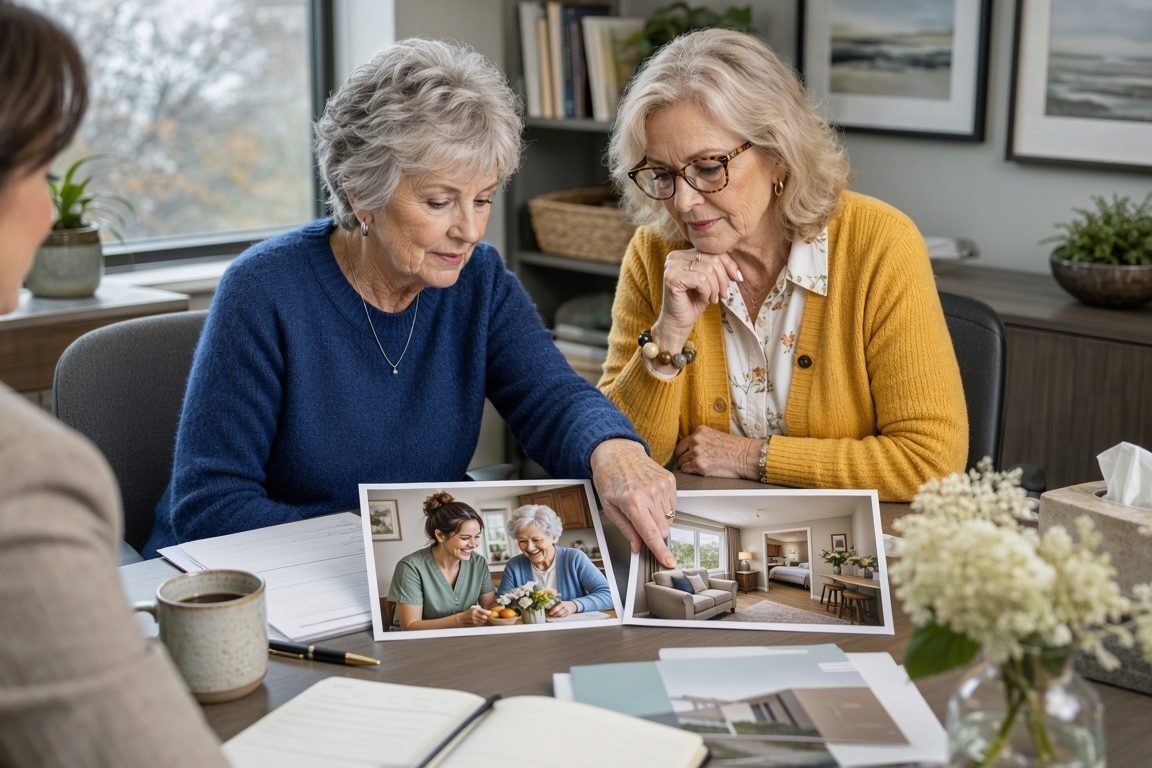
Step by step
What not to do
- Don't decide solely because someone else told you to.
- Don't stay stuck hoping a perfect answer will appear; endless research and waiting is still a choice to keep the status quo.
- Don't make a major decision in a crisis if you can safely wait 24–48 hours.
- Don't sacrifice your own health to burnout.
- Don't let guilt drive the choice; ask instead what is most loving and practical for both of you.
- Don't say 'I have no choice'; naming your choice returns your power.
Key points
- You always have a choice, even when it feels like you don't. Frame caregiving as a choice, not an obligation, to reclaim your power.
- Use the three-step process: identify your personal reason, filter out unhelpful opinions, and own your decision without guilt.
- Most decisions are not permanent. You can undo a decision to keep someone at home or move them to a facility. Flexibility is your friend.
- Ask 'What is the next right step?' instead of trying to solve everything at once. This reduces overwhelm and keeps you moving forward.
- Your reason for a decision is your foundation. If your reason is weak (e.g., 'because others told me to'), you'll struggle when things get hard. If it's strong (e.g., 'because I need to keep them safe'), you can stand firm.
- You are not a bad caregiver for making a hard choice. You are making the best decision you can with the information you have. Give yourself grace.
Videos
 How To Make A Caregiving DecisionThis video walks you through a simple three-step process for any caregiving decision, helping you avoid guilt and feel confident in your choice.
 The one mindset shift you need to make as a dementia caregiverThis video helps you shift from feeling powerless to owning your choices, which is essential for making decisions without regret.
 Managing Caregiver Stress & BurnoutBurnout often comes from feeling trapped in decisions. This video offers practical stress management that supports better decision-making.
 Worse Than Being Dead | Dementia Caregiver Experiences in Dealing with Progressively Worse BehaviorsHearing real caregiver stories helps you feel less alone and gives you perspective on the kinds of decisions others have faced.
2 more videos
 Beverley Glazer Founder of Reinvent Impossible Inc. & Host of 'Aging with Purpose & Passion' PodcastThis interview offers inspiration and practical tips for reinventing your approach to caregiving decisions when the path isn't clear.
 Finding the Right CaregiverIf your decision involves hiring help, this video guides you through choosing a caregiver who fits your loved one's needs.
Practical tools
4
The 'My Reason' Worksheet
The 'Loved One's Wishes' Reference
Keep a single page or card recording what your loved one has said about care, plus any advance directive details. When a decision arrives, let their prior words guide you.
The 'Check-In' Reminder
After deciding, set two recurring phone reminders: one for a week out, one for a month. When they chime, ask: 'How is this working for my loved one? How is it working for me?' Adjust if needed.
The 'Choice Reframe' Statement
When you catch yourself thinking 'I have no choice,' pause and say out loud: 'I have a choice. I am choosing to [fill in the blank].' Write it on a sticky note for your mirror or dashboard.
Different situations
For a spouse caregiver (vs. adult child)
Spouse caregivers often feel a deeper sense of obligation and guilt because of marriage vows. Your reason might be 'I promised to stay together in sickness and in health.' That is a strong reason, but it can also lead to burnout. Use the 'Choice Reframe' tool to remind yourself that choosing to bring in help or use respite is still honoring your vow, it's choosing to care for both of you. You are not failing by asking for support. Also, consider financial impact: if you give up your job or savings to care for your spouse, you may create poverty for yourself. Discuss with a financial planner or elder law attorney.
For early-stage dementia (mild cognitive impairment)
In early stages, your loved one can still participate in decisions. Involve them as much as possible, but be prepared for them to change their mind day to day. Use the 'My Reason' worksheet together. If they agree to a plan one day and refuse the next, that is normal. You may need to make a decision without their full input for safety reasons, like when they cannot offer reliable input due to cognitive issues. Frame it as: 'I am making this choice because I love you and I need to keep you safe.'
For Lewy body dementia or Parkinson's with cognitive decline
These conditions often involve fluctuating cognition, hallucinations, and physical symptoms. Decisions about safety (like preventing falls) become urgent. Use the 'Next Right Step' tool to focus on immediate safety: 'What is the next step to prevent a fall tonight?' Also, be aware that your loved one may have moments of clarity where they seem fine, then suddenly decline. Trust your gut and your observations over their temporary clarity. Document incidents (e.g., falls, wandering) to help you make decisions with concrete evidence.
For late-stage dementia (bedbound, full care needed)
In late stages, the decision is often about comfort and quality of life versus aggressive medical interventions. Your reason might be 'I want to keep them comfortable and pain-free.' Use the 'Three Questions' tool: Is this possible? Does it align with their dignity? How does it impact me? Also, consider hospice care, this is not giving up; it's a choice to focus on comfort. Discuss with your clinician about palliative care options.
For a caregiver who is also working full-time or has young children
Your resources are stretched thin. The decision might be about whether to reduce work hours, hire help, or use facility care. Use the 'Choice Reframe' tool to acknowledge that you cannot do everything. Your reason might be: 'I need to keep my job to support my family, and I cannot provide 24/7 care.' That is a valid, strong reason. Don't let guilt push you into a situation that harms your own family. Consider adult day care or in-home respite as a middle ground.
For the doctor
5
- Ask your loved one's doctor: 'Given their specific diagnosis and stage, what are the safety risks I should prioritize when making decisions about staying at home versus moving to a facility?'
- If you are considering medication to manage behaviors (like agitation or hallucinations), ask: 'What are the risks and benefits of this medication for my loved one? How will it affect their quality of life?'
- If you are considering stopping a medication or changing a dosage, always discuss with the prescribing clinician first. Do not make changes on your own.
- Ask about palliative care or hospice: 'Is my loved one eligible for palliative care or hospice? How would that change our care options and my decision-making?'
- If you are considering a move to a facility, ask the facility's nurse or social worker: 'What level of care do you provide for my loved one's specific condition? How do you handle behaviors like wandering or aggression?'