Step by step
What not to do
- Do not use vague or general activities that don't connect to their personal history or current ability.
- Do not assume they cannot participate; always offer a meaningful, adapted role.
- Do not skip music or limit it to occasional use, daily exposure from their peak recall years is key.
Key points
- A dementia diagnosis does not end a person's ability to feel joy, purpose, or connection. Their emotions and feelings remain intact.
- Focus on what they CAN still do, not on what they have lost. Adapt favorite activities to their current abilities.
- Give them a simple, specific role that makes them feel valued and important. Use phrases like 'I need your help with this.'
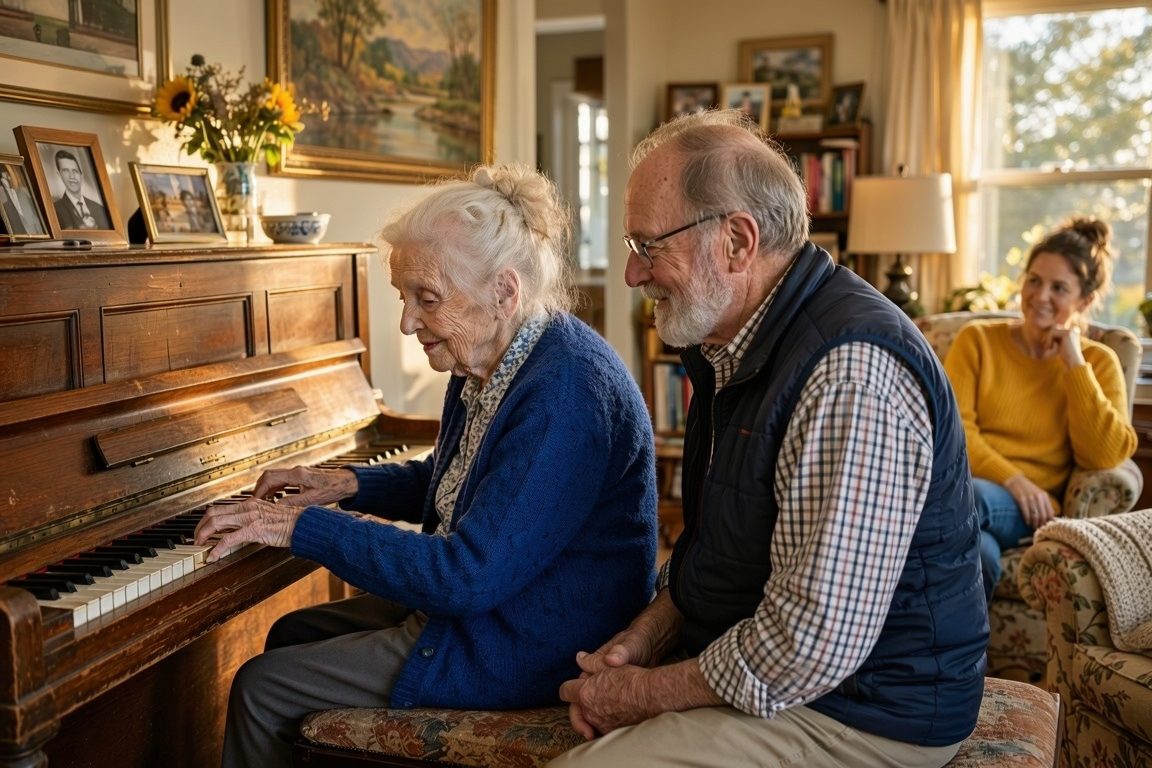
- Music, art, doll therapy, and simple physical activity are proven tools to boost mood and reduce anxiety.
- Do not correct or argue about their reality. Enter their world with empathy and go along with their experience.
- You are not alone. There is life after diagnosis, and small moments of joy are possible every day.
Videos
 Dementia Care Partner Talk Show Podcast: Ep. 101 - How to Help Someone Living with Dementia Find JoyThis episode directly addresses the question of how to help someone with dementia find joy, even when they cannot remember family members. It covers the 'four truths' of dementia and offers practical strategies from dementia care expert Teepa Snow.
 How To Entertain Someone With Dementia At Home?This video provides concrete, at-home activity ideas for engaging a person with dementia. It is especially useful for caregivers who feel stuck and need new ideas for meaningful interaction.
 The Caregiver's Journal with Lance A. Slatton with Cindy PT & Christina ST 'Family Caregivers'This video offers a caregiver's perspective on finding purpose and joy after diagnosis, including the importance of connecting with resources and support. It validates the emotional journey of both the person with dementia and the caregiver.
 Sam Simon 'Dementia Man' An Existential JourneyThis TEDx-style talk shares a first-person account of living with dementia, emphasizing that there is life and purpose after diagnosis. It is inspiring for both patients and caregivers.
Practical tools
4
Adapted Activity from Past Role
Identify a former hobby or job and simplify it to their current function (e.g., stirring, sorting, flipping pages).
Daily Routine Chart
A simple visual or verbal schedule of consistent activities (meals, chores, music, rest) to reduce confusion.
Music Playlist from Ages 15–25
Curated songs from their young adult years; play for at least one hour daily for mood and memory benefits.
Simple Task with Verbal Request
A single-step physical task (e.g., folding napkins) paired with a direct, respectful request for help.
Different situations
Early-stage dementia (mild cognitive decline)
The person can still learn new information if it is personally meaningful. They may be able to continue driving with a professional assessment and a companion in the car. Encourage them to set their own goals, like writing a book, spending more time with grandchildren, or volunteering. They can still participate in support groups and advocate for themselves. Focus on what they CAN do, and help them plan for the future while they can still make decisions.
Middle-stage dementia (moderate decline)
Simplify activities further. Break tasks into one or two steps. Use more visual cues and fewer words. They may enjoy repetitive, soothing activities like folding laundry or sweeping. Music and doll therapy become very effective. They may need help with initiation, so you will need to start the activity and do it alongside them. Avoid correcting confusion; instead, enter their reality.
Late-stage dementia (severe decline)
Focus on sensory experiences: gentle touch, familiar music, soft lighting, and favorite smells (like lavender or baked bread). They may not be able to participate in tasks, but they can still feel joy through a hand massage, being sung to, or sitting in a sunny spot. Use a calm, slow voice. Your presence and gentle touch are the most powerful tools. Even if they cannot respond, they can feel your love.
Lewy body dementia (LBD)
Be aware of fluctuating cognition, visual hallucinations, and movement issues. Activities should be done when they are most alert, often in the morning. Avoid overstimulation, which can trigger confusion or agitation. Music can be very helpful, but be mindful of sensitivity to noise. Physical activity like chair yoga can help with rigidity. Always consult their doctor about any new exercise or activity.
Frontotemporal dementia (FTD)
Behavioral changes and loss of empathy or social awareness are common. Focus on activities that do not require complex social rules. Simple, repetitive tasks or sensory activities (like sanding wood, sorting objects, or listening to music) can be calming. Avoid activities that require them to follow a conversation or read social cues. Keep the environment very structured and predictable.
For the doctor
5
- Ask your doctor if your loved one is cleared for physical activities like chair yoga, tai chi, or walking, especially if they have balance issues or other health conditions.
- Discuss any signs of depression, anxiety, or suicidal thoughts with a healthcare provider. Depression is common and treatable, but it needs professional assessment.
- If your loved one is still driving, ask their doctor for a referral to a driving rehabilitation specialist to assess their safety behind the wheel.
- Consult with a clinician about using any new medications or supplements to manage mood or behavior changes. Do not start or stop any medication without medical guidance.
- If your loved one has pain that seems to be causing agitation or withdrawal, ask their doctor about a formal pain assessment. Pain is often under-recognized in people with dementia.