Step by step
What not to do
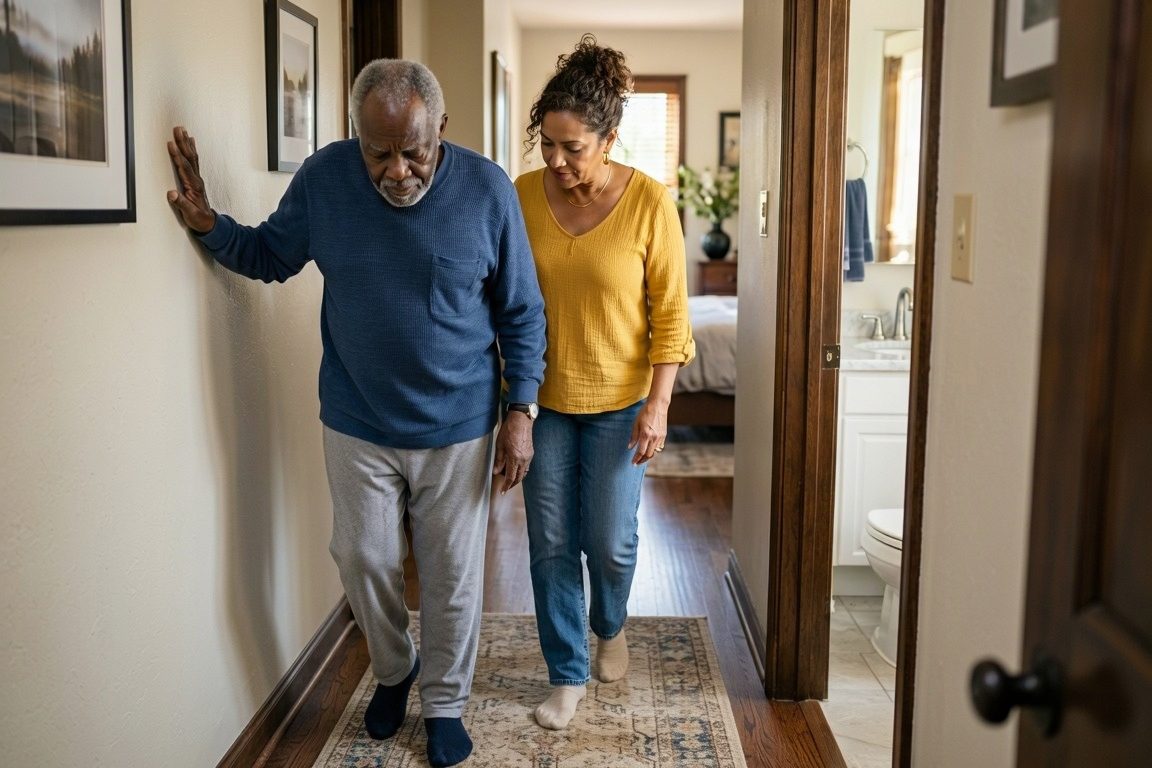
- Do not chalk up slowing down, shuffling, or wall-grabbing to 'just getting older', these are signs of deconditioning or a treatable medical issue, and dismissing them steals precious months of effective therapy.
- Do not wait for a fall to take action; therapy works best when started early, so the moment you spot one of the signs above, schedule a doctor's visit and ask for a PT referral by name.
- Do not try to fix it with generic YouTube exercises; a physical therapist has the training to match moves to your loved one's specific deficits.
Key points
- Slowing down, shuffling, or holding onto walls is not normal aging, it is a sign of weakness and balance loss that physical therapy can address.
- Start therapy early, before a fall happens. Waiting until after a fall increases the risk of injury and fear.
- Gait speed is a vital sign: if your loved one takes more than 5 seconds to walk 15 feet, talk to their doctor.
- Physical therapy is effective at any stage of dementia and even on hospice, you have the right to request it.
- Use specific, non-judgmental language when talking to your loved one and their doctor to reduce resistance.
- Caregivers benefit too: therapy teaches you safe transfer techniques that protect your own back and reduce stress.
Videos
 Choosing the Right CareThis video helps you understand the different types of care options, including physical therapy, and how to choose the right level of support for your loved one.
 Conscious Caregiving with L & L 'Mental Health and Seniors'This video discusses how mental health changes like anxiety and depression can be linked to physical decline, and why addressing both is important.
 Who Treats Dementia Symptoms?This video explains the roles of physical therapists, occupational therapists, and other professionals in managing dementia symptoms, including mobility and safety.
 The Baffled Brain: Demystifying Dementia Episode 27 June 5 ,2021This episode covers how dementia affects movement and balance, and why early physical therapy intervention is critical for fall prevention.
2 more videos
 Why Do Elderly Parents With Dementia Become AgitatedThis video explores how physical discomfort, pain, and fear of falling can cause agitation in dementia, and how therapy can address these triggers.
 😱 PARANOIA or Memory Loss. Signs That Could be Early Alzheimer'sThis video helps you distinguish between memory loss and other early signs of dementia, which often coincide with physical changes that warrant therapy.
Background
Why Physical Function Is a 'Vital Sign' for Older Adults
Just like blood pressure and heart rate, your loved one's ability to walk safely and move through their day is a critical indicator of their overall health. Physical therapists now consider gait speed, how fast a person walks, to be the 'sixth vital sign' because it can predict functional independence, hospitalization risk, and even mortality. When an older adult starts to slow down, it is not just a normal part of aging; it often signals underlying weakness, balance problems, or a medical condition that needs attention. This slowing down is your cue to ask, 'Should we start thinking about how therapy can help?'
The Hidden Cost of Waiting: Falls, Fear, and Loss of Independence
Many caregivers wait until after a fall to seek help, but by then the damage is done, a hip fracture, a head injury, or a deep fear of falling that makes the person even less active. Physical therapy is most effective when started early, before a fall occurs. Waiting until your loved one is holding onto walls, leaning on furniture, or shuffling their feet means they have already lost significant strength and balance. Early intervention with strength training and balance therapy can improve stability and reduce falls. Even if your loved one is on hospice, you can request a physical therapy consult to learn safe transfer techniques, this is your right under Medicare.
How Dementia Changes the Picture: Why Physical Therapy Still Matters
If your loved one has Alzheimer's or another dementia, physical therapy is not just about muscles, it is about safety, function, and reducing agitation. People with dementia often lose the ability to plan movements, judge distances, or recognize hazards, which makes them prone to falls. A physical therapist can recommend the right walking aid (cane vs. walker vs. wheelchair) and teach you how to help with transfers without injury. They can also suggest weighted utensils or other adaptive equipment to help with tremors and eating. Even in moderate to late stages, therapy can improve comfort and reduce caregiver strain by showing you the safest ways to provide care.
Different situations
If your loved one has Alzheimer's or another dementia (any stage)
Start therapy early, before falls happen. People with dementia lose the ability to plan movements and judge hazards, so they are at higher risk. A therapist can recommend the right walking aid (cane vs. wheeled walker vs. manual wheelchair) and teach you safe transfer techniques. Even on hospice, you can request a therapy consult to learn how to transfer your loved one safely: Medicare will pay for it.
If your loved one is in a facility (nursing home or assisted living)
You have the right to request a physical therapy evaluation even if the facility does not offer it. Ask the facility's director of nursing for a referral. Therapy can be done in the room or common area. Focus on goals like safe transfers, walking to the dining room, or reducing falls. If your loved one is on hospice, therapy is still available to teach you safe care techniques.
If you are a spouse caregiver (vs. adult child)
You may be more likely to overlook changes because you see them every day. Ask a trusted friend or relative to visit and give you their honest observations. Also, you are at high risk for caregiver burnout, physical therapy can reduce your physical strain by teaching you safe lifting and transfer techniques. Do not try to do it all alone.
If your loved one has Lewy body dementia or Parkinson's disease
These conditions cause fluctuating cognition, rigidity, and a high risk of falls. Therapy should focus on balance training, strength, and strategies to manage freezing episodes (when the feet feel stuck to the floor). A therapist can also help with visual-spatial issues that make navigating doorways and stairs dangerous.
If your loved one is on a limited budget or Medicaid
Medicare Part B covers physical therapy when it is medically necessary and ordered by a doctor. There is no limit on the amount of therapy you can receive, but it must be reviewed periodically. If you have Medicaid, it also covers therapy. Ask the therapist's office to verify coverage before starting. Some community centers offer free or low-cost balance classes like tai chi.
For the doctor
5
- Ask the doctor: 'Could my loved one's slowing gait or balance problems be caused by a medication side effect, vitamin deficiency, or an underlying condition like Parkinson's or arthritis?'
- Ask the doctor: 'Is it safe for my loved one to start a physical therapy program given their heart condition, blood pressure, or other chronic illnesses?'
- Ask the doctor: 'If my loved one has had a recent fall, do they need imaging (like an X-ray or MRI) to rule out a fracture or head injury before starting therapy?'
- Ask the doctor: 'Can you write a prescription for a physical therapy evaluation that includes a home safety assessment and caregiver training?'
- Ask the doctor: 'Are there any exercises or movements my loved one should avoid because of their specific health issues?'