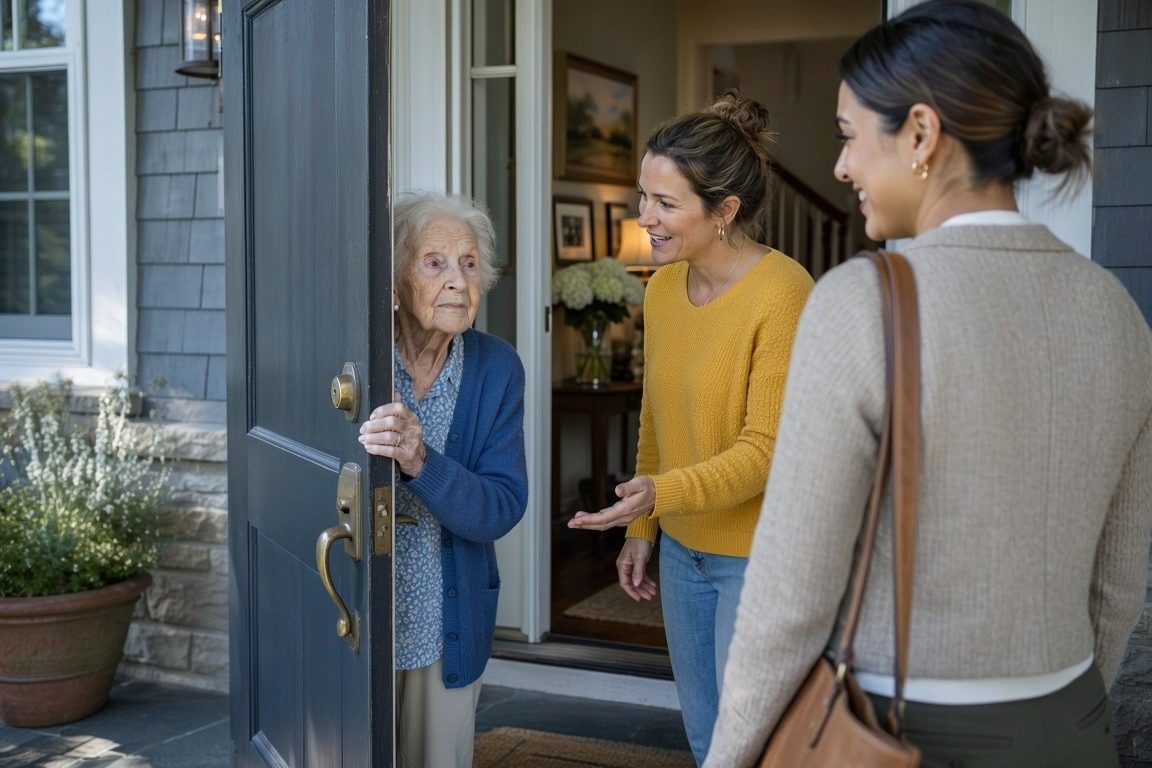
Step by step
What not to do
- Do not force the introduction. If your loved one is visibly upset or agitated, back off and try again later. Forcing the issue can create a negative association that is hard to undo.Instead, wait for a calmer moment and try a different approach.
- Do not argue or try to convince them they need help. Arguing will only increase resistance and damage your relationship. Their brain cannot process the logic.Instead, work around their denial by framing the aide's presence as something for you or as a social visit.
- Do not use the word 'help' or 'caregiver' when introducing the aide. These words can feel threatening and imply that your loved one is incapable.Instead, use neutral or positive terms like 'friend,' 'visitor,' or 'assistant.' This can make a huge difference in their willingness to accept the person.
- Do not leave your loved alone with the aide on the first visit. Your presence is a comfort and a bridge. If you leave too soon, your loved one may feel abandoned and become more resistant. Stay nearby until they seem relaxed and comfortable.
- Do not expect the aide to do everything perfectly. The aide is human and may make mistakes. Give them feedback gently and work together as a team. If the aide is not a good fit, do not hesitate to ask for a different person. The right match is crucial.
- Do not give up after one or two failed attempts. It often takes multiple visits and different strategies before a person with dementia accepts a new person. Be persistent but gentle. The disease is constantly changing, and what does not work today may work tomorrow.
Key points
- Resistance to a new care aide is a symptom of dementia, not a personal rejection. The person may not believe they need help and may feel threatened by a stranger.
- Introduce the aide gradually, starting with short, low-pressure visits focused on building trust through shared activities, not personal care.
- Use a different title for the aide, such as 'friend,' 'visitor,' or 'assistant,' to reduce the threat to your loved one's independence.
- Frame the aide's presence as help for you, the caregiver, not for them. This can reduce resistance and make them more willing to accept the person.
- Be patient and flexible. It may take multiple attempts and different strategies before your loved one accepts the aide. Celebrate small victories.
- Your own well-being matters. Bringing in an aide is a sign of strength, and it allows you to continue providing loving care without burning out.
Videos
 How to get someone with dementia to accept help from others: 5 tips (plus bonus)This video directly addresses the challenge of getting a loved one to accept help from someone other than you. It offers practical tips like calling the helper something else and starting with easy tasks first.
 How to get your loved one with dementia to accept help from others: 6 TipsThis video provides six actionable tips for introducing a new caregiver, including the importance of understanding the person's past and using a title that fits their self-image.
 3 Steps to Helping Your Parent with Dementia That Refuses HelpThis video offers a simple three-step framework for understanding why the refusal is happening and how to work around it, which is very useful when introducing a new aide.
 Dementia Care Partner Talkshow Podcast #45: How to Successfully Introduce Care Aides into Your HomeThis podcast episode is specifically about introducing care aides into the home, featuring expert advice from Teepa Snow and others. It covers real-life scenarios and creative solutions.
2 more videos
 What to do when a person with dementia refuses care: 6 simple strategiesThis video offers six strategies for overcoming refusal of care, including sticking to routines and using positive framing, which are directly applicable to introducing an aide.
 Is Your Aging Parent With Dementia Refusing Help? Do This!This video provides a step-by-step approach to getting a parent to accept help, including the importance of understanding their 'why' and using creative labeling.
Background
When to Seek Professional Guidance
If you have tried multiple strategies and your loved one continues to be physically or verbally aggressive toward the aide, it may be time to consult a professional. A dementia care specialist, occupational therapist, or geriatric care manager can observe the situation and offer personalized advice. They can also help you determine if the current aide is a good fit or if a different person with a different approach might be more successful.
In some cases, the person with dementia may have an underlying medical issue, such as a urinary tract infection or pain, that is causing increased agitation. A doctor should be consulted to rule out any medical causes for the resistance. Never assume that resistance is purely behavioral; always consider the possibility of an underlying physical problem.
Practical tools
6
The 'Friend' Script
A simple script to use when introducing the aide. Say: 'Mom, this is my friend Sarah. She is going to help me with some things around the house today. She is really nice and I think you will enjoy meeting her. Would you like to say hello?' This script avoids the word 'help' for your loved one and frames the aide as a social visitor.
The 'Assistant' Role Play
If your loved one had a professional identity, use it. For example, if they were a teacher, say: 'Dad, this is my assistant, Mark. He is going to help me with some paperwork. He would love to hear about your teaching days.' This taps into their sense of identity and makes them feel valued rather than dependent.
The 'Shared Activity' Kit
Prepare a small bag of items the aide can use during the first visit:
The aide can use these to engage your loved one in a low-pressure activity. This gives them something to do together and builds a positive connection.
The 'Gradual Handoff' Schedule
Create a written schedule for the first week:
This gradual approach builds trust slowly.
The 'Choice Illusion' Questions
Use questions that give your loved one a sense of control. For example: 'Would you like to meet the aide in the living room or the kitchen?' 'Would you like to have tea with her now or after your show?' 'Would you like to show her your garden or your photo album?' The outcome is the same (they meet the aide), but they feel they have chosen how it happens.
The 'Positive Environment' Checklist
Before the aide arrives, check the environment:
A calm, pleasant environment can significantly reduce anxiety and resistance.
Different situations
Lewy body dementia
People with Lewy body dementia are often very sensitive to changes in routine and environment. They may also have visual hallucinations or fluctuations in alertness. Introduce the aide at a time of day when your loved one is most alert and calm. Avoid sudden movements or loud voices. Use a very slow, gentle approach. The aide should be prepared for possible hallucinations and should not argue about them. Instead, they should validate the person's experience and redirect gently.
Late-stage dementia
In late-stage dementia, the person may not be able to communicate verbally or understand complex explanations. The introduction should be purely non-verbal. The aide should approach slowly, at eye level, with a warm smile and open body language. They can hold out a hand and wait for the person to reach out. The aide should focus on providing comfort and safety, not on completing tasks. The goal is to build a sense of trust through gentle touch and a calm presence.
Spouse vs. adult child caregiver
If you are the spouse, your loved one may see you as their partner, not their caregiver. They may be more willing to accept help from an outsider because it does not challenge their role as your spouse. If you are an adult child, your parent may feel a loss of authority and may resist help from a stranger as a way to assert control. In this case, it can be helpful to frame the aide as someone who is helping you, the child, so that your parent does not feel they are being taken care of. The aide can say, 'I am here to help your daughter with the housework, and she asked me to say hello to you.'
In a facility (e.g., assisted living or nursing home)
In a facility, the introduction is often managed by staff. However, you can still advocate for a gradual approach. Ask the facility to assign the same aide each time for consistency. You can also visit during the first few aide visits to provide a familiar face. If your loved one resists, ask the staff to use a different title for the aide, such as 'activity assistant' or 'social visitor.' The facility should be flexible and patient.
Medicaid or limited resources
If you are limited to a specific agency or aide due to Medicaid, you may have less choice in who is assigned. In this case, focus on training the aide yourself. Provide them with a written list of your loved one's preferences, routines, and triggers. Share the strategies in this article with them. If the first aide does not work out, request a different one from the agency. You have the right to advocate for a good match.
For the doctor
5
- If your loved one becomes physically aggressive toward the aide, discuss safety plans and possible medication adjustments with their doctor or a dementia care specialist.
- If your loved one has a sudden increase in agitation or resistance, ask their doctor to rule out a urinary tract infection, pain, or other medical causes.
- If you are unsure about the best approach for your loved one's specific type of dementia, ask for a referral to an occupational therapist or a geriatric care manager who specializes in dementia.
- If your loved one is on medications that affect mood or behavior, discuss with their doctor whether any adjustments might help reduce resistance to care.
- If you are feeling overwhelmed or burned out, talk to your own doctor or a therapist. Your well-being is essential to providing good care.