Step by step
What not to do
- Do not tell the young person 'nothing is wrong' when they ask about changes. This backfires because the child learns to distrust their own observations and may feel confused or anxious.Instead, give a simple, honest explanation: 'Grandma has an illness that makes her memory not work as well. It's not her fault.'
- Do not force a young person to spend long periods with the person with dementia if they are clearly distressed. This can create resentment or fear.Instead, start with short, structured visits (10-15 minutes) and let the child choose when to end. You can say: 'We can go say hi for a few minutes, and then we'll go play.'
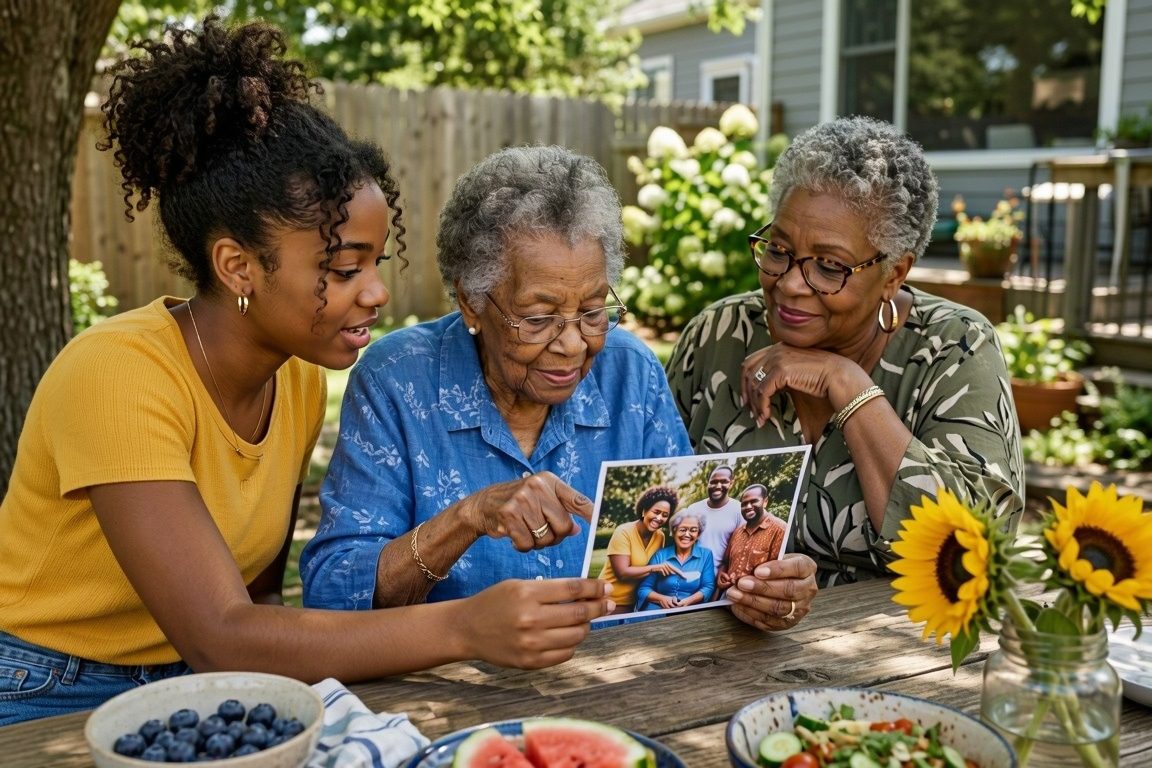
- Do not correct the person with dementia in front of the young person. If the older person says something inaccurate, the child may feel embarrassed or unsure.Instead, model gentle redirection: 'That's a nice memory. Let's look at this photo together.' This teaches the child that connection matters more than being right.
- Do not assume the young person understands dementia just because they are smart. Even teens may have misconceptions or fears. Take time to explain in simple terms and ask what they think. Use a resource like the 'Understanding the Changing Brain' guide to help explain brain changes in a visual way.
- Do not exclude young people from family discussions about dementia. This can make them feel isolated or imagine worse scenarios.Instead, invite them to be part of the care team in a small way, like helping to choose a music playlist or picking out a photo album for a visit. This gives them a sense of purpose and belonging.
Key points
- Start early: talk to young people about dementia in simple, honest terms before they see confusing changes.
- Use books, stories, and role-play to build understanding and reduce fear.
- Give young people specific, simple roles during visits, like holding a photo album or choosing a song.
- Model patience and positivity; your behavior teaches the child how to respond.
- Don't force interaction if the young person is uncomfortable, short, positive visits build trust over time.
- Involve teens in awareness projects like a dementia club to turn understanding into action.
- Adapt activities to the stage of dementia and the age of the child for the best experience.
Videos
 Carol Steinberg Author of 'Come Grandpa Meow, Let's Fly'This video shows how a children's book can gently introduce dementia concepts through a story about a grandparent and a cat, making it easier for young kids to understand.
 How To Find Local Dementia Caregiver Support Groups? - TestProvides practical steps for finding local support, which can include intergenerational programs and resources for families with young children.
 Discover Gleam in Your Eye - A Dementia Activity and Support ResourceShowcases intergenerational activities that keep people with dementia engaged and stimulated, and highlights the importance of viewing the person, not the disease.
 How to talk to young children about dementiaOffers direct guidance on age-appropriate language and conversation starters for young children.
2 more videos
 What's Wrong with Grandpa? (Talking with Kids about Dementia and Alzheimer's Disease)Addresses the common question children ask and provides strategies for answering honestly without causing fear.
 The Baffled Brain: Demystifying Dementia Episode 22 April 24 ,2021Explains dementia in an accessible way that can help older children and teens understand the brain changes involved.
Background
Why Young People Need to Be Part of the Conversation
Research shows that children often have a poor perception of Alzheimer's disease and dementia, and stigma is real, 88% of people living with dementia report feeling discrimination. When we keep young people away from the topic, we unintentionally reinforce fear and confusion. They may overhear worried conversations, see changes in a loved one, and feel confused or even scared without understanding what is happening. By involving them early, we can replace that fear with empathy, curiosity, and a sense of purpose. Intergenerational activities are a powerful way to 'eradicate the fear and confusion around the disease' and help children see the person, not just the diagnosis.
What Is Happening for the Young Person
A child or teen may feel a mix of emotions: sadness that their grandparent or older relative seems different, frustration when communication is hard, or even guilt if they feel they don't know how to act. They might ask 'What's wrong with Grandpa?' and if we repeatedly say 'nothing is wrong,' they learn that their observations are not valid. This can lead to withdrawal or acting out. At the same time, young people are naturally curious and compassionate. When given honest, age-appropriate information and a safe space to ask questions, they can become wonderful allies. Studies show that structured intergenerational programs help children develop coping skills and build a community of mutual understanding and encouragement.
The Unique Opportunity for Families and Communities
Involving young people is not just about helping them, it also benefits the person living with dementia. Meaningful engagement, like looking at photo albums together, reading a story, or doing a simple puzzle, can help the person stay stimulated and feel valued. As one expert notes, 'they're still a person and I think people need to view it through the person and not through the disease.' For the caregiver, having a young person who understands the situation can reduce isolation and create shared moments of joy. In faith communities and schools, starting a 'dementia awareness club' or offering age-appropriate education can build a generation that is more compassionate and prepared.
Practical tools
6
Age-Appropriate Books
For younger children: 'Still My Grandma' or 'The Memory Box', read together and follow up with a coloring session or puppet show. For older kids: 'Still Alice' or 'Dancing with Rose', these can spark deeper conversations. Use the local library or the Alzheimer's Association to find these titles.
Simple Activity Kits
Create a small bag with a few items:
Give the young person the bag before a visit and say: 'Here are some things you can do together. You choose what looks fun.'
The 'Three Good Things' Challenge
After a visit, ask the young person to notice three good things about the person with dementia, like 'their hands seemed clean,' 'they smiled when I played the song,' or 'they ate a lot of their food.' This shifts focus from loss to positive moments and builds a habit of gratitude.
Role-Play Script for Teens
Practice what to say if the person with dementia asks the same question repeatedly. Teach the teen to say calmly: 'That's a good question. I think we had pancakes for breakfast. Do you like pancakes?' This avoids frustration and keeps the conversation flowing. Use the Positive Approach to Care (PAC) training resources for more role-play ideas.
Dementia Awareness Club Starter Kit
If your school or faith community wants to start a club, use these steps:
This model has been used successfully with high school students.
Video Call Activity Ideas
For remote connections, try: 1) A guessing game: 'I'm looking at something black and rectangular that plays shows' (answer: TV). 2) Reading a short poem or story aloud. 3) Sharing a 'memory of the week', the young person describes a happy memory, and the older person can nod or smile. Keep sessions under 15 minutes.
Different situations
For a young child (ages 4-7)
Use very simple language: 'Grandma's brain is like a computer that sometimes forgets things. It's not her fault.' Read a picture book together and let the child lead a puppet show afterward. Keep visits very short (5-10 minutes) and focus on a single activity like looking at a photo of a pet.
For a teenager (ages 13-18)
Teens can handle more complex explanations and may want to help with care tasks like setting up a music playlist or organizing photos. Encourage them to join or start a dementia awareness club at school. Provide books like 'Still Alice' and discuss the emotional impact. Validate their feelings if they feel frustrated or sad.
In a faith community setting
Create a 'dementia-friendly' space during services, offer a quiet room with simple activities and a trained volunteer. Invite young people to be 'buddies' who sit with the person with dementia during coffee hour, helping with conversation or getting a snack. Use the church newsletter to share age-appropriate resources about dementia.
For a person with late-stage dementia
Focus on sensory activities: listening to familiar music, holding a soft object, or looking at a single bright photo. The young person can simply sit nearby and hum a song or gently hold the person's hand. Explain to the child: 'Even if she doesn't talk back, she can feel that you are here and that you care.'
For a grandchild who lives far away
Use video calls for short, structured visits. The young person can read a story aloud, show a drawing, or play a simple guessing game. Send a 'care package' with a photo album and a note: 'These are pictures of us. You can look at them together on the call.'
For the doctor
4
- Ask your doctor or a dementia specialist about age-appropriate educational materials for your child's specific age group.
- Discuss any behavioral changes in the young person (e.g., withdrawal, anxiety, sleep issues) that may be related to their understanding of dementia.
- If the person with dementia has significant memory loss or aggression, ask the clinician for guidance on how to prepare the young person for visits safely.
- Ask about local intergenerational programs or support groups that include children and teens.