Step by step
What not to do
- Don't hand them the book and walk away, they often can't initiate on their own, and the benefit comes from doing it together.
- Don't match the book to chronological age; match it to their current cognitive stage to feel respectful rather than frustrating.
- Don't correct mistakes, insist on finishing every page, or use the book to keep them busy, the goal is connection, not completion.
- Don't expect the same activity to keep working as the disease progresses; swap word searches for coloring or sorting as abilities shift.
- Don't overlook personal history, a former gardener will light up over a flower-themed book, and a crossword lover may enjoy a large-print word search.
Key points
- Activity books are tools for connection, not tests. Focus on the process, not the outcome.
- Match the book to the person's current ability level, too hard causes frustration, too easy causes boredom.
- Sit side by side, use a warm tone, and praise effort. Never correct mistakes.
- Stop immediately if you see signs of frustration or agitation. Try again later or switch activities.
- Incorporate activity books into a daily routine for structure and comfort.
- Personalize the activity to their past interests and current stage of dementia.
Videos
 How Do You Promote Safety In Patients With Dementia?This video covers safety considerations when setting up activities, including how to choose safe materials and avoid choking hazards.
 How Do You Entertain Someone With Dementia?Offers practical tips for engaging someone with dementia in activities, including activity books, and how to handle refusal.
 What are Dementia Friendly Gift ideas? Top 10 gift guide for someone with dementiaReviews specific activity books and other cognitive engagement tools that make great gifts for people with dementia.
 Dementia Care Partner Talk Show Podcast: Ep. 88 - How to Engage with Someone in a a Meaningful WayTeepa Snow discusses the difference between activity and engagement, emphasizing the importance of process over product.
2 more videos
 Cognitive Activities for Dementia and Older AdultsDemonstrates a range of cognitive activities, including activity books, and explains how to adapt them for different stages.
 What Activities Are Good For Dementia Patients? Module 1Provides a foundational overview of activity types, including activity books, and how to choose based on ability level.
Background
What Are Activity Books and Why Do They Matter?
Activity books for dementia are not your typical crossword or Sudoku books. They are carefully designed with large print, simple instructions, and tasks that tap into preserved abilities like recognition, sorting, and coloring. The goal is not to test memory or intelligence but to provide a soothing, repetitive, or mildly stimulating experience that can reduce anxiety, improve mood, and create a moment of connection between you and your loved one. As one expert notes, every single thing you do is an activity, watching TV, reading, walking, and people with dementia often lose the ability to initiate activities on their own. Activity books offer a ready-made, low-effort way to help them engage.
Why They Work: The Brain and Engagement
Dementia affects the brain's ability to plan, initiate, and sustain attention. Activity books work because they provide structure and routine, which helps maintain cognitive function and a sense of security. Repetitive tasks like coloring or simple word searches can be soothing for a dementia-affected brain, giving it a break from the chaos of confusion. Research shows that combining mental stimulation with physical activity can improve cognition and well-being. The key is to match the activity to the person's current ability level, too hard leads to frustration, too easy leads to boredom. The process, not the product, is what matters.
The Core Principle: Engagement Over Completion
Many caregivers feel pressure to finish a page or solve every puzzle. But with dementia, the value is in the doing, not the finishing. If your loved one colors outside the lines, skips a puzzle, or wants to stop after five minutes, that's okay. The goal is to enjoy the time spent together. Watch for signs of enjoyment, a smile, humming, relaxed posture, and stop if you see frustration, freezing up, or agitation. As one expert puts it, 'It's never ever about finishing the activity; it's about enjoying the time spent.'
Practical tools
4
Large-Print Word Search Books
Look for 18-point font or larger with themes matching their interests. Circle the first word together, then let them try the next one on their own.
Simple Coloring Books with Thick Lines
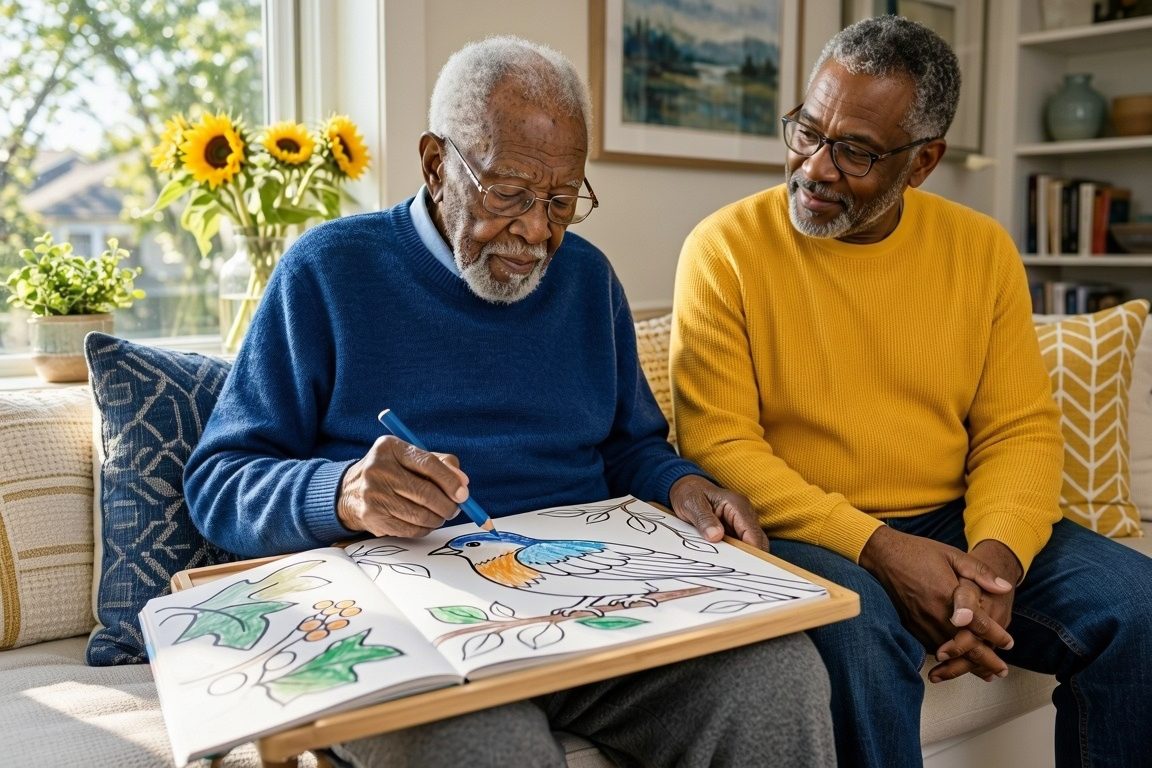
Choose one image per page with bold outlines and no tiny details. Pair with jumbo or ergonomic crayons if grip is difficult, and invite choices like 'What color should this flower be?'
Matching or Sorting Activity Books
Pages that match shapes, colors, or simple patterns tap into preserved recognition skills. You can also create your own by cutting shapes from colored paper and sorting together by color or size.
Memory or Reminiscence-Themed Books
Use nostalgic images like vintage cars or old-fashioned kitchens to spark conversations. Ask open-ended questions such as 'Do you remember a car like this?' to draw out stories.
Different situations
Lewy Body Dementia (LBD) or Parkinson's Disease Dementia
People with LBD often have visual hallucinations, fluctuating attention, and motor difficulties. Choose activity books with very simple, clear images (no abstract patterns). Avoid books with many small details that could be misinterpreted. Use large, easy-to-grip markers or crayons. Be prepared for sudden changes in ability, one day they may color for 20 minutes, the next they may not be able to hold a crayon. Always prioritize comfort over completion.
Late-Stage Dementia (bedbound or very limited communication)
Focus on sensory stimulation rather than cognitive tasks. Use books with high-contrast images (black and white or bright primary colors). You can also use texture books (e.g., fabric books) or simple 'I Spy' books where you point to objects. The goal is to provide a calming, familiar experience. Sit close, hold the book at eye level, and describe what you see in a soft voice. Even if they don't respond, the shared presence is valuable.
Caregiver Role: Adult Child vs. Spouse
Adult children may feel pressure to 'fix' or 'stimulate' their parent. Spouses may feel they are losing their partner. For adult children: focus on creating positive moments, not on cognitive improvement. Use the activity book as a way to connect and make memories. For spouses: choose activities that feel natural to your relationship. If you always did puzzles together, try a simple puzzle book. If you never did activities together, start with something low-pressure like coloring side by side.
Home Care Agency Owner / Professional Caregiver
Train your staff to use activity books as part of a daily routine, not as a one-time intervention. Create a 'menu' of activity books at different levels so staff can quickly match the right book to the client. Document what works (e.g., 'Client enjoyed large-print word search for 10 minutes, then became agitated with coloring'). Use the books during transitions (e.g., after lunch, before bath) to reduce anxiety. Consider laminating pages for reuse.
Early-Stage Dementia (still living at home, aware of diagnosis)
The person may feel frustrated or embarrassed by their cognitive changes. Choose activity books that feel 'adult' and dignified, like a book of famous paintings to color or a book of poetry with simple word games. Avoid anything that feels like 'baby work.' Let them choose the book themselves if possible. Use the activity as a way to talk about their feelings: 'I know things are hard right now, but I love spending time with you like this.'
Common questions
3
What are brain connection cafes and how do they work?
Brain connection cafes aren't mentioned in our guide, but for cognitive engagement, try sitting side-by-side with an activity book and focusing on one simple puzzle or coloring page together, praising any effort.
What activities can help slow cognitive decline in seniors?
Based on our guide, structured activity books with puzzles, coloring, and word games help slow decline by keeping the mind engaged in a low-pressure, meaningful way; match the difficulty to their current ability.
What activity books can help slow cognitive decline in seniors?
Look for simple activity books with large-print puzzles, easy coloring pages, or word games, sit together, praise the process, and stop if frustration appears, matching the book to their current skill level.
For the doctor
5
- If your loved one becomes very agitated or aggressive when presented with an activity book, discuss this with their doctor. It may be a sign of pain, discomfort, or a medication side effect.
- If they have significant vision or hearing loss, ask their doctor or occupational therapist for recommendations on adapted activity books (e.g., high-contrast, large print, or audio-assisted).
- If they have a history of seizures or epilepsy, check with their neurologist before using books with flashing patterns or very bright colors.
- If they are on medications that cause drowsiness or confusion, ask the doctor about the best time of day to try activities (e.g., after medication peaks).
- If they have difficulty swallowing or are at risk for choking, avoid activity books with small pieces (e.g., stickers, punch-out shapes) that could be put in the mouth.