What not to do
- Do not use competitive or timed games
- Do not correct mistakes or quiz the person
- Do not insist on daily practice if the person resists
- Do not rely on app-based brain training as a primary tool
Key points
- Brain games are not a cure, but they can be a meaningful tool for connection and engagement when used thoughtfully.
- Focus on the person, not the disease, activities should be based on their interests and current abilities, not on 'training' the brain.
- Keep activities short (5-15 minutes), simple, and in a calm environment to reduce overstimulation.
- Use personal history to choose activities, sorting golf tees for a former golfer, or matching fabric swatches for someone who sewed.
- The social connection is the most valuable part, play together, talk, and affirm their contributions.
- Rotate activities and document what works to refine your approach over time.
Videos
 Discover Gleam in Your Eye - A Dementia Activity and Support ResourceShows how activities can keep a person with dementia engaged and stimulated, and emphasizes viewing the person through the person, not the disease.
 Do brain games help with dementia?Provides a balanced look at the research on brain games, including a small study that showed improvement in processing speed and attention.
 Cognitive Activities for Dementia and Older AdultsOffers practical ideas for cognitive activities and explains why structure and routine help maintain cognitive function and reduce anxiety.
 Discover Memory Lane GamesIntroduces an app with thousands of games designed to stimulate conversation and trigger positive memories, perfect for playing together.
2 more videos
 Joyful Games for Seniors with DementiaDemonstrates how simple, joyful games can boost mood and well-being, and how to use them to create meaningful moments.
 Enhancing Everyday Activities in Dementia CareShows how to turn everyday tasks into engaging activities that provide a sense of purpose and maintain abilities.
Background
What Brain Games Can and Cannot Do
Research on brain games is mixed. Some small studies, like a 2018 trial with about 54 people, showed that playing certain brain-training games for at least 15 minutes a day over three weeks led to improvements in processing speed and attention, even on tests unrelated to the games themselves. However, experts caution that the evidence is not strong enough to guarantee that these benefits translate to real-world improvements in memory or daily functioning. The key takeaway is that brain games are not a cure or a guaranteed way to reverse dementia, but they can be a useful tool when used thoughtfully as part of a broader plan that includes physical activity, social engagement, and meaningful routines.
The Real Goal: Engagement, Not Performance
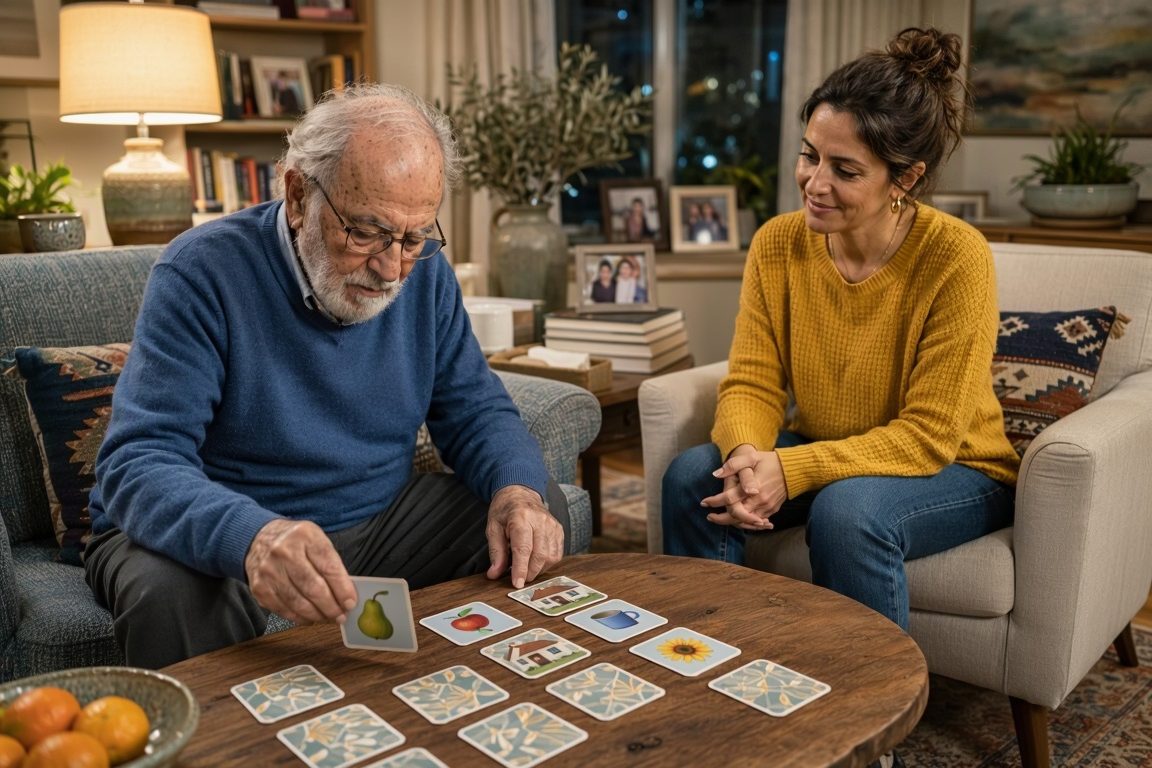
The most important shift you can make is to focus on engagement and connection rather than on 'training' the brain. As one expert put it, we need to view the person through the person, not through the disease. Activities like sorting socks, matching fabric swatches, or playing a simple card game can stimulate conversation, trigger positive memories, and provide a sense of purpose. For example, Memory Lane Games is an app designed for caregivers and people living with dementia to play together, it uses over 3,400 games on topics like hometowns, hobbies, and music to spark conversations. The goal is not to test memory but to create moments of joy and connection.
Why Structure and Routine Matter
Providing structure and routine helps a person with dementia maintain cognitive function, feel a sense of security, and can calm anxious or aggressive behaviors. Cognitive activities should be woven into the daily schedule at a time when the person is most alert and calm, often in the morning or after a meal. The environment matters too: reduce clutter, close blinds to soften light, and play calming music to minimize overstimulation. Remember, the part of the brain that processes music is often one of the strongest in dementia, so music can be a powerful anchor for any activity.
Practical tools
2
Familiar Household Items
Use items already in the home: clean socks for pairing, fabric remnants for texture matching, or wooden spoons for sorting. Familiarity reduces confusion and anxiety.
Structured Daily Schedule
Write or post a simple visual routine showing when the activity happens. Consistency builds security and reduces resistance over time.
Different situations
Early-stage dementia (mild cognitive impairment)
You can try slightly more complex games like crossword puzzles, word searches, or simple strategy games. The focus should still be on enjoyment, not performance. Consider using apps or programs that offer a social component, like a volunteer-led cognitive program where they meet the same person each week. This combines mental stimulation with social engagement, which is especially beneficial.
Middle-stage dementia
Simplify activities significantly. Use concrete, repetitive tasks like sorting large buttons, matching socks, or folding towels. Avoid anything that requires following multi-step instructions. The environment should be very calm and familiar. Use music from their youth to set a positive mood. The goal is comfort and connection, not skill-building.
Late-stage dementia
Focus on sensory stimulation rather than cognitive tasks. Offer items with different textures (soft fabric, smooth stones, a wooden spoon), play their favorite music, or gently guide their hands to touch a warm blanket. Use a calm, soothing voice and simple phrases like, 'Feel this soft cloth.' The goal is to provide comfort and a sense of security.
Lewy body dementia or Parkinson's disease dementia
Be extra cautious about overstimulation, as these conditions often involve visual hallucinations and sensitivity to complex environments. Keep activities very simple and in a quiet, dimly lit space. Avoid games with rapid movement or bright flashing lights. Focus on calming, repetitive tasks like sorting soft fabric squares or listening to gentle music.
Spouse vs. adult child caregiver
If you are a spouse, you may have a deep well of shared memories to draw from. Use that to personalize activities, 'Remember our trip to the beach? Let's look at those shells we collected.' If you are an adult child, you might need to learn about their interests from other family members. Be patient and use the activities as a way to build new positive memories together.
For the doctor
4
- Ask your doctor or occupational therapist: 'What level of cognitive activity is appropriate for my loved one's current stage of dementia?'
- Discuss any sudden changes in mood or behavior during activities, this could signal pain, infection, or medication side effects.
- If you are considering a paid brain-training program, ask your clinician if there is evidence supporting its use for your loved one's specific condition.
- Ask about combining cognitive activities with physical exercise, some programs like 'Minds in Motion' have shown benefits for both the person with dementia and the care partner.