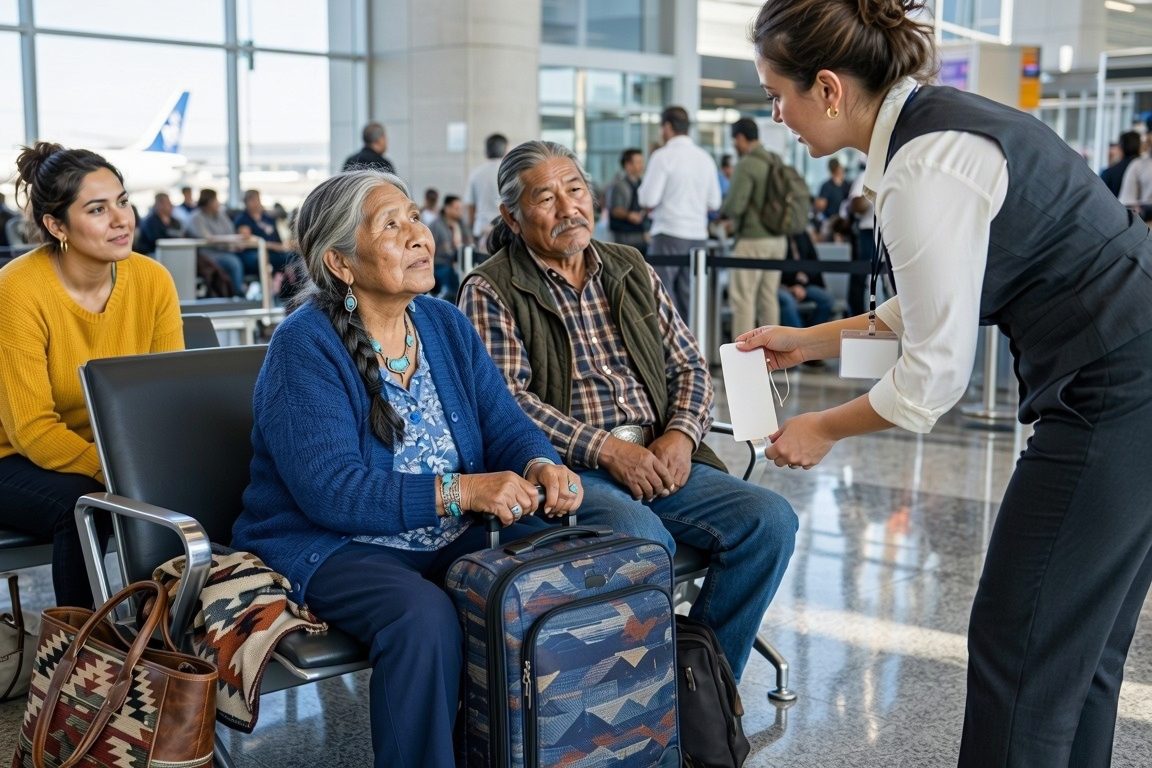
Step by step
What not to do
- Do not argue or rationalize. Saying 'But the plane is too small, it has to go below' will not work. A person with dementia cannot process logic when they are stressed.Instead, validate their concern: 'I know you want to keep your bag close. Let's figure this out together.'
- Do not grab the bag from them. This can feel like a theft and may trigger a panic reaction or even aggression. Always ask permission before touching their belongings.
- Do not involve other passengers or staff in a confrontation. If you raise your voice or draw attention, your companion may feel humiliated and dig in further. Keep your voice low and your body language relaxed.
- Do not lie about the bag's fate. Saying 'It will be right here' when it will be in the cargo hold can break trust later.Instead, use vague but honest language: 'They'll take good care of it and bring it back when we land.'
- Do not rush. If you are stressed about missing the flight, your companion will sense it and become more anxious. Allow extra time at the gate, at least 20 minutes, so you can handle this without pressure.
Key points
- The refusal is about fear and loss of control, not about the bag itself.
- Reduce sensory overload first, earplugs and sunglasses can prevent the refusal from happening.
- Use choice illusions to preserve their sense of autonomy.
- Never argue or grab the bag; validate their feelings and redirect.
- Pre-plan with the airline and TSA to minimize surprises at the gate.
- If all else fails, let them keep the bag and check your own instead.
Videos
 Curious Conversations about Brain Change with Teepa Snow and the PAC™ TeamTeepa Snow explains how to approach a person with dementia with curiosity rather than judgment, which is key when they refuse help at the airport.
 Conscious Caregiving with L & L 'Seniors and Travel'This video offers firsthand travel tips from a person with dementia, including using earplugs, sunglasses, and the importance of calling TSA ahead.
 What to do when a person with dementia refuses care: 6 simple strategiesProvides general refusal strategies that can be adapted to the gate-check scenario, such as offering choices and reducing triggers.
 3 Steps to Helping Your Parent with Dementia That Refuses HelpBreaks down the root cause of refusal and offers a step-by-step approach to getting cooperation without arguments.
2 more videos
 Why Do Dementia Patients Keep Saying They Want To Go Home?Helps you understand the emotional need behind the refusal, often a desire for safety and familiarity, which the bag represents.
 What Do You Do When A Dementia Patient Starts Wandering?While about wandering, the calming and redirection techniques apply directly to managing agitation at the gate.
Background
Why the Bag Feels So Important
For someone living with dementia, a carry-on bag is not just luggage. It is a portable anchor of identity and security. Inside may be medications, a favorite sweater, a wallet, or a phone, items that help them feel oriented and safe in a disorienting environment. When asked to gate-check it, their brain may interpret this as a threat: 'They are taking my things away.' This can trigger a fight-or-flight response, especially when compounded by the airport's overwhelming noise, flashing lights, and crowds. As one traveler with dementia noted, being in a 'herd of people' drastically increases dementia symptoms (source 5). The refusal is a protective reaction, not stubbornness.
The Hidden Role of Sensory Overload
Airports are designed for efficiency, not comfort. For a person with dementia, the constant announcements, moving walkways, fluorescent lights, and unfamiliar layout can cause sensory overload. This state of high arousal makes it nearly impossible to process a request like 'please gate-check your bag.' Their brain is already struggling to filter stimuli, and adding a demand can push them into confusion or agitation. Understanding this helps you shift from 'convincing them to comply' to 'reducing the overwhelm so they can hear you.'
The Fear of Losing Control
Dementia slowly erodes a person's sense of agency over their own life. Travel magnifies this: they are in an unfamiliar place, following someone else's schedule, and being told what to do by strangers. The bag may be one of the few things they still feel they control. Asking them to give it up, even temporarily, can feel like a final surrender. This is why a direct request often fails. Instead, you must work with their need for autonomy, not against it.
Practical tools
4
The 'Bag Buddy' Script
A pre-rehearsed phrase to use when the gate agent asks. Say to your companion: 'Oh, look, they have a special spot for bags like ours. Let's let them put it there so we can get on first.' Use the word 'special' to make it feel like a privilege, not a loss.
Sensory Survival Kit
Pack a small pouch with earplugs, sunglasses, a familiar small object (like a keychain or a photo), and a snack. At the first sign of refusal, offer the object to hold or the snack to eat. This redirects their focus and calms the nervous system.
Pre-Trip Bag Tagging
Before you leave home, attach a bright luggage tag to the carry-on with your contact info and a note: 'Please assist with gate-checking, passenger has cognitive needs.' Show this to the gate agent discreetly so they can handle the request without asking your companion directly.
The 'Companion Card'
Create a small card (like a business card) that says: 'My travel companion has dementia. Please speak calmly and directly to me if there are any issues. Thank you for your patience.' Hand this to the gate agent before they make the announcement. This can prevent the agent from addressing your companion directly and triggering refusal.
Different situations
Early-stage dementia (still independent)
In early stages, the person may still be able to understand a brief explanation if given privately and calmly. You can say, 'The plane is small, so they need to put big bags below. But I'll make sure you have your medication and phone in your pocket.' Offer to carry a small personal item for them.
Late-stage dementia (limited communication)
In later stages, the person may not understand words at all. Focus on non-verbal cues: gently take the bag from them while offering a comforting touch on the arm, and immediately hand them a familiar object (like a stuffed animal or a fidget toy) to hold. The bag may be forgotten quickly.
Lewy body dementia (fluctuating cognition and visual hallucinations)
People with Lewy body dementia are especially sensitive to visual stimuli. The bag may appear to 'move' or 'change shape' to them. Use a solid-colored bag (no patterns) and avoid asking them to look at it directly. Instead, have the gate agent handle the bag while you distract with a conversation about something pleasant.
Spouse vs. adult child caregiver
A spouse may have more authority to say 'Honey, let me take that' without causing offense. An adult child may need to use a more deferential approach: 'Dad, the pilot asked me to help with your bag. Can I take it for you?' Frame it as helping the staff, not as correcting them.
Traveling alone with dementia (early stage, solo traveler)
If the person is traveling alone and refuses gate-check, they may become stranded. Before the trip, practice the scenario with them. Role-play: 'The gate agent might ask you to check your bag. You can say, 'Yes, please,' and they'll give you a tag.' Also, arrange a meet-and-greet service at both ends to ensure someone helps them with the bag after landing (source 6).
For the doctor
3
- If the person has a history of severe anxiety or agitation during travel, ask their doctor about a short-acting anti-anxiety medication that can be used specifically for flights. Never administer medication without a doctor's guidance.
- If the person uses a wheelchair or walker, discuss with their clinician how to manage both the mobility aid and the carry-on bag at the gate. Some airports allow you to gate-check both, but policies vary.
- If the person has a medical device (like a CPAP or insulin pump) in the carry-on, ask the doctor for a letter explaining that the device must remain with the passenger. This can override the gate-check requirement.