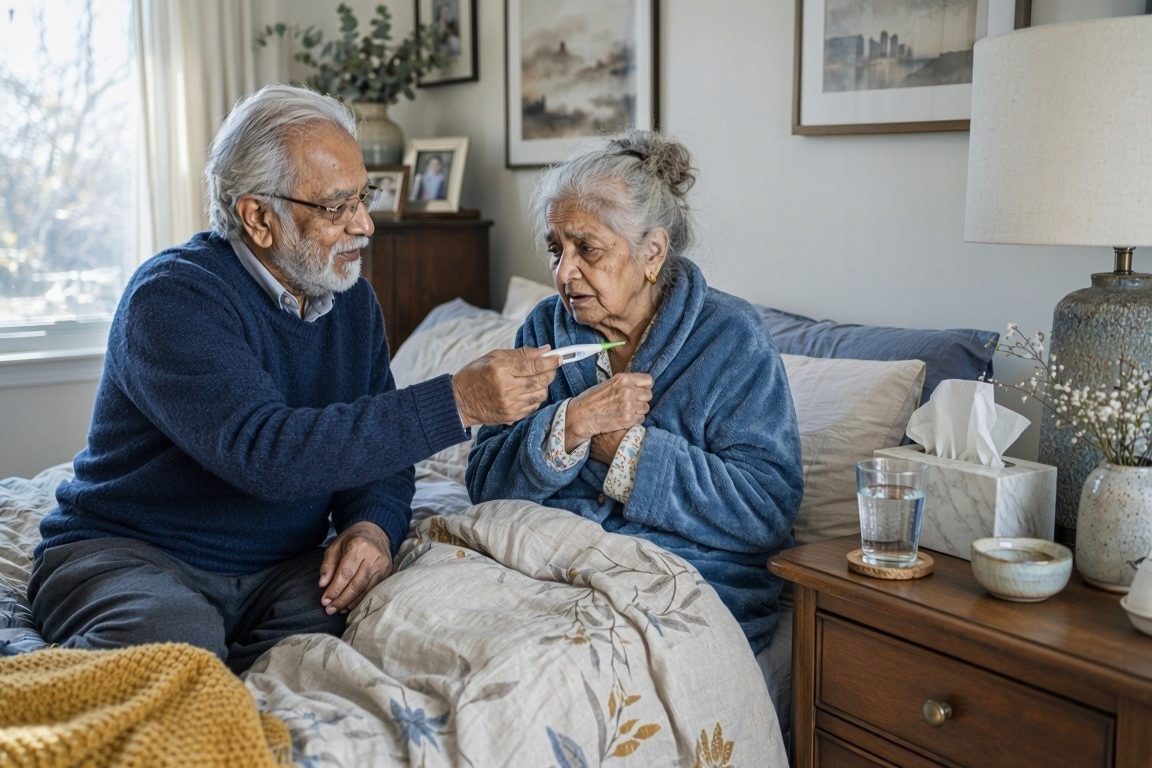
Step by step
What not to do
- Do not assume a lack of fever means they don't have the flu. Many seniors with the flu have a lower-than-normal body temperature or no fever at all. Rely on other symptoms like confusion, weakness, or a change in behavior.
- Do not give over-the-counter cold or flu medications without checking with their doctor first. Many of these can interact with their regular medications or worsen conditions like high blood pressure or heart disease. Always ask their pharmacist or doctor.
- Do not wait to see if symptoms get better on their own. In seniors, the flu can progress quickly to pneumonia or other complications. If you notice any concerning symptoms, call their doctor promptly. Early treatment is key.
- Do not try to force them to eat a full meal if they are not hungry. Focus on hydration and small, easy-to-digest foods. Forcing food can cause nausea or vomiting. Let them rest and offer food when they feel ready.
- Do not forget to disinfect your phone, remote controls, and other frequently touched items. These are often overlooked but can harbor germs. Use an alcohol-based wipe or a disinfectant spray daily.
- Do not skip your own flu shot or other preventive measures. You are the primary line of defense. If you get sick, your loved one is at greater risk. Protect yourself to protect them.
Key points
- In seniors, the flu often shows up as confusion, low body temperature, or severe weakness – not just a fever and cough.
- A sudden change in behavior in a person with dementia can be a sign of an underlying infection like the flu.
- Stock a dedicated flu season supply kit now: thermometer, pulse oximeter, masks, disinfecting wipes, electrolyte drinks, and easy-to-eat foods.
- Keep a daily symptom log to track temperature, oxygen levels, and any changes – this helps the doctor make a faster diagnosis.
- Do not give over-the-counter cold meds without checking with a doctor or pharmacist first due to potential interactions.
- Protect yourself: get your flu shot, wash hands frequently, and have a backup caregiver plan in case you get sick.
Videos
 Conscious Caregiving with L & L: Caring for SeniorsThis video directly addresses flu season for seniors, covering signs to watch for and best practices like hand washing and avoiding touching surfaces.
 Allergy Help for SeniorsWhile focused on allergies, it provides valuable tips on managing respiratory symptoms in seniors with COPD or other conditions, including always carrying an inhaler.
 Dementia Emergency Preparedness: How to make sure your loved one stays safe in an emergencyThis video offers essential advice on building an emergency kit for a person with dementia, including medication lists, incontinence supplies, and labeled clothing – all relevant for flu season preparedness.
 4 Things MAY Mean YOU have Caregiver Burnout PLUS 3 Things to Do TODAY to HELP!Caregiver burnout is a real risk during flu season. This video helps you recognize the signs in yourself and offers practical strategies to prevent it.
Background
Why the Flu Is Different for Seniors
For older adults, the flu is not just a bad cold. Their immune systems are less robust, and underlying conditions like COPD, high blood pressure, or heart disease can turn a routine flu into a serious complication like pneumonia. The danger is that seniors often don't show the classic signs we expect. Instead of a high fever, they might have a lower-than-normal body temperature, confusion, or a sudden change in behavior. This is why caregivers must be extra vigilant and not rely on typical flu symptoms alone.
The Link Between Flu and Sudden Behavioral Changes
One of the most important things to understand is that in seniors, especially those with dementia, an infection like the flu can cause a sudden, dramatic change in behavior. They might become more confused, agitated, or withdrawn. This is not just 'a bad day' – it can be a red flag for an underlying infection. As one expert notes, if your loved one suddenly starts acting very differently, take them to the doctor because it could be a sign of an infection that can be treated. This is a critical distinction: the flu can look like a dementia flare-up, but it needs medical attention.
Why Supplies Matter Before You Need Them
When flu hits, you don't want to be scrambling for basic supplies or trying to remember what to do. Having a dedicated 'flu kit' ready reduces stress and ensures you can act quickly. This is especially important for caregivers who are already stretched thin. The goal is to be proactive, not reactive. Stocking supplies now means you can focus entirely on your loved one's comfort and safety when they become ill, rather than making frantic trips to the store.
Practical tools
6
The 'Flu Season Supply Kit' Checklist
Create a physical bin or bag with these items:
Keep it in an easily accessible place.
The 'Symptom Log' Template
Use a simple notebook or a printable template. For each day, record: Date, Time, Temperature, Oxygen Level (if using a pulse ox), Symptoms (cough, confusion, weakness, etc.), Food/Fluid Intake, and Any Medications Given. This helps you communicate clearly with the doctor and spot worsening trends.
A 'What to Say' Script for Calling the Doctor
When you call, say: 'Hello, I am calling about [loved one's name]. They are [age] and have [underlying conditions like COPD or dementia]. They started showing [specific symptoms like confusion, low temperature, or cough] on [date]. Their temperature is [number]. They are [describe their energy level and whether they are eating/drinking]. I am concerned about [specific worry, e.g., pneumonia]. What should we do?' This script ensures you give the key information quickly.
The 'Hands-Free' Hydration Setup
Place a no-spill water bottle or a cup with a straw on the bedside table. Use a small cooler or insulated cup to keep cold water nearby. This reduces the need for them to get up or call for you constantly. If they are very weak and you are considering using a syringe (without needle) to offer small sips of water or electrolyte drink, only do so if the person can swallow safely and is not coughing or choking. If you have any concerns about their ability to swallow, consult their doctor or a speech therapist before trying to give liquids by syringe. Stop immediately if they cough, choke, or show any signs of distress.
A 'Backup Caregiver' Contact List
Before flu season starts, identify 2-3 people (family, neighbor, or a paid aide) who can step in if you become ill. Write down their phone numbers and a brief note about your loved one's routine and medications. Keep this list in your flu kit and on the refrigerator.
The 'Confusion vs. Infection' Quick Check
If your loved one with dementia suddenly becomes more confused, agitated, or withdrawn, ask yourself:
If the answer is yes to any of these, suspect an infection and call the doctor. Do not assume it is just their dementia worsening.
Different situations
If your loved one has dementia (Alzheimer's or Lewy body)
Pay extra attention to sudden behavioral changes like increased confusion, hallucinations, or agitation. These can be the first signs of the flu. Keep a 'dementia emergency kit' with extra incontinence supplies, a change of comfortable clothes, and a copy of legal paperwork (like power of attorney). Label their clothes with your emergency number. Use a calm, reassuring tone when they are confused – do not argue about their symptoms.
If your loved one has COPD or heart disease
Monitor oxygen levels with a pulse oximeter. A reading below 92% is a red flag and requires immediate medical attention. Keep their inhaler or heart medications easily accessible at all times, even if you are just going to the mailbox. Ask their doctor about prescribing a backup inhaler to keep in your flu kit. Any shortness of breath or chest discomfort warrants a call to the doctor.
If you are a long-distance caregiver
Arrange for a neighbor or local family member to check in daily during flu season. Have a video call scheduled so you can see their appearance and behavior. Keep a list of local resources (home health agencies, meal delivery) in your phone. If you visit, do a thorough check: look in the fridge for old food, check medication organizers, and ask about any recent falls or illnesses.
If your loved one lives in a facility (assisted living or nursing home)
Ask the facility about their flu prevention protocols and how they notify families of outbreaks. Keep a 'go bag' ready with a change of clothes, toiletries, and a list of their medications in case they need to be hospitalized. Visit during flu season only if you are healthy and wear a mask. Call ahead to check if there are any restrictions.
If you are a spouse caregiver
You are at high risk of catching the flu yourself. Plan for a backup caregiver now – a family member or a paid respite worker. If you get sick, you cannot care for your spouse. Have a plan for who will step in. Also, consider sleeping in a separate room during flu season to reduce your exposure.
For the doctor
6
- Ask your loved one's doctor if they should get the flu shot and the pneumonia vaccine (Prevnar 20 or Pneumovax 23). Timing and type matter for seniors.
- Ask the doctor or pharmacist if any of their current medications (e.g., blood thinners, heart medications) could interact with over-the-counter flu remedies like decongestants or pain relievers.
- Ask about the appropriate use of antiviral medications (like Tamiflu) – when to start them and if they are right for your loved one's age and health status.
- If your loved one has dementia and cannot communicate symptoms, ask the doctor what specific signs you should watch for that indicate a possible infection (e.g., increased confusion, refusal to eat, or a change in mobility).
- Ask about a 'sick day' plan for managing chronic conditions like diabetes or high blood pressure during a flu infection – for example, adjusting insulin or blood pressure medications if they are not eating well.
- Ask the doctor or a speech therapist: 'Is it safe for my loved one to use a syringe (without needle) for sips of liquid if they are very weak? What signs of swallowing trouble should I watch for, and when should I stop?'