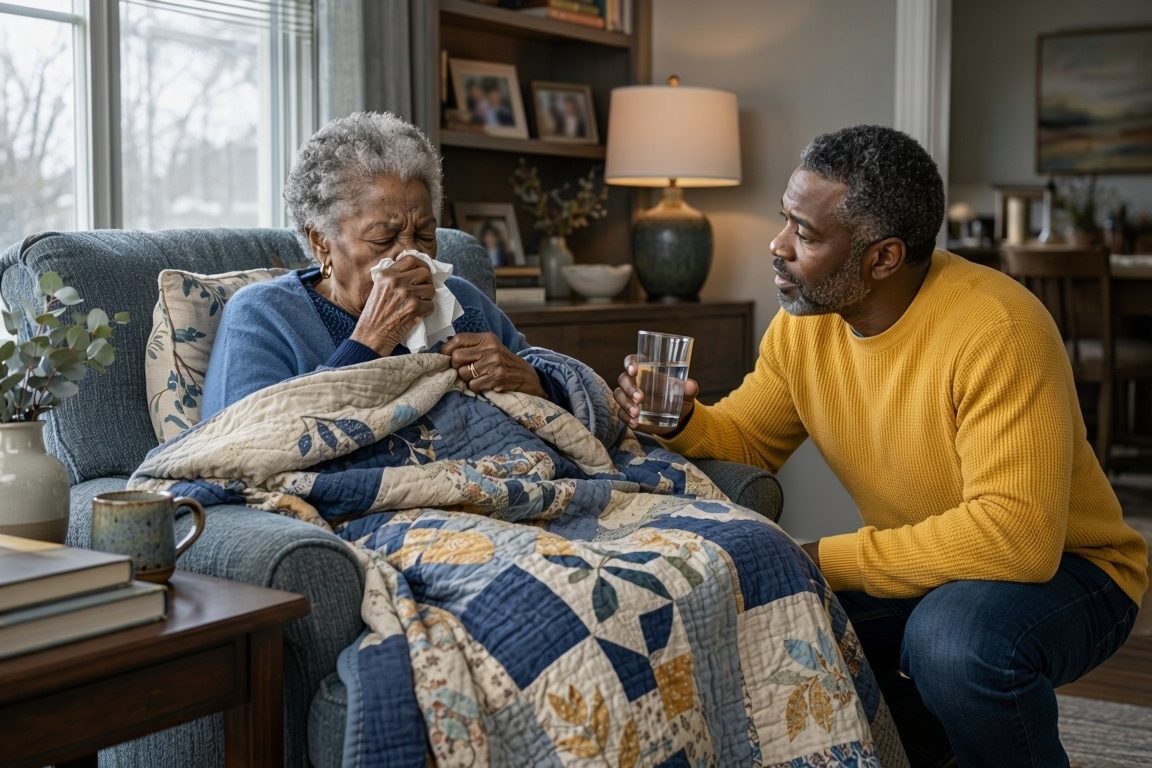
Step by step
Key points
- In seniors, flu often shows up as sudden confusion, low energy, or a drop in temperature, not just a fever or cough.
- Trust your gut: if something feels 'off,' call the doctor. You know your loved one best.
- Do not wait for them to tell you they are sick, they may not be able to.
- Keep a simple checklist and a 'go bag' ready for flu season.
- Hydration is critical: offer small sips often, and track how much they drink.
- Take care of yourself too, caregiver stress is real, and you need support to keep going.
Videos
 Conscious Caregiving with L & L: Caring for SeniorsThis video covers the basics of flu season for seniors, including signs to watch for and best practices. It is a warm, conversational resource that helps you feel less alone.
 Are You a Caregiver?This video helps you understand the role of a family caregiver and the unique challenges you face. It validates your experience and reminds you that you are not alone.
 Dementia and Sundowning: Tips to Help You Manage SundowningIf your loved one with dementia becomes more confused or agitated at night, this video offers practical tips. Flu can worsen sundowning, so these strategies are especially useful.
 Allergy Help for SeniorsWhile focused on allergies, this video covers how respiratory issues affect seniors, including the importance of having inhalers on hand. The advice applies to flu season too.
2 more videos
 How to cope with dementia caregiver stress: 4 ideasCaring for a loved one with flu symptoms on top of dementia is stressful. This video gives you four concrete ideas to manage your own stress so you can keep going.
 4 Things MAY Mean YOU have Caregiver Burnout PLUS 3 Things to Do TODAY to HELP!This video helps you recognize the signs of burnout in yourself and gives you three actions you can take today. It is a lifeline when you feel overwhelmed.
Different situations
If your loved one has dementia (any stage)
Pay extra attention to sudden behavior changes, this is often the first sign of flu. They may not be able to tell you they feel sick. Use simple, reassuring language. Do not argue if they refuse to take their temperature; try again later. If they become very agitated, it may be due to the infection, not the dementia itself. Call the doctor even if you are unsure.
If your loved one has COPD, heart failure, or diabetes
Flu can worsen these conditions quickly. Monitor their oxygen levels with a pulse oximeter if you have one (normal is 95-100%). Watch for increased shortness of breath, swelling in the legs, or blood sugar spikes. Have their rescue inhaler or nitroglycerin within reach. Call their specialist doctor if you see any changes in their chronic condition.
If you are a spouse caring for your partner
You may be at higher risk of catching the flu yourself because of close contact. Get your own flu shot if you haven't already. Ask a friend or neighbor to help with grocery runs or pharmacy pickups so you can rest. It is not selfish to take care of yourself, your partner needs you healthy.
If your loved one lives in a facility (nursing home or assisted living)
Ask the staff what their protocol is for flu symptoms. They may have a separate area for sick residents. Visit only if you are healthy, and wash your hands thoroughly before and after. If you notice symptoms, report them to the nurse immediately, do not assume they have already seen it. Bring a list of your loved one's medications to the facility.
For the doctor
5
- Ask your doctor: 'Should my loved one get the flu shot this year? Are there any reasons they should not?'
- Ask your doctor: 'What fever-reducing medication is safest for my loved one, considering their other health conditions and medications?'
- Ask your doctor: 'If my loved one gets the flu, should I give them antiviral medication like Tamiflu? Is it safe with their other meds?'
- Ask your doctor: 'What are the specific warning signs that would mean I need to take my loved one to the emergency room instead of waiting for an office visit?'
- Ask your doctor: 'How much fluid should my loved one drink each day, especially if they have heart failure or kidney disease?'