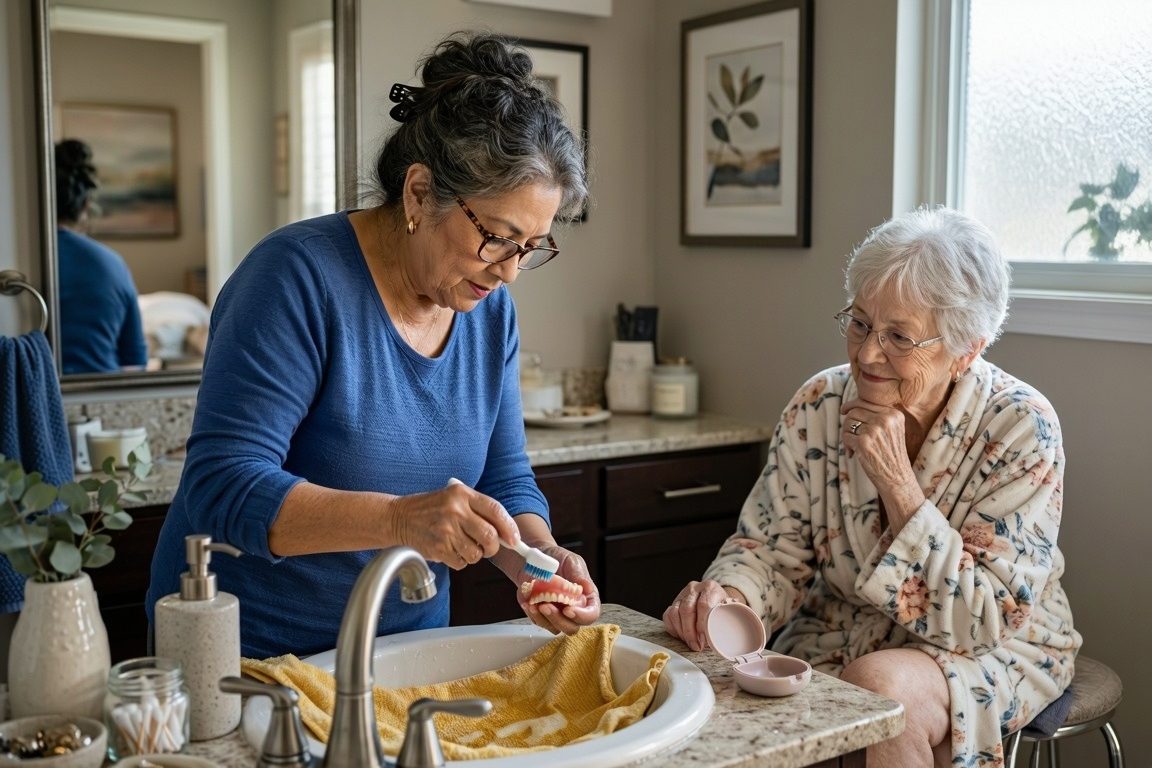
Step by step
What not to do
- Don't use regular toothpaste on dentures; it's abrasive and scratches surfaces, allowing bacteria to hide.
- Don't leave dentures in the mouth overnight; this raises risk of gum inflammation, fungal infections, and bad breath.
- Don't use hot water on dentures; heat warps them. Use cool or lukewarm water.
- Don't force dentures back in if there is pain or mouth sores. Check for red spots or poor fit and see a dentist.
- Don't argue if they say they've already cleaned dentures. Say 'Great, let me just check them' to avoid anxiety.
- Don't skip mouth care when dentures are out; gums, tongue, and cheeks still need gentle cleaning.
- Don't use alcohol-based mouthwash if swallowing is a risk; use non-alcohol rinse or plain water.
Key points
- Denture care is essential for preventing infections, pain, and behavioral changes in dementia.
- Use gentle, step-by-step verbal scripts and hand-under-hand guidance to reduce resistance.
- Rinse after meals, brush daily, and soak overnight, but adapt if your loved one resists.
- Clean the gums and tongue even when dentures are out to maintain oral health.
- Personalize your approach based on the stage of dementia and your loved one's unique needs.
- Seek professional dental care at least yearly, and don't hesitate to ask for help from a special needs dentist.
Videos
 Oral Care Tips for Loved Ones with DementiaThis video offers practical, visual demonstrations of how to approach oral care, including dentures, with someone who has dementia. It shows gentle techniques and verbal scripts you can use.
 Oral Hygiene Concerns and Options for GEMS States | Teepa's ClipsTeepa Snow explains how dementia stages affect oral care and provides tailored strategies for each GEMS state. This helps you understand why your loved one reacts differently and what to try.
 5 TIPS FOR TALKING TO YOUR LOVED ONE WITH DEMENTIACommunication is key to successful denture care. This video gives tips on how to phrase requests and reduce agitation, which you can apply directly to denture care conversations.
 Ask Teepa Anything! Live on YouTubeTeepa answers live questions from caregivers, including many about mouth care and resistance. You may find a question similar to yours and get a tailored response.
Background
Why denture care becomes difficult with dementia
Dementia affects the brain's ability to plan, sequence, and remember steps, even for routines as familiar as brushing teeth or removing dentures. Your loved one may forget they have dentures, resist having them removed, or become confused about the process. They might also experience changes in taste, texture sensitivity, or mouth comfort, making them reluctant to cooperate. This isn't stubbornness; it's the disease altering how their brain processes sensations and instructions.
The risks of poor denture care
If dentures aren't cleaned daily and removed at night, food particles and bacteria can build up, leading to gum infections, mouth sores, bad breath, and even pneumonia (from aspirating bacteria). Poor oral health can also make eating painful, leading to weight loss and reduced nutrition. For someone with dementia, a mouth infection can cause confusion, agitation, or behavioral changes that are mistaken for 'worsening dementia.' Keeping dentures clean is a key part of overall health, not just dental hygiene.
How to approach denture care with compassion
The goal is to preserve dignity and comfort, not to force a perfect routine. Start by observing what your loved one can still do independently, some may only need reminders, while others need full assistance. Use a calm, reassuring tone, and break the task into small steps. For example, instead of saying 'Let's clean your dentures,' try 'Let's rinse your mouth after lunch' or 'Let's soak these in the cup so they stay nice.' Always explain what you're doing before you touch their mouth, and move slowly to avoid startling them.
Practical tools
4
Gentle verbal scripts and hand-under-hand guidance
Use short, reassuring phrases like 'Let's give your mouth a little break and soak these.' For hand-under-hand, place your hand under theirs and guide it to hold the toothbrush or denture, letting them feel in control.
Daily denture care checklist
Post a simple visual checklist in the bathroom:
Check off each step together to build routine and reduce confusion.
Soft oral swabs and mouth moisturizer
Disposable foam swabs (e.g., Toothette) are gentle for cleaning when a toothbrush is too stimulating. Pair with a saliva substitute or mouth moisturizer (e.g., Biotene) to prevent dry mouth and sores.
Calming care environment
Choose a consistent time when your loved one is most alert (often after breakfast). Sit on their dominant side, lay a soft towel on the counter, keep the room quiet or play soft music to reduce resistance.
Different situations
Early-stage dementia
Your loved one can likely still do most of the care with reminders. Use the checklist and verbal prompts. Let them lead as much as possible. Check their toothbrush and denture cup to ensure they're actually cleaning. Offer praise for independence.
Middle-stage dementia
They may need step-by-step guidance and physical help. Use hand-under-hand, break tasks into smaller parts, and expect resistance. If they refuse, try a different time or a different approach (e.g., 'Let's just rinse your mouth' instead of full cleaning). Be flexible.
Late-stage dementia
Focus on comfort and moisture. If dentures are no longer tolerated, remove them and keep the mouth clean with swabs. Use a mouth moisturizer. Watch for signs of pain or infection (redness, swelling, bad odor). Consult a dentist if needed. Prioritize dignity and calm.
Lewy body dementia or Parkinson's disease dementia
These conditions often cause rigidity, tremors, and difficulty swallowing. Be extra gentle and slow. Use a soft toothbrush or swab. Watch for choking risk if they swallow denture cleaner or water. Consider a non-alcohol mouthwash. Discuss with a dentist about special needs.
Spouse vs. adult child caregiver
Spouses may feel more comfortable with intimate care but also more emotionally burdened. Adult children may need to navigate role reversal. Both should practice self-care and seek support. If the person with dementia resists care from a spouse, an adult child or professional may have better success.
In a facility or with paid caregivers
Ensure the care plan includes denture care specifics: removal at night, daily brushing, and mouth tissue cleaning. Ask staff to use the same verbal scripts and techniques you've found effective. Visit during care times to observe. Advocate for your loved one's preferences.
Common questions
1
How can I improve acceptance of mouth care for a person with dementia?
Try a gentle, step-by-step verbal script like 'Let's get your teeth clean and fresh' while using hand-under-hand guidance, place your hand under theirs and move together slowly to reduce resistance. Keep sessions short and positive, stopping if they seem upset, and try again later. Offer a familiar touch, like holding a favorite cup of water to rinse after, to make the routine feel safer and more predictable.
For the doctor
5
- Ask the dentist or doctor: 'Is there a safe mouthwash or denture cleanser if my loved one might swallow it?'
- Ask: 'What should I do if dentures no longer fit and cause pain? Are there options for relining or replacement?'
- Ask: 'Are there any medications my loved one takes that could affect oral health or cause dry mouth?'
- Ask: 'If my loved one has sores or infections in the mouth, what signs should I look for and when should I seek urgent care?'
- Ask: 'Is a special needs dentist available in our area who has experience with dementia patients?'