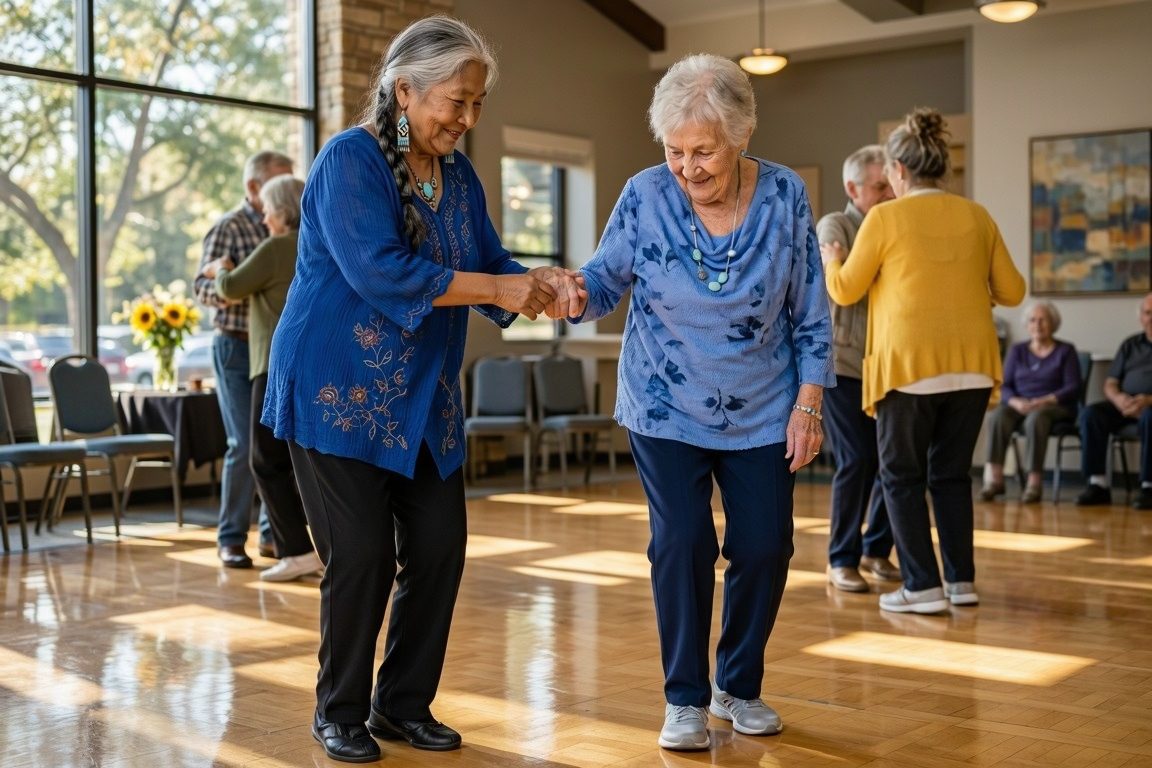
Step by step
What not to do
- Choosing a dance that is too complex or fast-paced for the person’s current ability.Instead: Start with slow, simple steps like swaying or marching in place. Gradually increase complexity as they become comfortable.
- Correcting mistakes or insisting on exact choreography.Instead: Focus on the joy of moving together. If they miss a step, just keep going. Laugh it off and keep the mood light.
- Forcing dancing when the person is tired, agitated, or not in the mood.Instead: Try a different time of day or a different activity. Dancing should feel like a treat, not a chore.
- Using the same dance routine every day without variation.Instead: Change the music, the steps, or the style every few sessions. Try a new dance like the cha-cha, waltz, or even a simple hip-hop move.
- Ignoring safety, dancing on slippery floors or without proper footwear.Instead: Dance on a non-slip surface, wear supportive shoes, and have a chair nearby for balance. Clear the area of obstacles.
- Assuming dancing is only for people who are already ‘good’ at it.Instead: Emphasize that the goal is brain health and fun, not performance. Everyone can move to music in their own way.
Key points
- Dancing reduces dementia risk and supports cognitive function by activating multiple brain regions simultaneously.
- The best dances are novel, involve learning patterns, and include social interaction, partner dances and choreographed routines are ideal.
- For early-stage dementia, aim for 30 minutes of dancing 4 times a week. For later stages, shorter, seated sessions with familiar music work well.
- Safety first: use non-slip surfaces, supportive shoes, and have a chair nearby. Avoid forcing or correcting mistakes.
- Music from the person’s youth (ages 12–25) is most effective for triggering positive memories and engagement.
- Dancing is a joyful, low-cost activity that benefits both the person with dementia and the caregiver.
Videos
 Reduce Your Risk of Dementia (Here’s Why It Works)Explains the science behind why dancing is so effective for brain health, including its impact on the hippocampus and neuroplasticity.
 PAC Live at 5 - DancingDemonstrates how to adapt dancing for people living with dementia, including seated options and the importance of social connection.
 The ‘Magic Pill’ for Brain Health: A Behavioral Neurologist ExplainsProvides expert advice on exercise as a key lifestyle intervention for preventing cognitive decline, with practical tips.
 Cognitive Activities for Dementia and Older AdultsOffers ideas for combining music and movement to stimulate cognitive function, including simple dance routines.
Practical tools
6
The ‘Twist’ Starter Routine
A simple, iconic dance that involves twisting the hips and stepping side to side. It’s easy to learn, works the core and legs, and activates the prefrontal cortex (planning) and motor areas. Do it for 5 minutes as a warm-up or standalone activity. Use the original Chubby Checker song or any upbeat 60s music.
Seated Dance Playlist
Create a playlist of 5–7 songs from the person’s favorite era (e.g., 1950s–1970s). For each song, assign a simple arm movement (e.g., clapping, swaying arms, tapping knees). This allows participation even if standing is difficult. Example: ‘Twist and Shout’ for arm twists, ‘Stand By Me’ for slow swaying.
Partner Dance Cue Cards
Write or print simple step sequences on index cards (e.g., ‘Step forward, step back, sway side to side’). Hold the card where both you and your partner can see it. This reduces confusion and provides a visual guide. Use for dances like the waltz or foxtrot at a slow tempo.
‘Dance Break’ Timer
Set a timer for 5–10 minutes and announce a ‘dance break’ during the day. This can be a spontaneous activity that breaks up sedentary time. Use a phone app or kitchen timer. The short duration makes it feel manageable and fun.
Music Memory Prompts
Before dancing, ask a simple question like ‘What song did you dance to at your wedding?’ or ‘What was your favorite song in high school?’ This primes the brain for positive memories and makes the dance more meaningful. Use the answer to choose the first song.
Safety Setup Checklist
Before each dance session:
This prevents falls and makes the experience comfortable.
Different situations
Early-stage Alzheimer’s or dementia (still independent with daily activities)
Focus on learning new dance styles (e.g., salsa, swing, or line dancing) to maximize neuroplasticity. Encourage attending a community dance class or social dance event. The social engagement is as important as the movement. Aim for 30 minutes, 4 times a week.
Moderate dementia (needs assistance with some daily tasks)
Simplify to seated or supported dancing. Use familiar music from their youth. Keep sessions short (10–15 minutes) and repeat the same simple routine to build familiarity and confidence. Avoid complex choreography. The goal is enjoyment and maintaining mobility, not learning new steps.
Lewy body dementia or Parkinson’s disease
Be extra cautious with balance. Use a chair for support. Focus on rhythmic, repetitive movements like marching in place or swaying. Avoid quick turns or complex sequences. Dancing to a steady beat can help with gait and motor symptoms. Consult a physical therapist for specific exercises.
Caregiver dancing with a loved one (spouse or adult child)
The caregiver should also benefit from the brain health effects. Dance together as a shared activity. Use it as a way to connect emotionally. If the caregiver is stressed, start with a slow, calming dance like a waltz. The caregiver should model enjoyment and patience.
Person living in a facility (nursing home or assisted living)
Coordinate with staff to schedule a regular dance activity. Use group sessions to foster social bonds. If the person is non-ambulatory, a seated dance with arm movements is still beneficial. Bring headphones with their favorite music if group music is not to their taste.
For the doctor
5
- Ask the doctor if there are any physical limitations (e.g., hip or knee problems, heart conditions) that might affect the type or intensity of dancing recommended.
- If the person has a history of falls, ask about the safest way to incorporate dancing, should they use a walker or cane? Are there specific movements to avoid?
- For those with Parkinson’s or Lewy body dementia, ask if a physical therapist can provide a tailored dance-based exercise program to address balance and gait issues.
- If the person is on medications that affect heart rate or blood pressure, ask whether moderate dancing (e.g., 30 minutes of continuous movement) is safe.
- Ask about the optimal frequency and duration of dancing for brain health, especially if the person has other chronic conditions like diabetes or heart disease.