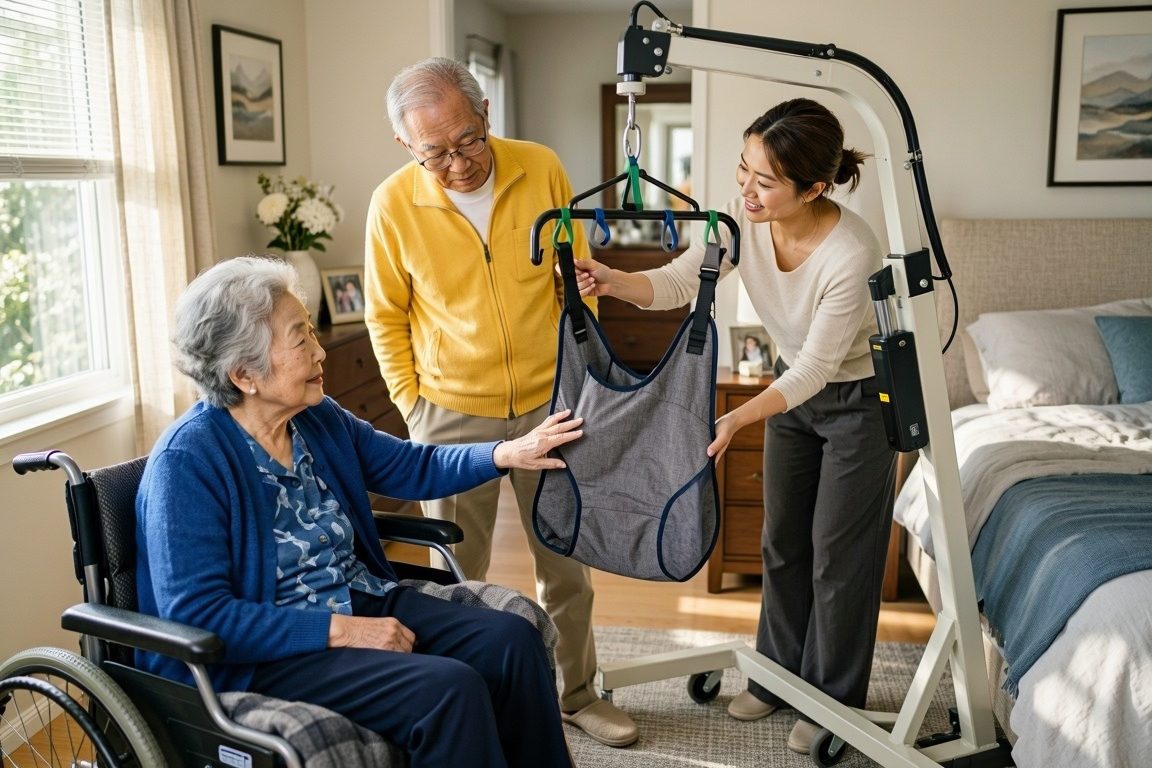
Step by step
What not to do
- Do not rely on towel bars or flimsy furniture for support when your spouse stands, they can crumble and cause falls. Install professionally mounted grab bars near the toilet, tub, and bed.
- Do not buy a lift without involving a physical therapist, they prevent unsafe or wrong-type purchases.
- Do not force a lift on your spouse if they are frightened. Introduce it gradually; let them see, touch, and sit in it without lifting.
- Do not exceed the lift's weight capacity or use it on a surface or slope it is not designed for, this can cause tipping or failure.
Key points
- A sit-to-stand lift is best for someone who can bear some weight and follow simple cues; a transfer lift works for those who can stand briefly but cannot get up from a chair.
- Always involve a physical therapist before buying a lift, they can assess your spouse's needs and trial equipment.
- Check your home's floor surfaces; thick carpet makes lifts difficult to use and may require a hard mat.
- Lifts can be used for toileting, which is a huge help for caregivers, look for models that allow the person to remain standing over the toilet.
- Do not rely on towel bars or flimsy furniture for support, install professionally mounted grab bars instead.
- Join a dementia caregiver support group to learn from others' experiences and find affordable equipment options.
Videos
 Dementia Caregiver Support In Action: Advocating and AdaptingThis video shows real-life examples of caregivers adapting their homes and using lifts, including a sit-to-stand lift demonstration. It offers practical tips on advocating for your loved one's needs.
 Ask Teepa Anything! Live on YouTubeTeepa Snow answers caregiver questions about transfers and lifts, including how to position a chair to prevent falls and why some lifts are more comfortable than others. Her advice on using a padded sling is directly relevant.
 The Baffled Brain: Demystifying Dementia Episode 27 June 5 ,2021This episode covers the challenges of standing and transferring for people with dementia, including the importance of keeping muscles active and the role of lifts in maintaining mobility.
 Time with Teepa - Does Their Comfort Matter?Teepa discusses how to make transfers comfortable for the person with dementia, including tips on using a lift without causing fear or discomfort. This is key for introducing a lift to a resistant spouse.
2 more videos
 Home Safety For Your Loved OnesThis video covers home safety modifications like grab bars, raised toilet seats, and floor mats that complement lift use. It helps you create a safer environment for transfers.
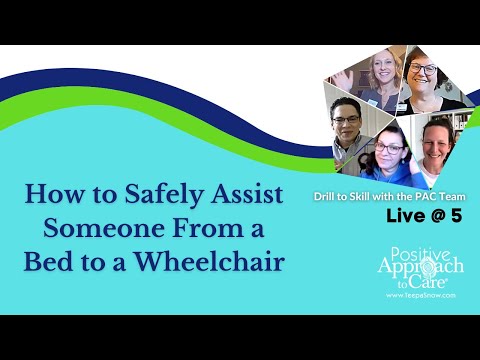 How to assist someone transferring from a bed to a wheelchairThis video demonstrates safe transfer techniques that can be adapted for use with a lift. It shows proper positioning of the chair and the caregiver's body to reduce strain.
Background
Why Your Spouse Struggles to Stand
When dementia progresses, the brain loses its ability to coordinate the complex sequence of movements needed to stand up. Your spouse may not recognize that they need help, or they may try to stand without properly positioning their feet. As one expert explains, 'the person is not someone that will say I need help so their ability to recognize the level of assist that they currently need to safely stand is not present'. This means they might lean forward, pull their feet too far back, or tip forward dangerously. Additionally, the large muscles in the buttocks and thighs, the gluteals, begin to weaken and contract when not used regularly, making standing even harder. Understanding this neurological and physical decline helps you see that a lift is not a failure but a tool to maintain safety and activity.
The Hidden Risks of Manual Lifting
As a spouse caregiver, you may have been helping your partner stand for months or years, but as dementia advances, your own body pays the price. One caregiver shared that her husband, who is six-foot-two and 'all legs,' became impossible for her to lift alone. Manual lifting can strain your back, shoulders, and knees, and if your spouse falls, you may not be able to get them up without calling 911. A lift can prevent injuries to both of you and reduce the need for emergency calls. The key is to choose a device that matches your spouse's current abilities and your home environment.
Types of Lifts and When They Work
There are two main categories of lifts for home use: sit-to-stand lifts and transfer lifts. A sit-to-stand lift uses a sling that goes under the person's bottom and around their waist, with a knee block to keep them from sliding forward. It hydraulically lifts them to a standing position. These are ideal for someone who can bear some weight and follow simple cues. As one source notes, 'stand lifts play a significant role can really really really make a person's life in caregiving'. They range from about $600 to $3,000, depending on features. A transfer lift, sometimes called a 'dolly for a person,' is scooted behind the person, and a belt secures them; it lifts them to chair height so they can step off. This works well for someone who can stand briefly but cannot get up from a chair. For those who are more impaired, a full-body sling lift may be needed, but experts caution that the sling must be removed after each transfer, which can be cumbersome.
The Role of Physical Therapy and Professional Assessment
Before buying any lift, it is crucial to involve a physical therapist or occupational therapist. They can perform standardized tests to evaluate your spouse's strength, balance, and fall risk, and they can trial different devices to see what works. A therapist can also teach you proper techniques to avoid injury. As one expert advises, 'I would want a professional that really could lay their eyes and hands on him and provide the right' equipment. This assessment is especially important because dementia can change rapidly, and what works today may not work next month.
Practical tools
2
Observation Checklist for Standing Ability
Before buying any lift, watch your spouse stand from a chair:
Unable to bear weight or follow commands indicates need for a full-body sling lift; some weight-bearing but unable to stand independently suggests a sit-to-stand lift.
Questions for the Equipment Supplier
Ask:
Different situations
Lewy body dementia or Parkinson's disease dementia
These conditions often cause fluctuating cognition and rigidity. Your spouse may be able to stand one day but not the next. A sit-to-stand lift with a wide, padded sling is recommended because it can be used even on 'bad' days. Avoid lifts that require the person to hold a bar, as tremors or rigidity may make gripping difficult. Discuss with your clinician about medication timing to maximize strength during transfers.
Late-stage dementia (unable to bear weight or follow commands)
A full-body sling lift (like a Hoyer lift) may be necessary. However, experts caution that the sling must be removed after each transfer, which can be time-consuming. Consider renting one first to see if it works in your home. Also, focus on using a lift chair for comfort and a transfer lift for brief standing if your spouse can still bear some weight. Involve a physical therapist to ensure safe use.
Spouse caregiver vs. adult child caregiver
As a spouse, you may be older and more at risk for injury yourself. Prioritize a lift that is easy for you to operate alone, such as a battery-powered model rather than a manual hydraulic one. If you are an adult child, you may have more physical strength but less experience; still, do not rely on manual lifting. Both roles benefit from a lift that reduces strain. Also, spouse caregivers may feel more emotional resistance to using a lift, remind yourself that it is a tool to keep your partner safe, not a sign of failure.
In a facility or nursing home
Facilities often have their own lift policies and equipment. If your spouse is in a facility, ask the staff what lifts they use and whether you can bring your own. Some facilities require staff-only operation of lifts for liability reasons. Focus on advocating for your spouse's comfort and safety during transfers, and ask for a care plan that includes lift use.
Limited budget or Medicaid
Medicare typically does not cover sit-to-stand lifts. Check with Medicaid, which may cover durable medical equipment in some states. Look for used lifts on Craigslist, Facebook Marketplace, or through local dementia support groups. Some nonprofit organizations offer loaner programs. A basic hydraulic stand lift can be found for around $600. Also consider a lift chair, which may be less expensive than a full lift.
For the doctor
5
- Ask your doctor: 'Is my spouse safe to use a sit-to-stand lift given their current strength and balance? Are there any medical conditions (like low blood pressure or hip fractures) that would make a lift unsafe?'
- Ask the physical therapist: 'Can you trial a sit-to-stand lift and a transfer lift with my spouse to see which one works best? Can you teach me how to use it safely?'
- Ask the pharmacist: 'Are any of my spouse's medications causing dizziness or weakness that could affect their ability to stand or use a lift?'
- Ask the occupational therapist: 'What home modifications (like grab bars, raised toilet seats, or floor mats) should I make to support lift use?'
- Ask the supplier: 'Does this lift require a prescription? Is it covered by my insurance or Medicaid? Can I rent it first to try it out?'