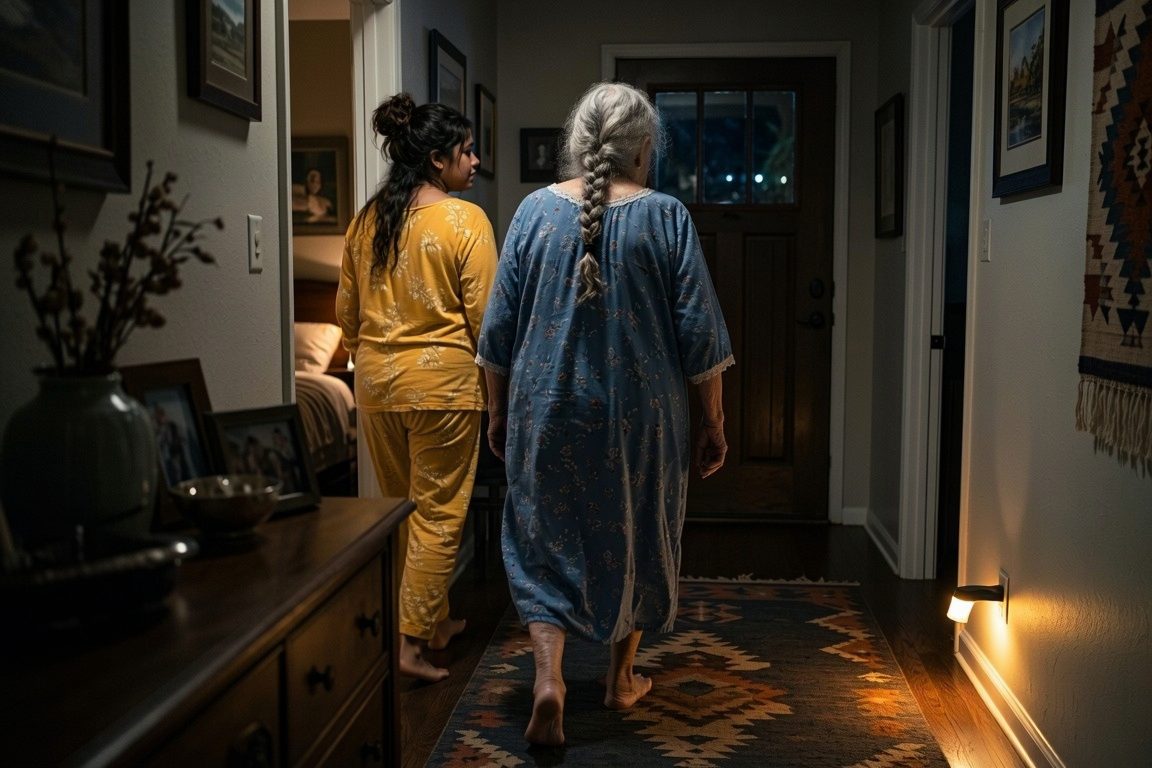
Step by step
What not to do
- Do not argue, scold, or reason with them ('This is your home'). Validate the feeling and redirect instead.
- Do not use physical restraints or lock them in their room. Use door alarms or childproof covers if needed.
- Do not offer caffeine, nicotine, or alcohol after late afternoon.
- Do not assume wandering is 'bad behavior', always check for physical causes (pain, hunger, thirst, UTI). If sudden new, call their doctor.
- Do not ignore your own exhaustion. Arrange respite: family member, adult day program, or professional care.
Key points
- Nighttime wandering is usually a symptom of confusion, an unmet need, or a disrupted body clock, not deliberate misbehavior.
- A consistent, calming evening routine and a well-lit path to the bathroom can dramatically reduce wandering.
- Increasing daytime activity and morning sunlight exposure helps reset the circadian rhythm for better nighttime sleep.
- Never argue or scold; instead, validate their feelings and gently redirect them to a safe, calming activity.
- Remove triggers for leaving (keys, coats, shoes) and use simple safety devices like door alarms or GPS trackers.
- Always rule out a physical cause (pain, infection, medication side effect) before assuming the behavior is just part of dementia.
Videos
 Alzheimer's and Wandering - Professional Caregiver WebinarThis webinar offers professional-level strategies for preventing wandering and creating a safe home environment, including the use of visual cues and door alarms.
 Dementia Wandering: Prevention + What to Do If They Go Missing | Dr. Khushboo VermaDr. Verma provides practical, step-by-step advice on both preventing wandering and what to do immediately if your loved one goes missing, including safety registration programs.
 Can Increasing Daytime Activity Reduce Nighttime Sundowning In Dementia? - Dementia Help HubThis video explains the science behind how daytime activity and light exposure can reset the circadian rhythm, directly reducing nighttime wandering and sundowning.
 What Is Sundowning In Dementia And How To Cope? - Dementia Help HubA clear explanation of sundowning and its triggers, with practical coping strategies that directly apply to reducing evening and nighttime wandering.

Background
Why Does Nighttime Wandering Happen?
Nighttime wandering is rarely random. In dementia, the brain's internal clock, the circadian rhythm, often becomes disrupted. This means the person may not feel tired at the right time or may confuse day and night. They might wake up feeling disoriented, not recognizing their bedroom, and then get up to 'go home' or look for a lost loved one. This is not deliberate misbehavior; it is a response to confusion and anxiety. As one expert explains, the person may be reliving an old memory or feeling distressed, and they have less ability to communicate or explain where they are going or why.
The Role of Sundowning and Unmet Needs
Wandering often gets worse in the late afternoon and evening, a pattern called 'sundowning.' Fatigue, shadows, and the changing light can increase confusion and fear. A person who is tired from the day is more likely to become agitated. Additionally, wandering can be a sign of a simple physical need: they may need to use the bathroom, be thirsty, or be in pain. Sometimes, they are just looking for their bed after getting up to use the toilet and getting lost in the hallway. Understanding these triggers helps you respond with compassion instead of frustration.
Wandering as a Need for Purpose
For many people with dementia, wandering is not aimless. It can be a leftover habit from a former life, like a farmer wanting to check on the cows or a mother looking for her children. They might act as if they are doing a chore, but nothing gets done. This is their brain trying to find a familiar purpose. Recognizing this can help you redirect them gently rather than trying to stop them. The goal is not to trap them, but to guide them toward a safe, calming activity that meets that underlying need for purpose or comfort.
Practical tools
5
The Redirect Script for 'I Want to Go Home'
When they say 'I want to go home,' respond: 'Tell me about your home. What was it like?' Listen, nod, then say: 'It is late now, and your bed is ready. Let me help you get comfortable, and we can look at pictures of your home tomorrow.'
The Light Path Setup
Run soft-white LED rope lighting along the baseboard from bedroom to bathroom door, plugged into a motion-sensor near the bed. Light turns on automatically when they get up, reducing disorientation.
The Door Disguise Method
Paint the interior side of the front door the same color as the wall, and/or hang a dark curtain over it. Add a slide latch or childproof cover high or low, out of natural line of sight.
The Safe Wandering Chair
Place a sturdy, comfortable chair with armrests in a long hallway or quiet corner. If they wander at night, they have a safe place to rest instead of heading for an exit.
The Morning Light Routine
Each morning spend 20-30 minutes in bright natural light (walk outside, sunny porch, or by a large window). On gray days, use a 10,000-lux light therapy box for 30 minutes during breakfast.
Different situations
Middle stage (stage 5) vs. late stage
In middle stage, your loved one may still be able to follow simple instructions and use the bathroom independently. Focus on creating clear visual cues (like the light path) and a consistent routine. In late stage, they may need more hands-on help. You may need to use a bedside commode to reduce the need to walk to the bathroom. Wandering may become more aimless and less purposeful. In late stage, safety is paramount: consider a low bed (mattress on the floor) to prevent falls, and use a bed alarm to alert you when they get up.
Spouse caregiver vs. adult child caregiver
As a spouse, you may have a harder time setting boundaries because of a lifetime of shared habits. You might feel guilty about changing the bedroom or limiting their freedom. It is okay to prioritize safety. As an adult child, you may have more emotional distance, but you might also feel you are 'parenting' your parent. Both roles benefit from remembering that the wandering is not personal. Spouses can use phrases like 'Honey, let me help you back to bed.' Adult children can say 'Dad, it's me, your son. Let me help you.'
Lewy body dementia vs. Alzheimer's
In Lewy body dementia, people often have vivid visual hallucinations and severe fluctuations in alertness. Nighttime wandering may be triggered by frightening hallucinations. In this case, do not argue about what they see. Instead, say 'I see you are scared. Let me turn on the light and show you it is just a shadow.' Avoid using antipsychotic medications unless prescribed by a specialist, as they can be dangerous in Lewy body. Focus on a calm, predictable environment and use a nightlight to reduce shadows.
If your loved one is in a facility
Even in a facility, you can advocate for these strategies. Ask the staff to place a nightlight in the room and a familiar object (like a quilt or photo) on the bed. Request that they limit caffeine after 2 PM and offer a bathroom visit before bed. If wandering is a problem, ask about a 'wandering path' in the facility's hallways. You can also provide a GPS tracker or ID bracelet for extra safety.
If your loved one has a history of being a night owl
Do not force a 9 PM bedtime if they have always stayed up until midnight. Instead, shift the routine later. Keep them engaged with quiet activities (looking at magazines, folding towels) until they naturally feel sleepy. The goal is to align with their natural rhythm as much as possible, while still ensuring they get enough sleep and do not wander in the middle of the night.
Common questions
1
What is sleepwalking and what are its typical features?
Instead of focusing on sleepwalking, remember that nighttime wandering in dementia is different and stems from confusion or unmet needs. Start by ensuring your loved one has a calm, consistent bedtime routine and a clear, well-lit path to the bathroom to reduce confusion.
For the doctor
5
- Ask your doctor if a low dose of melatonin (0.5-3 mg) might help regulate sleep, especially if taken 1-2 hours before bedtime. Do not start any supplement without medical guidance.
- If your loved one has a sudden increase in wandering or confusion, ask the doctor to check for a urinary tract infection, which can cause delirium.
- Review all medications with the doctor or pharmacist. Some drugs, including certain antidepressants, blood pressure meds, and over-the-counter sleep aids (like diphenhydramine), can worsen confusion and sundowning.
- If wandering is severe and does not respond to non-drug strategies, ask about a referral to a geriatric psychiatrist or a sleep specialist. Do not ask for sedatives or antipsychotics without a thorough discussion of risks and benefits.
- Ask about a home safety evaluation by an occupational therapist, who can recommend specific environmental modifications to prevent falls and wandering.