
Step by step
What not to do
- Do not argue or try to reason with the person, their brain can no longer process logic and arguing escalates behavior.
- Do not use a loud or frustrated tone. Your body language matters more than words; if you sound angry, they will mirror with fear or resistance.
- Do not force an activity they resist. Find something matching their current abilities and interests instead.
- Do not reach for medications as the first solution. Use non-drug strategies first; only consider medication after discussion of specific risks and benefits with the clinician.
- Do not take the behavior personally. They are responding to an unmet need or environmental trigger, not trying to hurt you.
- Do not try to do this alone. Caregiving is too heavy for one person. Reach out to family, friends, or a local Alzheimer's Association chapter for respite.
Key points
- Doctors are trained to diagnose and prescribe, not to teach behavioral strategies. That’s why you feel unsupported, it’s a system failure, not yours.
- Behaviors are not ‘bad’, they are responsive to an unmet need. Always check for pain, hunger, fatigue, or overstimulation first.
- Non-drug strategies are the first, second, and third line approach. Medications are a last resort, used only when the person is in significant distress.
- Your tone, body language, and environment are powerful tools. A calm voice and a quiet room can prevent many behaviors before they start.
- Track behaviors in a simple log to find patterns and share with the doctor. This turns vague complaints into actionable data.
- You are not alone. Join a support group, ask for an occupational therapy referral, and keep advocating for your loved one’s comfort and dignity.
Videos
 Why Do Alzheimer's & Dementia Patients Get Aggressive?Explains the root causes of aggression and how to respond without escalating.
 Agitation and Alzheimer’s: Strategies for Managing Behavioral and Psychological Symptoms of DementiaProvides practical, non-drug strategies for agitation and sundowning.
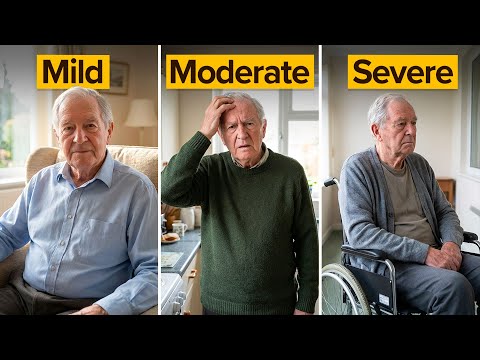 Dementia Progression: What I Wish Caregivers Were ToldHonest advice from a caregiver about what to expect and how to prepare.
 Dementia Careblazer Interview: How the 5 senses can impact behaviorShows how sensory triggers (noise, light, smell) can cause or calm behaviors.

Background
The Training Gap: Diagnosis vs. Daily Life
Doctors are trained in human anatomy, diagnosis, and cure. When a disease can’t be cured, as with dementia , their training runs out. They learn about medications that can help with symptoms, but they are not taught behavioral skills or communication skills. They don’t learn how to explain to a family how to get a loved one to take a shower, because that’s not part of medical school. As one expert put it, ‘It doesn’t matter what kind of damn dementia they have. It’s the symptoms we need to deal with at home that’s the problem.’ That’s the big problem.
This lack of training extends to the entire system. Memory care staff and even many specialists are trained on the same basic facts , what dementia is, what causes it , and then told to ‘blow it off and divert to an activity.’ That’s not enough. Families are left with zero skills for handling real-life challenges like getting someone to eat, to stop pacing, or to get into the car for a doctor’s appointment. The medical and memory care industries have failed families for decades.
Why Behaviors Happen: Unmet Needs, Not ‘Bad’ Behavior
What doctors often label as ‘behavioral and psychological symptoms of dementia’ (BPSD) are actually responsive behaviors, a person’s way of communicating an unmet need. The person with dementia is not being deliberately difficult. Their brain is adapting to the environment automatically. When they’re in a doctor’s office, social reflexes kick in, and they may seem fine for a short visit. But at home, those reflexes melt away, and the real challenges emerge.
Up to 98% of people with dementia will experience significant behavioral symptoms at some point. These behaviors are not random. They are responses to triggers like pain, hunger, fatigue, overstimulation, or a change in routine. When a caregiver tries to help and the person gets more upset, it’s often because the caregiver’s approach , tone, body language, or the environment , is actually triggering the behavior. The person’s brain can no longer process complex instructions or frustration, so they react physically.
The One-Size-Fits-All Problem: Medications Aren’t the First Answer
Current dementia care in the real world is neither personalized nor precise. It’s a one-size-fits-all approach that emphasizes medications and not much else. But medications are not the first, second, third, or even fourth line approach for behaviors. They should only be considered when non-medication strategies have failed and the person is in significant distress, fear, pain, anxiety that you cannot calm down.
Many doctors default to prescribing antipsychotics or benzodiazepines because they don’t have other tools. But these medications carry serious risks for older adults, including increased fall risk, sedation, and even hastened cognitive decline. The real solution lies in non-pharmacologic strategies: understanding the unmet need, changing the environment, and adjusting your own communication. This is where caregivers need training, and this is where the system has failed.
Practical tools
5
The 'Unmet Needs' Checklist
Before reacting to a behavior, run through:
Print it and tape it to the fridge.
The 'Positive Script' for Bathing Resistance
Script: 'I know you don't want to shower. That's okay. Let's just get your face and hands clean with this warm cloth.' Pair with no-rinse body wash. Warm the room and towel ahead.
The 'Sundowning Survival Kit'
Keep a basket ready with:
When agitation starts, bring the basket and sit with them without rushing.
The 'Doctor Visit Prep Sheet'
Before any appointment, write down:
Hand it to the clinician at the start.
The 'One-Week Behavior Log' Template
Create a table with columns for: Date, Time, Behavior, Trigger, What you tried, Outcome. After a week, patterns usually emerge, bring to your clinician for targeted solutions.
Different situations
Lewy Body Dementia (LBD)
People with LBD are extremely sensitive to antipsychotic medications, they can cause severe side effects or even be fatal. Always discuss with a specialist before using any antipsychotic. Also, visual hallucinations are common in LBD; do not argue about them. Instead, say ‘I see you’re seeing something that’s upsetting you. Let’s move to a different room.’ Fluctuations in alertness are normal; plan activities for ‘good’ times and rest during ‘foggy’ times.
Frontotemporal Dementia (FTD)
FTD often affects behavior and personality first, with memory relatively intact early on. The person may show apathy, disinhibition, or compulsive behaviors. Do not take it personally. Use simple, direct language. For compulsive behaviors (like hoarding or repetitive movements), try to redirect to a similar but safer activity (e.g., folding towels instead of hoarding paper). Avoid confrontation, it will escalate.
Late-Stage Dementia
In late stages, the person may be bedbound and nonverbal. Behaviors like moaning, grimacing, or restlessness are often signs of pain or discomfort. Use the PAINAD scale (Pain Assessment in Advanced Dementia) to assess. Focus on comfort: gentle touch, soft music, mouth care, repositioning every 2 hours. Medications for pain or agitation should be discussed with the hospice or palliative care team. Your role shifts from managing behaviors to providing comfort.
Spouse vs. Adult Child Caregiver
Spouses often have a deeper emotional history and may feel guilt or grief more intensely. It’s okay to take breaks. Adult children may struggle with role reversal, the parent may resist being ‘bossed’ by a child. Use a gentle, respectful tone: ‘Dad, I’m here to help you, not to tell you what to do. Let’s figure this out together.’ Both roles benefit from joining a support group (like the Alzheimer’s Association support groups) to share strategies and vent.
In a Facility (Nursing Home or Assisted Living)
You are not the primary caregiver anymore, but you are still the advocate. Ask the staff for a copy of the care plan and the behavior log. Request a meeting with the social worker and nurse to discuss non-pharmacologic strategies. If the facility pushes medication, ask: ‘What non-drug approaches have you tried? Can we try a different approach for 48 hours before considering medication?’ You have the right to be involved in decisions.
For the doctor
5
- Ask your doctor: ‘Could there be a medical cause for this sudden behavior change, like a urinary tract infection, dehydration, or a medication side effect?’
- If non-drug strategies have failed and the person is in significant distress, ask: ‘What are the risks and benefits of a low-dose medication for this specific symptom? Are there non-drug options we haven’t tried?’
- For Lewy body dementia: ‘Is this medication safe for someone with LBD? Are there alternatives that don’t carry the same risks?’
- If the person is in a facility: ‘Can you document in the care plan that non-pharmacologic approaches should be tried first? Can we have a team meeting to discuss this?’
- Ask about a referral to a geriatric psychiatrist or a behavioral neurologist who specializes in dementia behaviors.