Step by step
What not to do
- Do not assume that playing any music is automatically therapeutic. Music that is too loud, unfamiliar, or associated with negative memories can cause agitation.Instead, choose familiar, preferred songs from their youth and observe their reaction.
- Do not use music as a 'babysitter' or mere background noise. Research shows that aged care staff sometimes view music this way, missing its potential as a treatment tool.Instead, use music intentionally, during transitions, for mood regulation, or to spark conversation.
- Do not force participation. If your loved one doesn't want to sing or play an instrument, that's okay. Passive listening can still be beneficial, but let them lead. A music therapist can help you find ways to engage them without pressure.
- Do not rely solely on recorded music if your loved one has severe dementia. A live, interactive experience with a music therapist or a trained caregiver can be more effective because it adapts to their responses in real time.
- Do not skip training if you are a nursing staff member. Without proper guidance, you may not use music effectively. Seek training from a music therapist to learn how to design and facilitate music activities that meet clinical goals.
Key points
- Music therapy is a clinical service delivered by a board-certified professional (MT-BC) with at least four years of training; it is not the same as playing music casually.
- Nursing staff and family can still use music effectively, especially if they receive training from a music therapist. Research shows CNAs can lead music activities that improve depression and well-being.
- For everyday calming or engagement, family can use personalized playlists from the person's young adult years, sing along, and offer simple instruments.
- Professional music therapy is recommended for complex needs (severe depression, agitation, end-of-life care) and may be covered by insurance in hospice or developmental disabilities settings.
- Always observe your loved one's response to music, if it causes agitation, stop and try a different approach. Music should be a tool for connection, not a one-size-fits-all solution.
- Advocate for music therapy in nursing homes and memory care facilities; it can reduce reliance on medications and improve quality of life.
Videos
 Time with Teepa Are You Jazzed Up, because we are!Teepa Snow discusses how music can be used by care partners to either energize or calm a person with dementia, emphasizing the role of family and staff in using music intentionally.
 An Interview with Music Therapist Alexis Baker MT-BCAlexis Baker explains the difference between music therapy and casual music use, and how music therapists train nursing staff and family to use music effectively.
 Long Distance Caregiving and the Power of Music with Alzheimer's Music ConnectThis video shows how family caregivers can use music remotely to connect with loved ones, offering practical tips for using playlists and technology.
 The Baffled Brain: Demystifying Dementia Episode 21 April 17 ,2021This episode covers how music can be used by anyone, family or staff, to improve communication and reduce distress in dementia care.
2 more videos
 Parkinson's Disease Caregivers: You're Not AloneWhile focused on Parkinson's, this video discusses building a care team that can include music therapy, and how to ask for referrals.
 Why Do Elderly Parents With Dementia Become AgitatedPamela D. Wilson explains how music can be used as a pleasant distraction during care tasks, a strategy family and staff can use immediately.
Background
The Difference Between Music Therapy and Music Activities
Music therapy is a clinical, evidence-based practice delivered by a trained professional who has completed at least four years of university training in music theory, anatomy, and counseling. A music therapist assesses your loved one's needs, designs active or receptive interventions (like singing, playing instruments, or listening), and tracks progress toward specific goals, such as reducing depression or improving mood. This is different from simply playing a song on a phone or speaker, which is a passive experience. A music therapist actively engages the person, adjusting in real time to their responses, and can bill through Medicare or private insurance in some settings, especially hospice or developmental disabilities care.
Why Nursing Staff and Family Can Still Use Music Effectively
Research shows that music activities led by certified nursing assistants (CNAs) who are trained by music therapists can significantly reduce depression symptoms and improve well-being in nursing home residents with moderate to severe dementia. For example, a study found that a singing intervention designed by a music therapist but facilitated by CNAs helped sustain mood improvements. Similarly, family caregivers can use music to calm agitation, ease transitions (like bathing or dressing), and spark moments of connection. Teepa Snow’s Positive Approach to Care emphasizes that music can 'awake and arouse the brain' or 'calm and quiet the brain,' making it a powerful tool for care partners. The key is that untrained caregivers may not recognize when music might trigger distressing memories or overstimulation, so some guidance from a professional is helpful.
When to Seek a Professional Music Therapist
You should consider hiring a board-certified music therapist if your loved one has complex needs, such as severe depression, agitation that doesn't respond to simple music, or if you want to use music therapy as part of a formal care plan. Music therapists can also help train nursing staff and family on how to use music effectively. Administrators of senior living communities are encouraged to hire a music therapist because it makes a significant difference in quality of life. If you're in a nursing home or memory care facility, ask if they have a music therapist on staff or if they can contract with one. For hospice care, music therapy is more commonly covered, and the therapist can help with end-of-life comfort and caregiver education.
Practical tools
5
Personalized Music Playlist
Create a playlist of 10-15 songs from your loved one's young adult years (ages 15-25). Use a simple MP3 player or a smartphone with a dedicated playlist. Label it with their name and a photo. Play it during calm times or before stressful care tasks. This is a low-cost, high-impact tool that family and staff can use.
Simple Rhythm Instruments
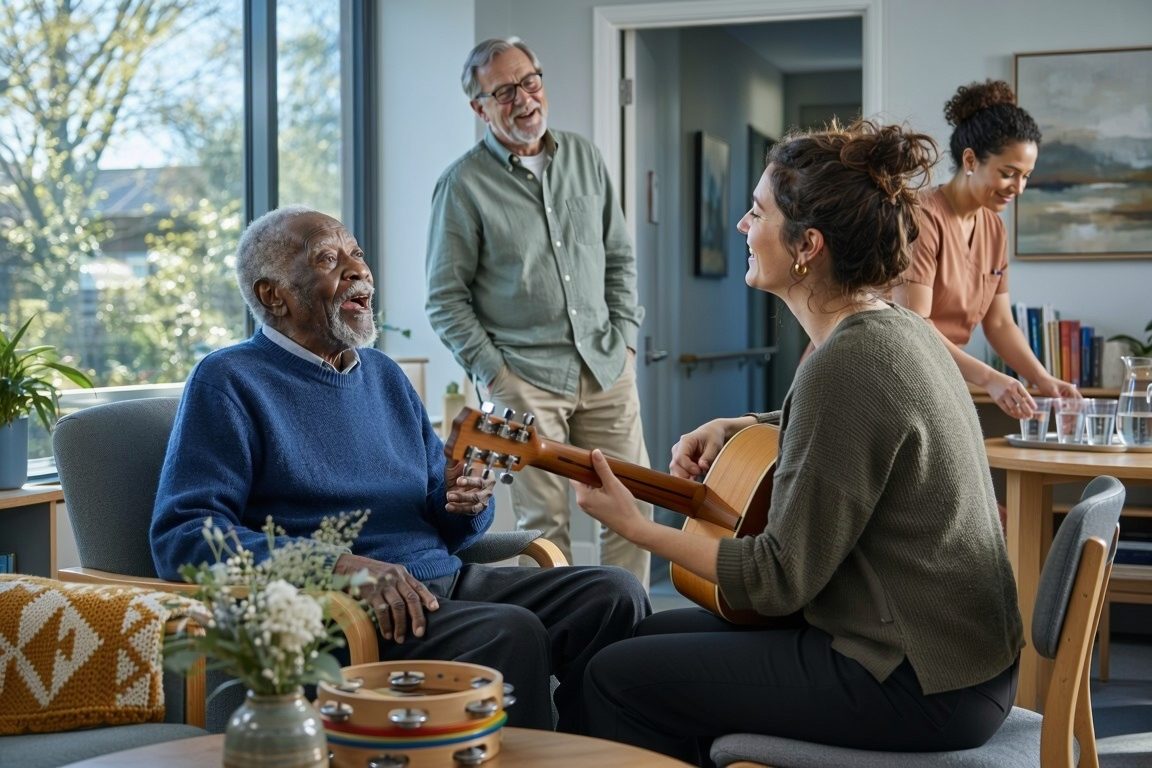
Keep a small basket of easy-to-hold instruments like maracas, a small drum, or a tambourine. Offer these during music time to encourage active participation. Even if they can't play in rhythm, the act of holding and shaking can be engaging and calming.
Music and Care Routine Checklist
Create a short checklist for staff or family:
This helps ensure music is used purposefully, not as background noise.
Exact Phrases to Say
When starting music, say: 'I remember you loved this song. Let's listen together.' or 'Can you help me sing this one? I always forget the words.' This invites connection without pressure. If they seem upset, say: 'That's okay, we can try a different one later.'
Music Therapy Referral Form
If you're in a facility, create a simple form for staff to request a music therapy assessment. Include fields for:
This helps the music therapist tailor interventions.
Different situations
Late-stage dementia or when verbal communication is limited
Focus on receptive music therapy (listening) rather than active participation. Use gentle, familiar songs from their youth. A music therapist can help identify songs that still evoke a response, even if the person cannot speak. Family can still play music, but watch for subtle cues like a smile, tear, or relaxed posture.
In a nursing home or memory care facility
Advocate for a music therapist to be part of the care team. Administrators often hesitate due to cost, but research shows it reduces reliance on medications and improves quality of life. If a therapist isn't available, ask if CNAs can be trained to lead music groups. You can also bring in a personal MP3 player for your loved one, as one family caregiver did, with remarkable results.
Family caregiver vs. nursing staff role
Family caregivers have the advantage of knowing their loved one's music history intimately. Use that knowledge to create personalized playlists. Nursing staff may need to learn preferences from family or through trial and error. Staff should also be aware that music can trigger memories, both positive and negative, and should be used with sensitivity.
Hospice or end-of-life care
Music therapy is more commonly covered by insurance in hospice. Ask the hospice team for a referral. The therapist can help with comfort, pain management, and emotional support for both the patient and family. Family can still play music, but a therapist can guide you on what works best during this sensitive time.
If your loved one has a history of trauma or mental health issues
Be cautious: certain songs may trigger distressing memories. A music therapist is trained to navigate this. If you're using music yourself, start with instrumental or neutral songs and watch for signs of distress. Discuss any concerns with a clinician before starting.
For the doctor
4
- Ask your loved one's doctor or hospice team: 'Can we get a referral for a board-certified music therapist? Is this covered by our insurance or Medicare?'
- If your loved one has severe depression or agitation that doesn't respond to simple music, ask: 'Would music therapy be appropriate as part of their care plan?'
- For nursing home residents, ask the facility administrator: 'Do you have a music therapist on staff or can you contract with one? If not, can our CNAs receive training from a music therapist?'
- If your loved one is on medications for mood or behavior, ask: 'Could music therapy help reduce the need for these medications?' (Research supports this, but always consult the doctor.)