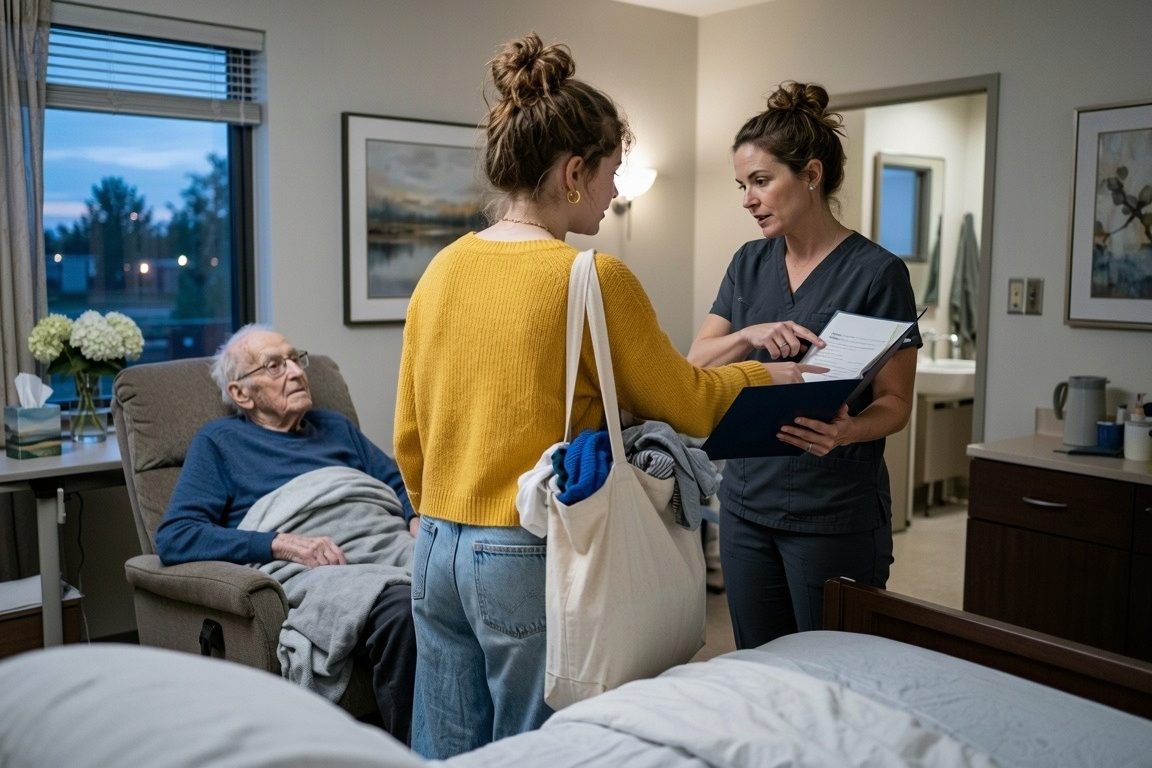
Step by step
What not to do
- Don't criticize staff or blame them for every problem; use 'I' statements (e.g., 'I noticed Mom seems more agitated after bath time. Can we work together on how to make that easier?').
- Don't skip your own medical and dental appointments; ask a friend to hold you accountable.
- Don't make major irreversible decisions (e.g., selling the home, quitting your job) in the first three months after placement.
- Don't disappear: maintain shorter, more frequent visits (e.g., 20 minutes three times a week) and keep in touch with friends via a simple weekly text.
- Don't skip the quarterly care plan meetings; these are your main formal opportunity to review medications, behaviors, and routines with the full team.
Key points
- Caregiver burden often persists after nursing home placement, but it changes form, from physical care to emotional and advocacy work.
- Your pre-placement stress level, the quality of the nursing home relationship, and your own health are the strongest predictors of how your burden will evolve.
- Staying involved through regular check-ins, a care notebook, and varied visit times can reduce feelings of helplessness and improve care quality.
- Prioritizing your own health, sleep, medical appointments, and social connections, is not selfish; it is essential for sustainable caregiving.
- Joining a support group for caregivers of institutionalized loved ones can provide validation, practical tips, and emotional relief.
- Guilt and mixed emotions are normal; acknowledging them without judgment is the first step to managing them.
Videos
 What Is Caregiver Burden During Dementia Progression? - TestThis video explains the concept of caregiver burden as dementia progresses, which is the foundation for understanding why burden may persist after nursing home placement.
 5 Changes Caregivers Face After a Dementia Diagnosis!This video outlines the major changes caregivers experience, helping you recognize that your feelings of change and loss are normal and shared by others.
 What is the Impact of Dementia on a Spouse?Spousal caregivers face unique challenges, including identity loss and profound grief. This video addresses those specific experiences.
 What Level Of Care Does A Dementia Patient Need?Understanding the different levels of care (including nursing homes vs. memory care) helps you evaluate whether the current placement is appropriate and what to advocate for.

Background
Why Caregiver Burden Persists After Nursing Home Admission
The transition itself is a major stressor. People with dementia often experience increased confusion, anxiety, and disorientation when moved to an unfamiliar environment, which can accelerate the progression of the disease (Source [13]). Watching your loved one struggle to adjust can be heartbreaking, and you may feel torn between wanting them to be safe and wishing they could be home. Additionally, many caregivers report dissatisfaction with the quality of care in nursing homes, including concerns about staff understanding of dementia, social interaction, and involvement in decision-making (Source [12]). These worries add to the burden, making it feel like you are still carrying the weight of care, just in a different way.
What Predicts Whether Burden Will Increase or Decrease
Your own health and support system also matter greatly. Caregivers who neglect their own physical and mental health, skipping doctor appointments, losing sleep, or isolating from friends, are more vulnerable to persistent burden (Source [15]). Having a strong support network, whether through family, friends, or support groups, can buffer the stress. Finally, the stage of your loved one's dementia plays a role. If they are in the later stages with severe behavioral symptoms like aggression or wandering, the burden of managing those behaviors from a distance can be especially heavy (Source [2], [3]). Understanding these predictors can help you target your efforts to reduce burden.
Practical tools
4
Weekly Check-In Call Script
Use this opener and question list: 'Hi, this is [your name], [loved one's name]'s [relationship]. I'm calling for our weekly check-in. Could you tell me:
' Write answers with dates to spot patterns.
One-Page Care Notebook
A laminated single page for the room or nurses' station with:
Ask staff to read at each shift change.
Worry-to-Action Journal
A notebook with two columns: left side for each worry (e.g., 'Dad is not drinking enough'), right side for one small action this week (e.g., 'Bring a marked water bottle and ask the aide to offer sips at meals'). Review every Sunday.
Weekly Caregiver Health & Mood Tracker
A one-page log you fill each evening:
Review every Sunday. If sleep is poor or mood is ≤5 for over two weeks, schedule a primary care appointment for possible caregiver depression.
Different situations
If your loved one has Lewy body dementia
Be especially vigilant about fluctuations in alertness and hallucinations. These can be misinterpreted by staff as confusion or agitation. In your care notebook, add a section: 'My loved one has Lewy body dementia. They may have good days and bad days. If they seem confused or see things that aren't there, it may be part of their condition. Please do not restrain them; instead, speak calmly and redirect.' Also, discuss with the nursing home doctor about medications that can worsen symptoms, such as certain antipsychotics.
If your loved one is in late-stage dementia
Your role shifts from managing behaviors to ensuring comfort and dignity. Focus on end-of-life care discussions with the nursing home team. Ask about palliative care and hospice services. Your visits may be shorter but more meaningful, hold their hand, play their favorite music, or just sit quietly. You may need to advocate more strongly for pain management and skin care to prevent bedsores. Consider joining a support group for caregivers of late-stage dementia patients.
If you are a spouse versus an adult child
Spouses often experience a deeper sense of loss and identity change because the marital relationship is fundamentally altered. You may feel like you have lost your partner even though they are still alive. It is crucial to seek individual counseling or a spousal support group. Adult children may struggle more with guilt about 'putting Mom in a home' and with sibling conflicts over care decisions. For adult children, consider family meetings with a neutral facilitator to divide responsibilities and communicate openly.
If your loved one is on Medicaid
Medicaid-covered nursing homes may have fewer resources and higher staff-to-patient ratios. You may need to be more proactive in monitoring care. Visit at different times, including evenings and weekends. Build relationships with the social worker and the ombudsman (a resident advocate). If you see neglect, document it and report it to the state's long-term care ombudsman program. Also, be aware that Medicaid may limit the types of therapies or activities available.
If you live far from the nursing home
Long-distance caregiving adds unique challenges. Schedule regular video calls with your loved one if they are able. Ask the nursing home if they have a 'virtual visit' program. Designate a local contact person, a friend, relative, or hired advocate, who can visit weekly and report back. Use a shared online document (like Google Docs) to track care notes with staff. Join an online support group for long-distance caregivers to share strategies and emotional support.
For the doctor
5
- If you have been feeling persistently sad, hopeless, or unable to enjoy things for more than two weeks, ask your doctor: 'Could I be experiencing depression related to caregiving? What treatment options might help?'
- If you are having trouble sleeping (difficulty falling asleep, waking frequently, or sleeping too much) for more than a few weeks, ask: 'What sleep strategies are safe for me? Could a sleep study or medication be appropriate?'
- If you have noticed changes in your own physical health, such as high blood pressure, weight loss or gain, or frequent headaches, since your loved one entered the nursing home, ask: 'Could these be stress-related? What steps should I take to manage my health?'
- If you are considering starting or stopping any medications for anxiety, depression, or sleep, always consult your clinician first. Do not make changes on your own.
- If you feel overwhelmed by guilt or anger to the point that it interferes with your daily life, ask: 'Can you recommend a therapist who specializes in caregiver issues or grief?'