Step by step
What not to do
- Never say 'I already told you, they died', this forces repeated grief and they cannot remember being told.
- Don't argue or correct their timeline; it deepens distress.
- Don't use vague terms like 'passed away' or 'gone to heaven', these imply the person might return; use 'died' if directness is needed.
- Don't involve them in funeral planning or viewing the body if in moderate or advanced stage, it can be traumatic.
Key points
- Your loved one's question is not a test of honesty, it is an expression of emotional need. Respond to the feeling, not the fact.
- Do not repeatedly tell them their spouse has died. This causes repeated grief and confusion. Use gentle redirection instead.
- Validate their feelings first: 'I know you miss them. They were so wonderful.' Then offer comfort or a positive memory.
- Use physical touch, photos, music, or a simple ritual to provide comfort without words.
- Tailor your approach to the stage of dementia: more direct in early stages, more redirection in later stages.
- Take care of yourself. Your patience and compassion are the greatest tools you have.
Videos
 When someone with dementia remembers someone is deadThis video directly addresses the emotional dilemma of whether to tell or not, and offers practical phrases to use.
 Dementia Care Partner Podcast #46: How to Respond When Someone Asks for a Deceased Parent or SpouseA detailed discussion from Teepa Snow's team on the 'why' behind the question and multiple response strategies.
 Simple dementia trick to get your loved one talking and feeling happyShows how to use positive memories from the distant past to shift mood, which is a key tool for this situation.
 Should I Tell or Remind My Person with Dementia of a Death in the FamilyDirectly answers the caregiver's question with clear, compassionate guidance on when to tell and when to redirect.


Background
Why They Ask: The Brain's Timeline Has Shifted
Dementia, especially Alzheimer's, gradually erodes the brain's ability to store new memories and correctly sequence events in time. As one source explains, the disease 'unavs the timeline of life', it takes away the ability to recognize where a person is in their life story, while still allowing them to keep vivid 'episodic memories' of past experiences (Teepa Snow). This means your loved one may vividly remember their spouse as alive and well from decades ago, but cannot recall the funeral that happened last year. Their brain is not being stubborn or cruel; it is simply operating on a different timeline, where the spouse is still present.
Another key factor is that earlier memories are often better preserved than recent ones. As the Dementia Careblazers note, people with dementia are 'more likely to be able to remember what happened to them 40 years ago' than what happened yesterday. So when they ask, 'Where is my wife?' they may be mentally living in a time when she was alive. The question is not a test of your honesty, it is a genuine expression of their current reality. Their feelings of love, longing, or confusion are very real, even if the facts are not.
The Emotional Truth: Feelings Are Real, Even If Memories Are Not
It is crucial to understand that a person with dementia experiences emotions just as intensely as anyone else. As one source puts it, 'their brain may be struggling to work as well as it did in the past, but their feelings are still very much working and are very real' (Dementia Careblazers). When you tell them their spouse has died, you are not just delivering information, you are triggering a fresh wave of grief, shock, and pain, every single time. Because they cannot hold onto that memory, they may experience the loss anew with each reminder.
This is why many experts advise against repeatedly 'telling the truth' in a literal sense. The goal is not to deceive, but to protect them from unnecessary emotional trauma. As one caregiver expert states, 'in their mind the person is still there... it's really not about wanting to see the person as much as it is that they are feeling a need for connection or comfort' (Dementia With Grace). Your role is to meet that emotional need, not to correct their memory. You can honor their feelings while gently steering the conversation toward comfort and reassurance.
Practical tools
5
Comforting Phrase List
Keep a mental or written list: general comfort, 'I know you miss them. I miss them too.' Redirect, 'They're not here right now, but I am. Let's look at this photo.' Early-stage, 'Yes, they died. I'm here with you.' Anxiety, 'They are safe. You are safe.'
Photo Album or Memory Box
Small album of happy times with the deceased spouse. When asked, say: 'Let's look at this together.' Label it 'Our Happy Memories.'
Music Playlist
Songs meaningful as a couple (wedding song, favorite tunes). Music shifts mood to warmth without needing words.
Comfort Item
Offer with: 'Here, hold this, it's soft and warm like a hug.'
Caregiver's Reminder Card
Small card: 'This is dementia. They cannot store this answer. They are not trying to upset me. Respond with love.' Glance at it when patience runs thin.
Different situations
Early-stage dementia (mild cognitive impairment)
In early stages, the person may still have some awareness of the death and may be able to participate in grief rituals. You can be more direct, using clear language like 'died' rather than euphemisms. You might also involve them in creating a memory book or visiting the grave if they wish. However, always watch for signs of distress and be ready to redirect.
Moderate to advanced dementia
In later stages, the person is unlikely to retain the information that their spouse has died. The best approach is almost always to use gentle redirection and validation. Avoid any mention of death. Focus on comfort, physical touch, and positive memories from the distant past. Do not bring them to funerals or viewings.
Lewy body dementia or Parkinson's dementia
These conditions often involve visual hallucinations and fluctuating cognition. The person may see or 'sense' their deceased spouse in the room. Do not argue with this. Instead, say something like, 'I see you're thinking of them. They must be watching over you.' Then gently guide them to a different activity. Be extra patient, as confusion can shift rapidly.
Spouse as caregiver vs. adult child as caregiver
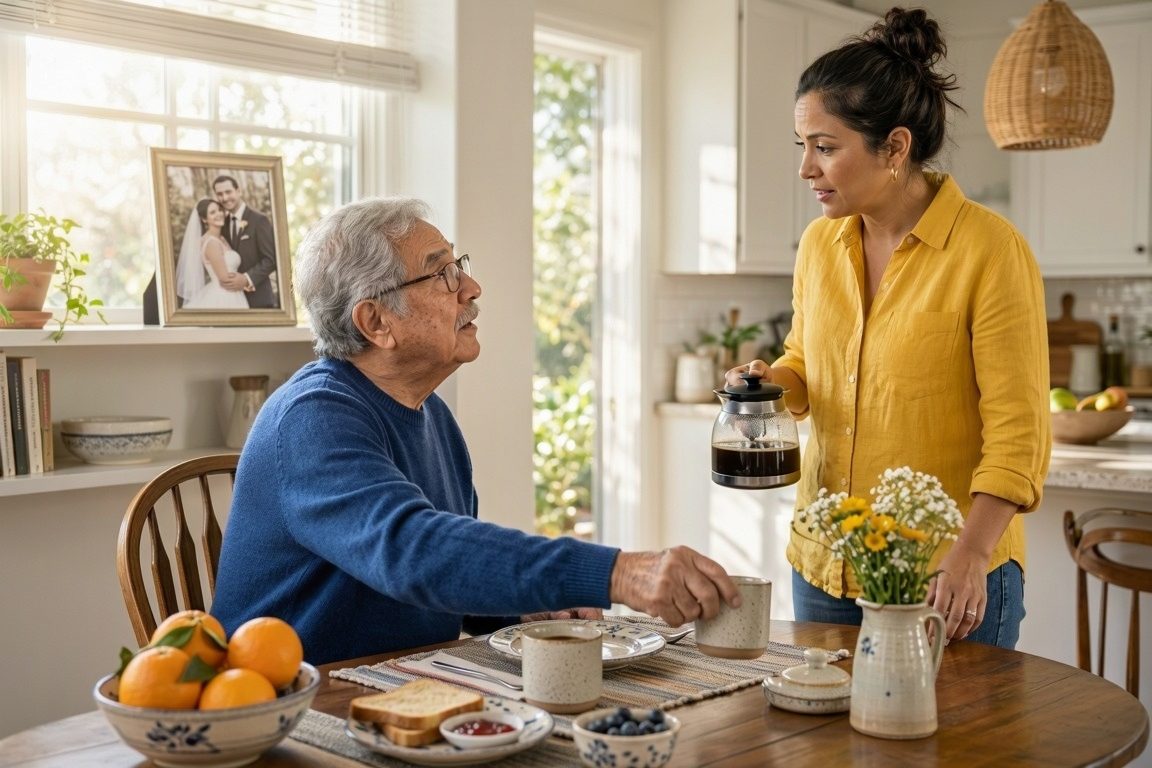
If you are the spouse, your own grief is intertwined. It is okay to say, 'I miss them too. I'm here with you.' Your presence is a powerful comfort. If you are an adult child, avoid saying 'Mom is gone' if it will cause your parent to search for her. Instead, say, 'She's not here right now, but I am. Let's have some tea.' Your role is to be a calm, loving presence, not a truth-teller.
In a facility or with paid caregivers
If your loved one is in a care home, brief all staff on the preferred approach. Provide a written 'care card' with the spouse's name, a few key phrases to use, and a list of comforting activities. Consistency across caregivers reduces confusion. Also, ensure staff know not to correct the person or bring up the death.
Common questions
2
What do I do when a person keeps asking about a sick relative or can't retain news of a death?
Validate their feelings first by saying, 'I know you care about them so much,' then gently shift the focus to something comforting like a photo or a familiar activity, as repeatedly explaining the death only causes fresh grief each time.
What should I ask about a facility's policy when a resident's care needs increase?
Ask the facility directly: 'What is your process for reassessing care levels and adjusting costs or staffing when a resident's needs change?' This helps you plan ahead and ensures your loved one gets the support they need without surprises.
For the doctor
4
- If your loved one becomes severely agitated, depressed, or refuses to eat or drink after learning of the death, discuss with their doctor whether grief counseling or medication for depression or anxiety might be appropriate.
- Ask the doctor about the risks and benefits of using anti-anxiety medications (e.g., benzodiazepines) for acute distress, as these can sometimes worsen confusion in dementia.
- If your loved one is in a late stage and you are considering whether to tell them about a recent death (e.g., of a sibling or child), discuss with a geriatric psychiatrist or dementia care specialist. The decision is highly individual and depends on their cognitive level and emotional state.
- If you are struggling with your own grief and caregiving stress, ask your clinician for a referral to a support group or counselor. Your well-being directly affects your loved one's care.